
研究绵羊对严重急性呼吸综合征冠状病毒2的中和抗体反应。
Investigating SARS-CoV-2 Neutralising Antibody Response in Sheep.
作者信息
Samojlović Milena, Mesquita João R, Santos-Silva Sérgio, Neptin Malin, Esbjörnsson Joakim
机构信息
Systems Virology, Faculty of Medicine, Lund University, 223 62 Lund, Sweden.
Instituto de Ciências Biomédicas Abel Salazar, University of Porto, 4050-313 Porto, Portugal.
出版信息
Microorganisms. 2024 Dec 30;13(1):49. doi: 10.3390/microorganisms13010049.
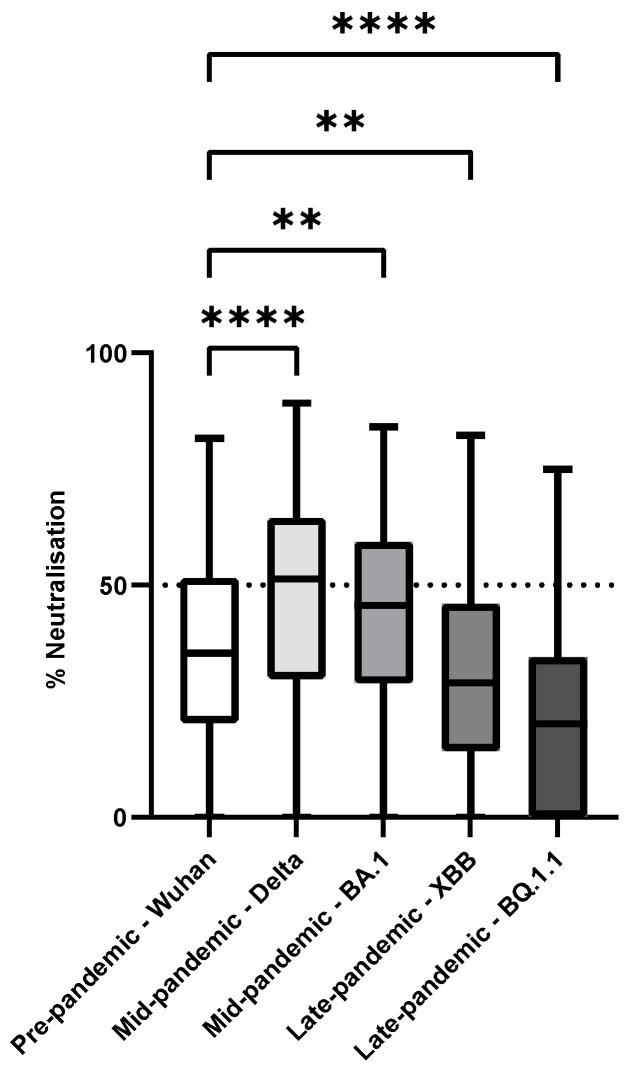
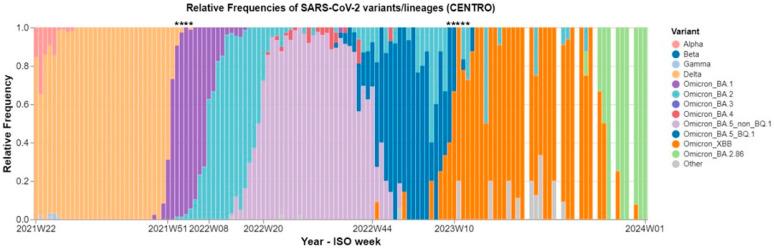
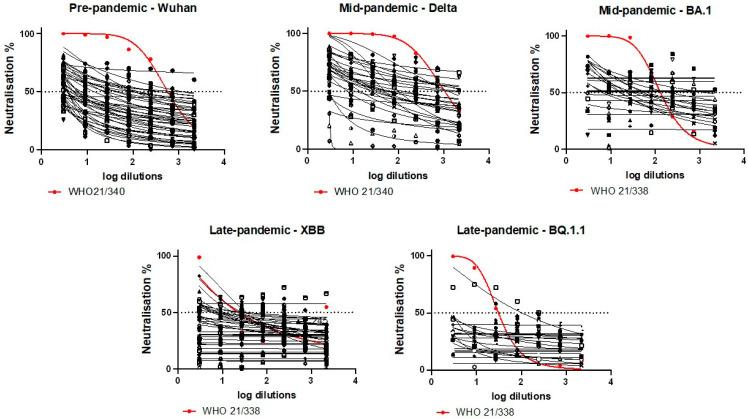
SARS-CoV-2 can cause clinical and inapparent disease and mortality in several animals cohabitating with humans, and sheep are susceptible to SARS-CoV-2 due to virus-receptor interactions similar to those in humans. Hence, sheep have the potential to be infected, spread, and develop neutralising antibodies (NAbs) against SARS-CoV-2. The aim of this study was to investigate the prevalence of SARS-CoV-2 NAbs in farm animals after natural exposure to the virus. Serum samples were collected from sheep in the Serra da Estrela region in Portugal, both prior to and during the COVID-19 pandemic. The sera were tested by established SARS-CoV-2 pseudovirus systems for multiple SARS-CoV-2 variants (early-Wuhan, mid-Delta, Omicron-BA.1, and late-Omicron XBB, BQ.1.1). Partial neutralisation activity in Pre-pandemic and Mid-pandemic samples was observed, while no NAb activity was observed in Late-pandemic samples tested. Different levels of NAbs were observed between Pre-pandemic samples and those collected during the Mid-pandemic and Late-pandemic periods ( ≤ 0.01). Our results indicate that SARS-CoV-2 cross-species transmission may have occurred through human-sheep contacts on sheep farms during the pandemic, and that farm animals could contribute to the One Health Approach in zoonotic virus surveillance and pandemic preparedness.
严重急性呼吸综合征冠状病毒2(SARS-CoV-2)可在与人类共同生活的几种动物中引发临床疾病、隐性感染和死亡,并且由于与人类相似的病毒-受体相互作用,绵羊对SARS-CoV-2易感。因此,绵羊有被感染、传播并产生针对SARS-CoV-2的中和抗体(NAbs)的可能性。本研究的目的是调查农场动物在自然接触该病毒后SARS-CoV-2中和抗体的流行情况。在葡萄牙埃什特雷拉山脉地区,于2019冠状病毒病(COVID-19)大流行之前和期间采集了绵羊的血清样本。利用已建立的SARS-CoV-2假病毒系统对血清进行检测,针对多种SARS-CoV-2变异株(早期武汉株、中期德尔塔株、奥密克戎-BA.1株以及晚期奥密克戎XBB、BQ.1.1株)。在大流行前和大流行中期的样本中观察到部分中和活性,而在检测的大流行后期样本中未观察到中和抗体活性。在大流行前样本与大流行中期和后期采集的样本之间观察到不同水平的中和抗体(≤0.01)。我们的结果表明,在大流行期间,SARS-CoV-2可能通过绵羊养殖场中的人-羊接触发生了跨物种传播,并且农场动物可为人畜共患病病毒监测和大流行防范中的“同一健康”方法做出贡献。
 Zotero 插件