
饮用决明子茶对老花眼、干眼症、眼压和近视力的改善作用。
Improvement of Presbyopia, Dry Eye, Intraocular Pressure, and Near Vision Through Cassiae Tea Consumption.
作者信息
Fan Mei, Hung Jen-Lin, Hung Shao-Huan, Chen Li-Chai, Horng Chi-Ting
机构信息
Department of Pharmacy, Kaohsiung Armed Forces General Hospital, Kaohsiung 802, Taiwan.
Master of Science Program in Health Care, Department of Nursing, Meiho University, Pingtung 912, Taiwan.
出版信息
Medicina (Kaunas). 2024 Dec 29;61(1):35. doi: 10.3390/medicina61010035.
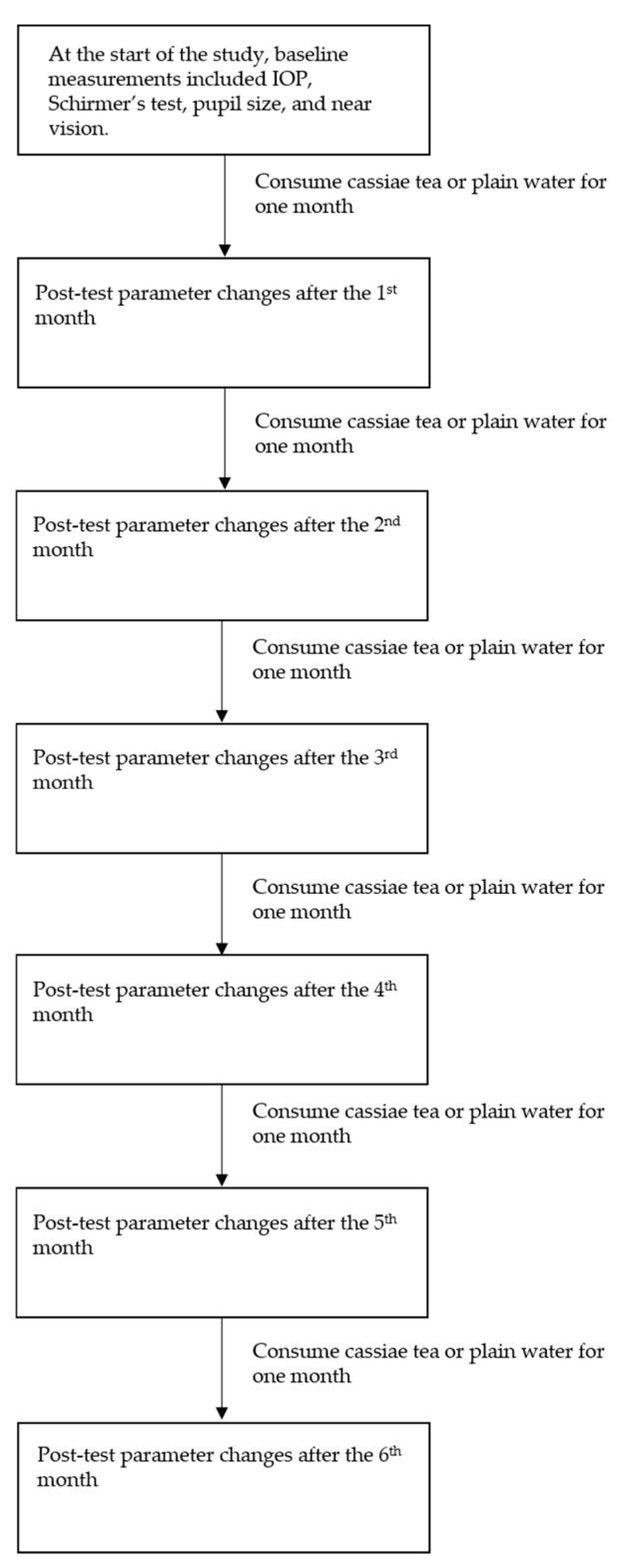
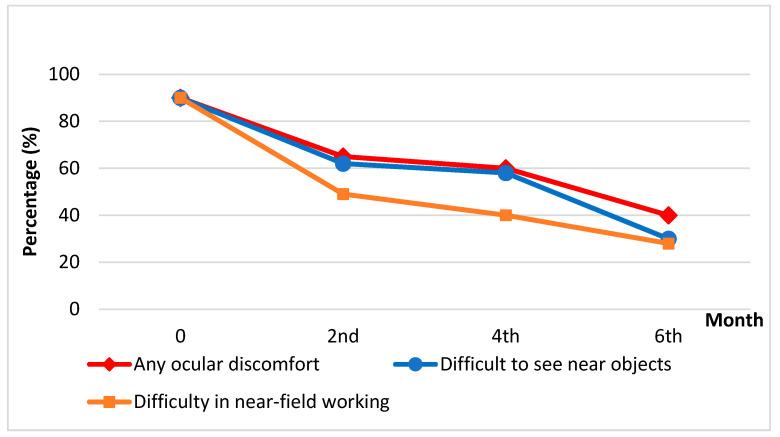
: This study aimed to illustrate a novel method for improving presbyopia by drinking cassiae tea. : A total of 425 eyes from 425 participants (aged 52.5 ± 9.5 years) were recruited and divided into several experimental groups over a 6-month period. Participants consumed cassiae tea daily (10 g of cassiae semen brewed in 500 cc of water). Meanwhile, control group participants consumed 500 cc of plain water along with 1000 mg of vitamin C each day. Experiments 1 and 2: Participants with severe dry eye and intraocular pressure (IOP) > 30 mmHg were enrolled, and outcomes were assessed for these conditions, respectively. Experiments 3, 4, and 7: These experiments evaluated pupil size, near vision, and serum superoxide dismutase (SOD) levels in two groups of volunteers. Experiment 5: Different quantities of cassiae tea were prescribed to various groups, and near vision was measured. Experiment 6: Three questionnaires assessed presbyopic symptoms after cassiae tea consumption. Experiment 8: The antioxidant activity of cassiae tea compared with other bioactive compounds and Chinese herbs was evaluated using the DPPH test. : By the fourth month of the study, participants experienced increased tear volume and reduced IOP. Pupil size constricted, near vision improved, and serum SOD levels increased. Furthermore, greater consumption of cassiae tea was correlated with better near vision. The antioxidant activity of cassiae tea was found to surpass that of anthocyanins, wolfberry, and vitamin C. : Drinking cassiae tea improves dry eye symptoms, reduces IOP, regulates pupil size, and enhances near vision due to its excellent antioxidant and pharmacological properties. These benefits may particularly aid individuals with presbyopia and those engaged in near-distance activities, such as smartphone use.
本研究旨在阐明一种通过饮用决明子茶改善老花眼的新方法。共招募了425名参与者(年龄52.5±9.5岁)的425只眼睛,并在6个月的时间内将其分为几个实验组。参与者每天饮用决明子茶(10克决明子用500毫升水冲泡)。同时,对照组参与者每天饮用500毫升白开水并服用1000毫克维生素C。实验1和2:招募了患有严重干眼症且眼压(IOP)>30 mmHg的参与者,并分别评估这些病症的结果。实验3、4和7:这些实验评估了两组志愿者的瞳孔大小、近视力和血清超氧化物歧化酶(SOD)水平。实验5:给不同组开了不同量的决明子茶,并测量了近视力。实验6:通过三份问卷评估饮用决明子茶后的老花眼症状。实验8:使用DPPH测试评估了决明子茶与其他生物活性化合物和中草药相比的抗氧化活性。在研究的第四个月,参与者的泪液量增加,眼压降低。瞳孔缩小,近视力改善,血清SOD水平升高。此外,饮用更多的决明子茶与更好的近视力相关。发现决明子茶的抗氧化活性超过花青素、枸杞和维生素C。饮用决明子茶可改善干眼症症状,降低眼压,调节瞳孔大小,并增强近视力,这归因于其出色的抗氧化和药理特性。这些益处可能对患有老花眼的人和从事近距离活动(如使用智能手机)的人特别有帮助。


 Zotero 插件