
靶向三重自然杀伤细胞抑制机制:胰腺癌治疗中生物标志物的全面综述
Targeting Triple NK Cell Suppression Mechanisms: A Comprehensive Review of Biomarkers in Pancreatic Cancer Therapy.
作者信息
Fanijavadi Sara, Thomassen Mads, Jensen Lars Henrik
机构信息
Cancer Polyclinic, Levanger Hospital, 7601 Levanger, Norway.
Department of Oncology, Vejle Hospital, University Hospital of Southern Denmark, 7100 Vejle, Denmark.
出版信息
Int J Mol Sci. 2025 Jan 9;26(2):515. doi: 10.3390/ijms26020515.
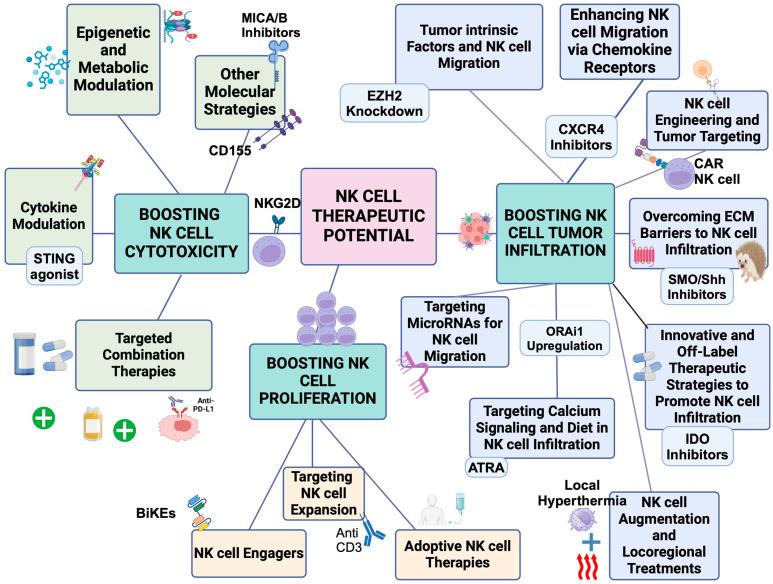
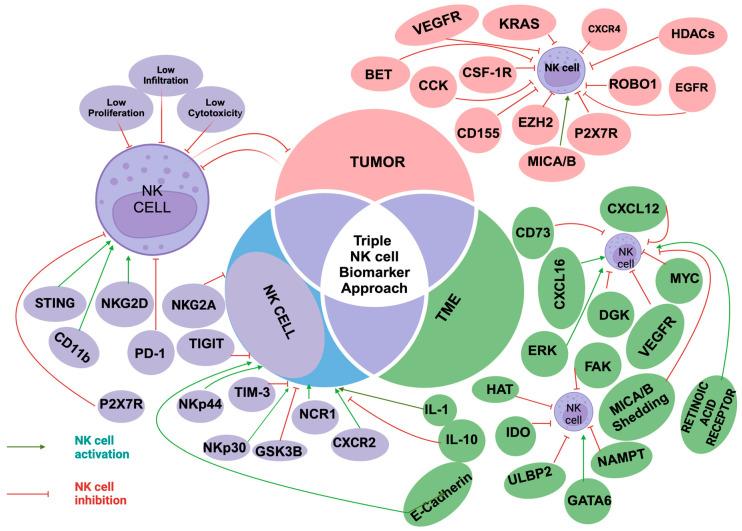
Pancreatic ductal adenocarcinoma (PDAC) is an aggressive cancer with poor outcomes due to frequent recurrence, metastasis, and resistance to treatment. A major contributor to this resistance is the tumor's ability to suppress natural killer (NK) cells, which are key players in the immune system's fight against cancer. In PDAC, the tumor microenvironment (TME) creates conditions that impair NK cell function, including reduced proliferation, weakened cytotoxicity, and limited tumor infiltration. This review examines how interactions between tumor-derived factors, NK cells, and the TME contribute to tumor progression and treatment resistance. To address these challenges, we propose a new "Triple NK Cell Biomarker Approach". This strategy focuses on identifying biomarkers from three critical areas: tumor characteristics, TME factors, and NK cell suppression mechanisms. This approach could guide personalized treatments to enhance NK cell activity. Additionally, we highlight the potential of combining NK cell-based therapies with conventional treatments and repurposed drugs to improve outcomes for PDAC patients. While progress has been made, more research is needed to better understand NK cell dysfunction and develop effective therapies to overcome these barriers.
胰腺导管腺癌(PDAC)是一种侵袭性癌症,由于频繁复发、转移和治疗耐药性,其预后较差。这种耐药性的一个主要原因是肿瘤抑制自然杀伤(NK)细胞的能力,NK细胞是免疫系统对抗癌症的关键参与者。在PDAC中,肿瘤微环境(TME)创造了损害NK细胞功能的条件,包括增殖减少、细胞毒性减弱和肿瘤浸润受限。本综述探讨了肿瘤衍生因子、NK细胞和TME之间的相互作用如何促进肿瘤进展和治疗耐药性。为应对这些挑战,我们提出了一种新的“三重NK细胞生物标志物方法”。该策略专注于从三个关键领域识别生物标志物:肿瘤特征、TME因子和NK细胞抑制机制。这种方法可以指导个性化治疗以增强NK细胞活性。此外,我们强调了将基于NK细胞的疗法与传统治疗和重新利用的药物相结合以改善PDAC患者预后的潜力。虽然已经取得了进展,但仍需要更多研究来更好地理解NK细胞功能障碍并开发有效的疗法来克服这些障碍。

 Zotero 插件