
衰老对小鼠胫前肌损伤后肌内胶原蛋白相关因子的影响。
Effects of Aging on Intramuscular Collagen-Related Factors After Injury to Mouse Tibialis Anterior Muscle.
作者信息
Kanazawa Yuji, Takahashi Tatsuo, Inoue Takao, Nagano Mamoru, Koinuma Satoshi, Eiyo Haruki, Tamura Yuma, Miyachi Ryo, Iida Naoya, Miyahara Kenichiro, Shigeyoshi Yasufumi
机构信息
Department of Physical Therapy, Hokuriku University, Kanazawa 920-1180, Japan.
Well-Being Research Team, Hokuriku University, Kanazawa 920-1180, Japan.
出版信息
Int J Mol Sci. 2025 Jan 18;26(2):801. doi: 10.3390/ijms26020801.
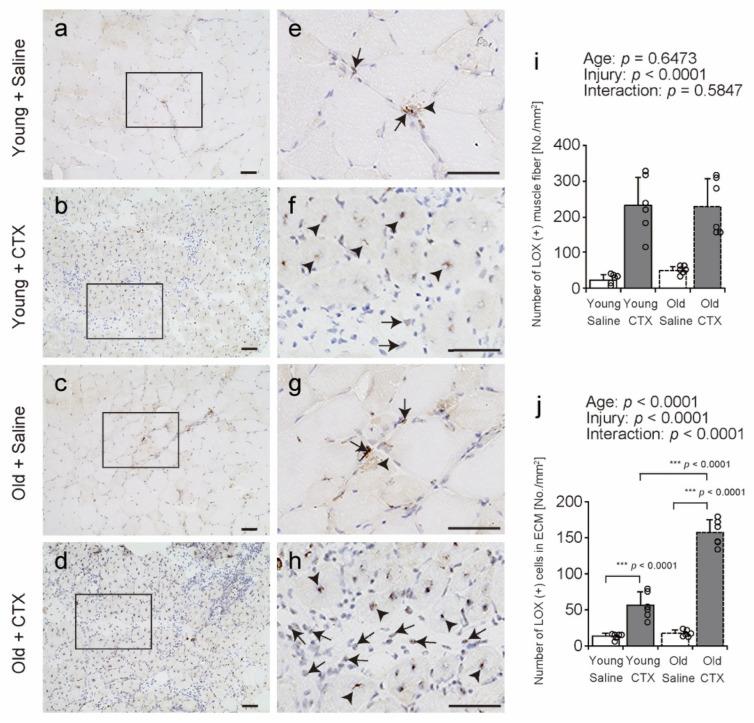
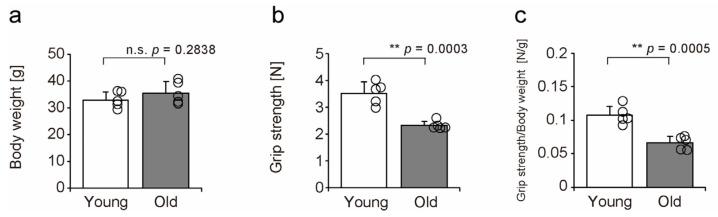
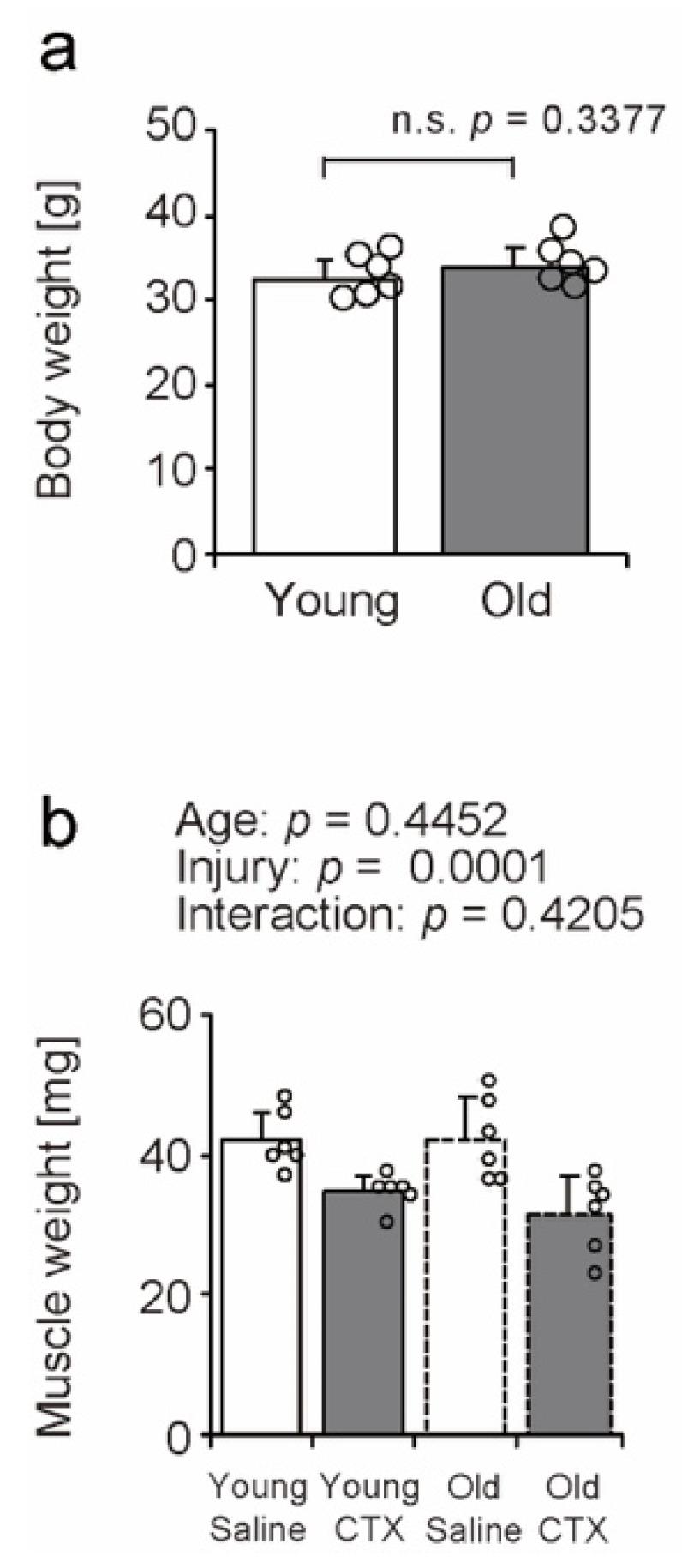
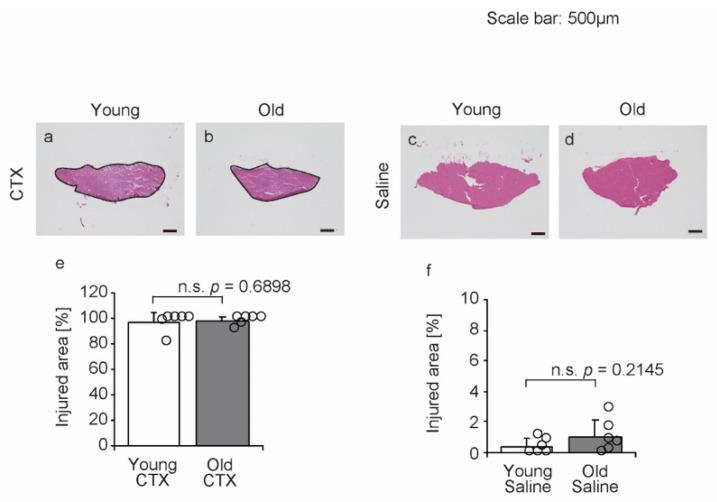
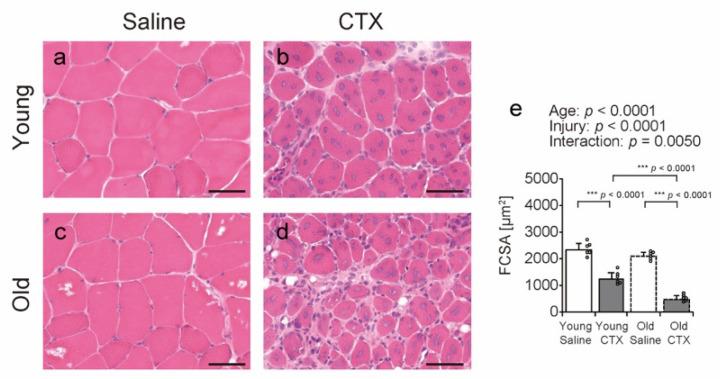
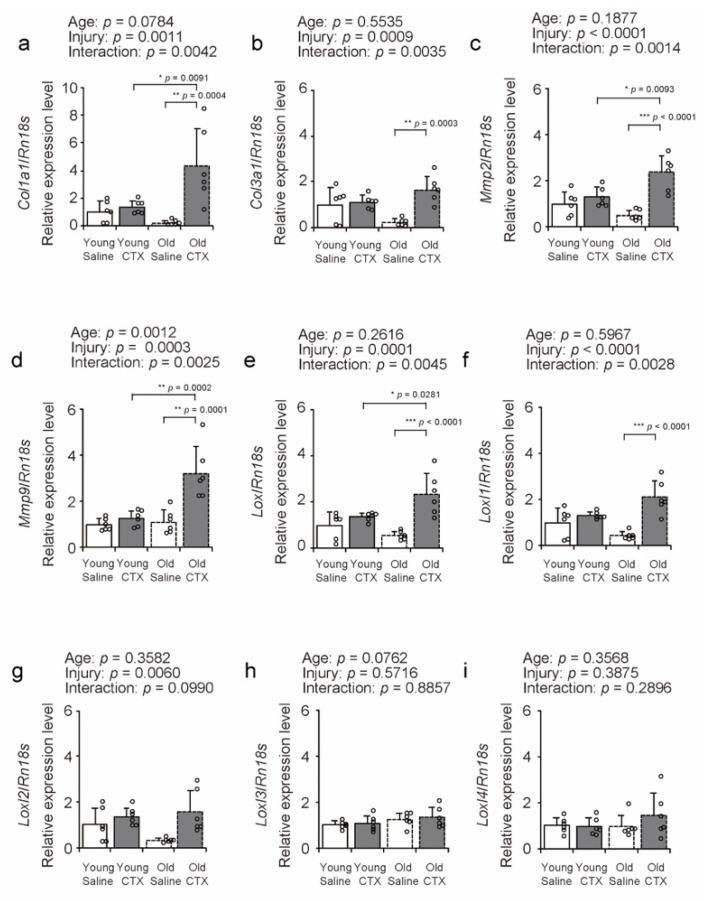
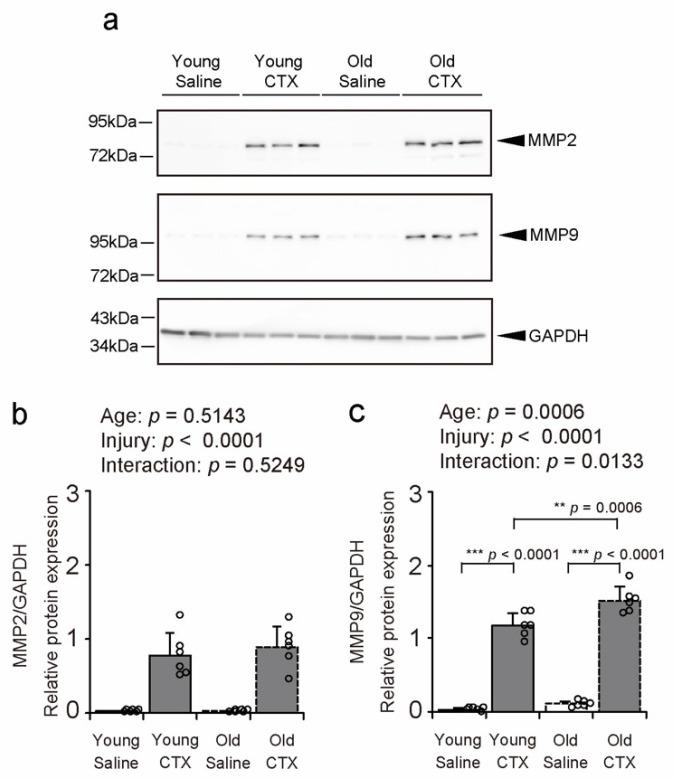
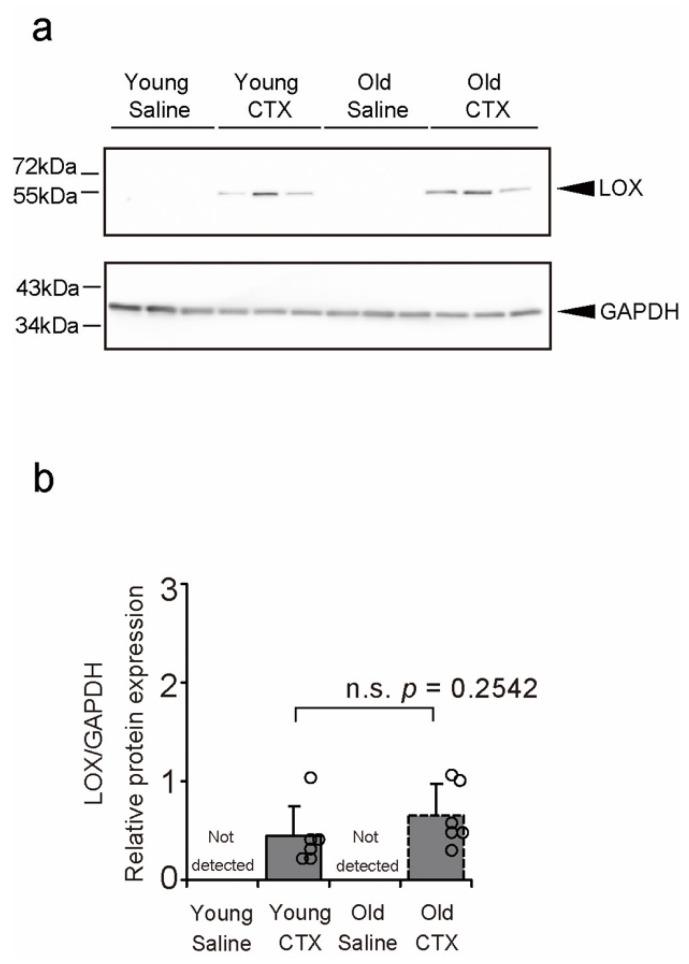
Collagen I is the most abundant type of intramuscular collagen. Lysyl oxidase promotes collagen cross-link formation, which helps stabilize the extracellular matrix. Furthermore, matrix metalloproteinases, responsible for collagen degradation, maintain typical muscle structure and function through remodeling. Although it is well known that aging leads to delayed recovery of muscle fibers, the impact of aging on the remodeling of intramuscular collagen is not well understood. In this study, we investigated the impact of aging on collagen remodeling during muscle injury recovery using young and old mouse models. Muscle injury was induced in the right tibialis anterior (TA) muscle of male C57BL/6J mice [aged 21 weeks (young) and 92 weeks (old)] using intramuscular cardiotoxin injection, with the left TA serving as a sham with saline injection. Following a one-week recovery period, aging was found to delay the recovery of the fiber cross-sectional area. The intensity and area of immunoreactivity for collagen I were significantly increased in old mice compared to young mice post-injury. Additionally, expression and the number of LOX (+) cells in the extracellular matrix significantly increased in old mice compared to young mice post-injury. Furthermore, and MMP9 expression levels after muscle injury were higher in old mice than in young mice. These results suggest that muscle injury in old mice can lead to increased collagen I accumulation, enhanced collagen cross-link formation, and elevated MMP9 expression compared to young mice.
I型胶原蛋白是肌肉内最丰富的胶原蛋白类型。赖氨酰氧化酶促进胶原蛋白交联的形成,这有助于稳定细胞外基质。此外,负责胶原蛋白降解的基质金属蛋白酶通过重塑来维持典型的肌肉结构和功能。虽然众所周知衰老会导致肌纤维恢复延迟,但衰老对肌肉内胶原蛋白重塑的影响尚未得到充分了解。在本研究中,我们使用年轻和老年小鼠模型,研究了衰老对肌肉损伤恢复过程中胶原蛋白重塑的影响。通过肌肉注射心脏毒素,在雄性C57BL/6J小鼠[21周龄(年轻)和92周龄(老年)]的右胫前肌(TA)中诱导肌肉损伤,左TA注射生理盐水作为假手术对照。经过一周的恢复期后,发现衰老会延迟纤维横截面积的恢复。与年轻小鼠相比,老年小鼠损伤后I型胶原蛋白的免疫反应强度和面积显著增加。此外,与年轻小鼠相比,老年小鼠损伤后细胞外基质中LOX(+)细胞的表达和数量显著增加。此外,老年小鼠肌肉损伤后的MMP9表达水平高于年轻小鼠。这些结果表明,与年轻小鼠相比,老年小鼠的肌肉损伤可导致I型胶原蛋白积累增加、胶原蛋白交联形成增强以及MMP9表达升高。

 Zotero 插件