
针对脑部疾病中细胞因子介导的炎症:开发新的治疗策略。
Targeting Cytokine-Mediated Inflammation in Brain Disorders: Developing New Treatment Strategies.
作者信息
Mallick Rahul, Basak Sanjay, Chowdhury Premanjali, Bhowmik Prasenjit, Das Ranjit K, Banerjee Antara, Paul Sujay, Pathak Surajit, Duttaroy Asim K
机构信息
A.I. Virtanen Institute for Molecular Sciences, Faculty of Health Sciences, University of Eastern Finland, 70211 Kuopio, Finland.
Molecular Biology Division, ICMR-National Institute of Nutrition, Indian Council of Medical Research, Hyderabad 500007, India.
出版信息
Pharmaceuticals (Basel). 2025 Jan 15;18(1):104. doi: 10.3390/ph18010104.
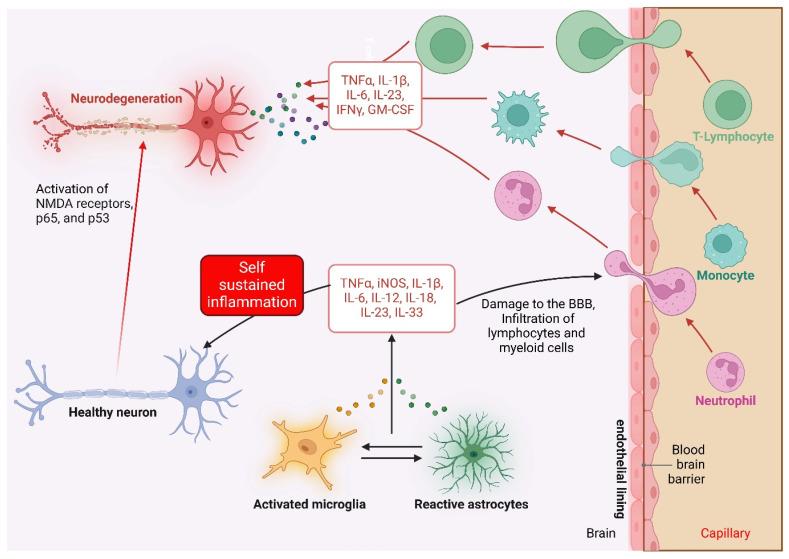
Cytokine-mediated inflammation is increasingly recognized for playing a vital role in the pathophysiology of a wide range of brain disorders, including neurodegenerative, psychiatric, and neurodevelopmental problems. Pro-inflammatory cytokines such as interleukin-1 (IL-1), tumor necrosis factor-alpha (TNF-α), and interleukin-6 (IL-6) cause neuroinflammation, alter brain function, and accelerate disease development. Despite progress in understanding these pathways, effective medicines targeting brain inflammation are still limited. Traditional anti-inflammatory and immunomodulatory drugs are effective in peripheral inflammatory illnesses. Still, they face substantial hurdles when applied to the central nervous system (CNS), such as the blood-brain barrier (BBB) and unwanted systemic effects. This review highlights the developing treatment techniques for modifying cytokine-driven neuroinflammation, focusing on advances that selectively target critical cytokines involved in brain pathology. Novel approaches, including cytokine-specific inhibitors, antibody-based therapeutics, gene- and RNA-based interventions, and sophisticated drug delivery systems like nanoparticles, show promise with respect to lowering neuroinflammation with greater specificity and safety. Furthermore, developments in biomarker discoveries and neuroimaging techniques are improving our ability to monitor inflammatory responses, allowing for more accurate and personalized treatment regimens. Preclinical and clinical trial data demonstrate the therapeutic potential of these tailored techniques. However, significant challenges remain, such as improving delivery across the BBB and reducing off-target effects. As research advances, the creation of personalized, cytokine-centered therapeutics has the potential to alter the therapy landscape for brain illnesses, giving patients hope for better results and a higher quality of life.
细胞因子介导的炎症在多种脑部疾病的病理生理学中发挥着至关重要的作用,这一点日益得到认可,这些疾病包括神经退行性疾病、精神疾病和神经发育问题。促炎细胞因子,如白细胞介素-1(IL-1)、肿瘤坏死因子-α(TNF-α)和白细胞介素-6(IL-6),会引发神经炎症,改变脑功能,并加速疾病发展。尽管在理解这些途径方面取得了进展,但针对脑部炎症的有效药物仍然有限。传统的抗炎和免疫调节药物在外周炎症性疾病中有效,但应用于中枢神经系统(CNS)时面临诸多障碍,如血脑屏障(BBB)和不良的全身效应。本综述重点介绍了用于调节细胞因子驱动的神经炎症的新兴治疗技术,着重于选择性靶向参与脑部病理的关键细胞因子的进展。新方法,包括细胞因子特异性抑制剂、基于抗体的疗法、基于基因和RNA的干预措施,以及纳米颗粒等先进的药物递送系统,在以更高的特异性和安全性降低神经炎症方面显示出前景。此外,生物标志物发现和神经成像技术的发展正在提高我们监测炎症反应的能力,从而实现更准确和个性化的治疗方案。临床前和临床试验数据证明了这些定制技术的治疗潜力。然而,仍然存在重大挑战,如改善跨血脑屏障的递送和减少脱靶效应。随着研究的进展,创建个性化的、以细胞因子为中心的疗法有可能改变脑部疾病的治疗格局,给患者带来更好疗效和更高生活质量的希望。

 Zotero 插件