
病毒微环境中细胞间通讯的蛋白质组学表征入门
A Primer on Proteomic Characterization of Intercellular Communication in a Virus Microenvironment.
作者信息
Kostas James C, Brainard Colter S, Cristea Ileana M
机构信息
Department of Molecular Biology, Princeton University, Princeton, New Jersey, USA.
Department of Molecular Biology, Princeton University, Princeton, New Jersey, USA.
出版信息
Mol Cell Proteomics. 2025 Mar;24(3):100913. doi: 10.1016/j.mcpro.2025.100913. Epub 2025 Jan 23.
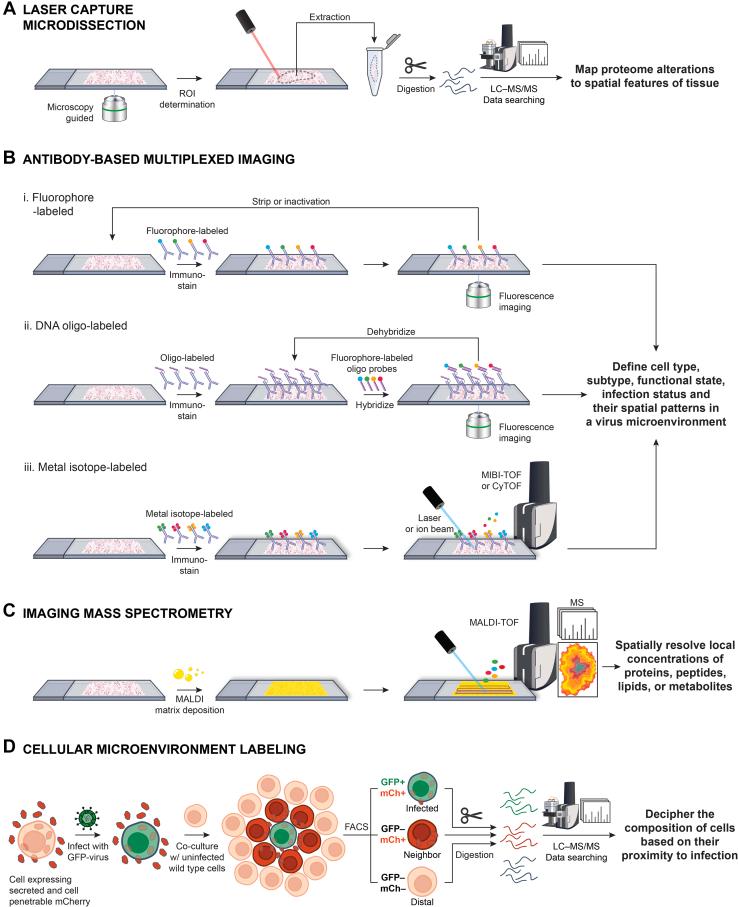
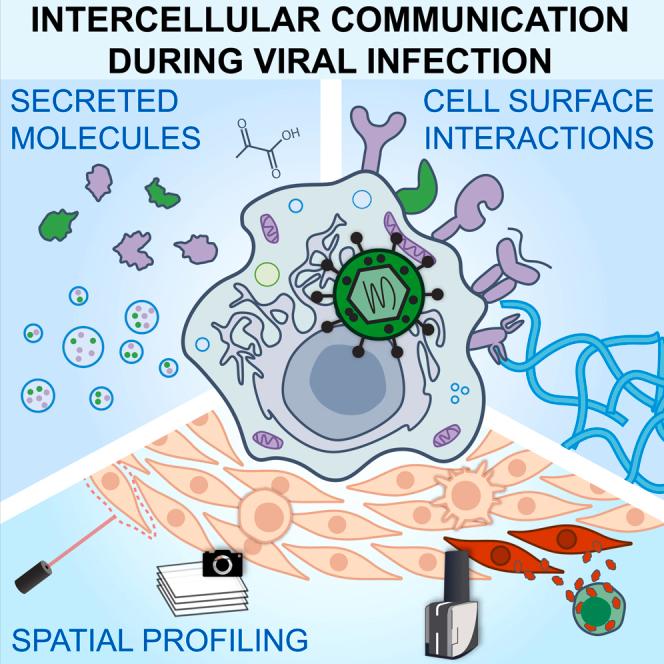
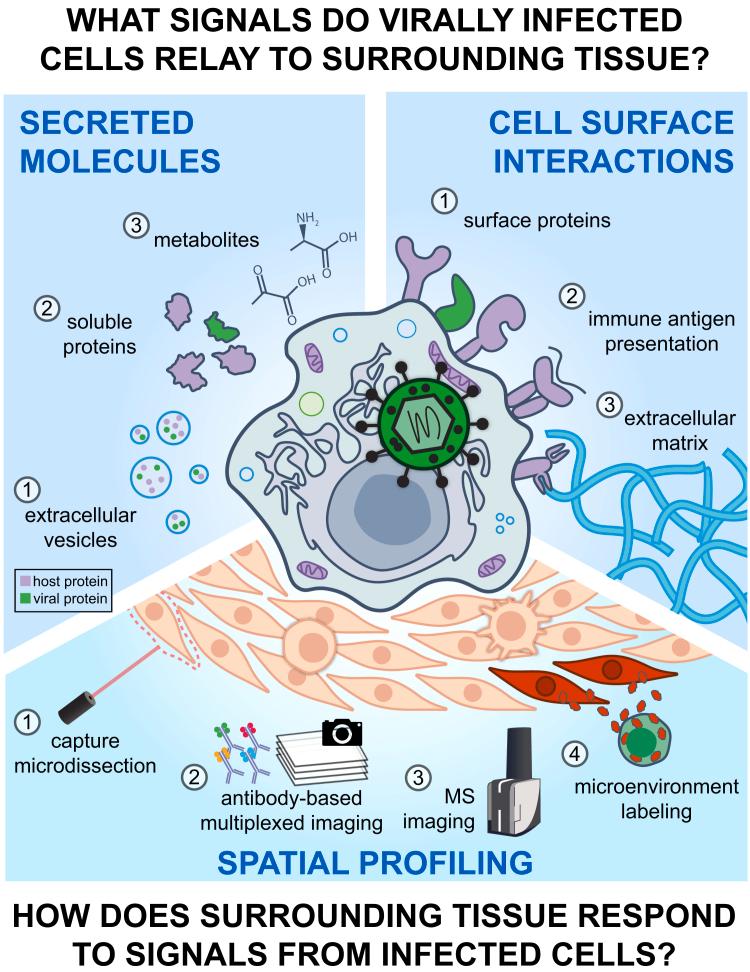
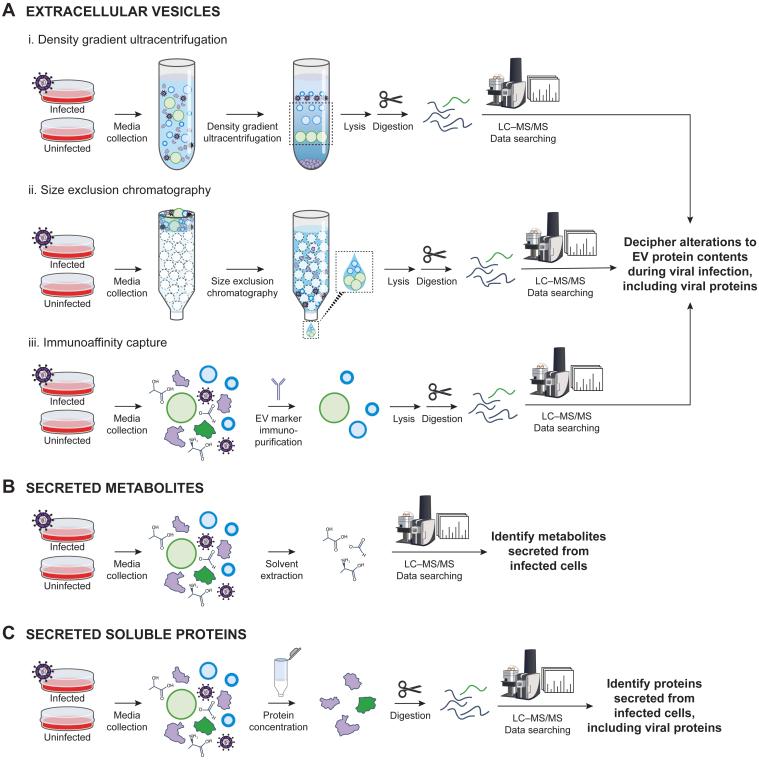
Intercellular communication is fundamental to multicellular life and a core determinant of outcomes during viral infection, where the common goals of virus and host for persistence and replication are generally at odds. Hosts rely on encoded innate and adaptive immune responses to detect and clear viral pathogens, while viruses can exploit or disrupt these pathways and other intercellular communication processes to enhance their spread and promote pathogenesis. While virus-induced signaling can result in systemic changes to the host, striking alterations are observed within the cellular microenvironment directly surrounding a site of infection, termed the virus microenvironment (VME). Mechanisms employed by viruses to condition their VMEs are emerging and are critical for understanding the biology and pathologies of viral infections. Recent advances in experimental approaches, including proteomic methods, have enabled study of the VME in unprecedented detail. In this review article, we provide a primer on proteomic approaches used to study how viral infections alter intercellular communication, highlighting the ways in which these approaches have been implemented and the exciting biology they have uncovered. First, we consider the different molecules secreted by an infected cell, including proteins, either soluble or contained within extracellular vesicles, and metabolites. We further discuss the modalities of interactions facilitated by alteration at the cell surface of infected cells, including immunopeptide presentation and interactions with the extracellular matrix. Finally, we review spatial profiling approaches that have allowed distinguishing how specific subpopulations of cells within a VME respond to infection and alter their protein composition, discussing valuable insights these methods have offered.
细胞间通讯是多细胞生物生存的基础,也是病毒感染过程中结果的核心决定因素,在这一过程中,病毒和宿主在持续存在和复制方面的共同目标通常相互矛盾。宿主依靠编码的先天性和适应性免疫反应来检测和清除病毒病原体,而病毒则可以利用或破坏这些途径以及其他细胞间通讯过程,以增强其传播并促进发病机制。虽然病毒诱导的信号传导可导致宿主发生全身性变化,但在感染部位直接周围的细胞微环境(称为病毒微环境,VME)中可观察到显著变化。病毒调节其VME的机制正在逐渐明晰,对于理解病毒感染的生物学和病理学至关重要。包括蛋白质组学方法在内的实验方法的最新进展,使得对VME的研究达到了前所未有的详细程度。在这篇综述文章中,我们提供了一份关于用于研究病毒感染如何改变细胞间通讯的蛋白质组学方法的入门指南,强调了这些方法的实施方式以及它们所揭示的令人兴奋的生物学现象。首先,我们考虑受感染细胞分泌的不同分子,包括蛋白质(可溶性或包含在细胞外囊泡中的)和代谢产物。我们进一步讨论受感染细胞表面变化所促进的相互作用方式,包括免疫肽呈递以及与细胞外基质的相互作用。最后,我们回顾了空间分析方法,这些方法能够区分VME内特定细胞亚群对感染的反应以及如何改变其蛋白质组成,并讨论了这些方法所提供的有价值的见解。

 Zotero 插件