
降低痴呆风险的生活方式干预措施:关于体育活动和饮食在西方国家及亚洲国家所起作用的综述
Lifestyle interventions for dementia risk reduction: A review on the role of physical activity and diet in Western and Asian Countries.
作者信息
Vidyanti Amelia Nur, Rahmawati Fitri, Rahman Rifki Habibi, Prodjohardjono Astuti, Gofir Abdul
机构信息
Department of Neurology, Faculty of Medicine, Public Health, and Nursing, Universitas Gadjah Mada, Indonesia/Dr Sardjto General Hospital Yogyakarta, Indonesia.
Neurology Research Office, Department of Neurology, Faculty of Medicine, Public Health, and Nursing, Universitas Gadjah Mada, Indonesia.
出版信息
J Prev Alzheimers Dis. 2025 Feb;12(2):100028. doi: 10.1016/j.tjpad.2024.100028. Epub 2025 Jan 1.
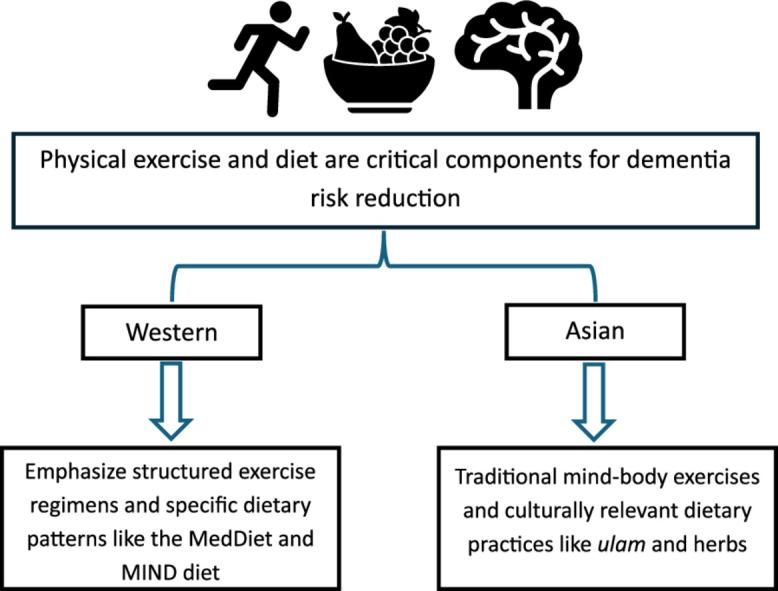
Dementia, is a critical global public health challenge with no effective pharmacological treatments. Recent research highlights the significant role of lifestyle interventions, particularly physical activity and dietary habits, in mitigating cognitive decline among the elderly and preventing the progression to dementia in individuals with Mild Cognitive Impairment (MCI). This comprehensive review explores the impact of physical exercise and dietary approaches on cognitive health, comparing strategies adopted in Western and Asian countries. Physical activity, including aerobic, resistance, balance training, and dual-task exercises, has been shown to enhance neurogenesis, improve cerebral blood flow, and delay cognitive decline. In Western countries, structured regimens such as the Mediterranean (MedDiet) and MIND diets are prominent, while Asian countries often integrate traditional mind-body practices like Tai Chi and culturally relevant diets rich in antioxidants and polyphenols. Although both regions recognize the importance of lifestyle changes in reducing dementia risk, their approaches differ significantly, shaped by cultural norms and dietary preferences. This review underscores the need for culturally tailored public health strategies to promote cognitive health globally, highlighting the importance of individualized approaches in MCI and dementia prevention.
痴呆症是一项严峻的全球公共卫生挑战,目前尚无有效的药物治疗方法。最近的研究强调了生活方式干预,特别是体育活动和饮食习惯,在减轻老年人认知衰退以及预防轻度认知障碍(MCI)患者发展为痴呆症方面的重要作用。这篇综述全面探讨了体育锻炼和饮食方式对认知健康的影响,比较了西方国家和亚洲国家所采用的策略。体育活动,包括有氧运动、抗阻训练、平衡训练和双任务练习,已被证明可以促进神经发生、改善脑血流量并延缓认知衰退。在西方国家,诸如地中海饮食(MedDiet)和MIND饮食等结构化饮食方案很突出,而亚洲国家则常常将太极拳等传统身心练习与富含抗氧化剂和多酚的具有文化特色的饮食相结合。尽管两个地区都认识到生活方式改变在降低痴呆症风险方面的重要性,但由于文化规范和饮食偏好的影响,它们的方法存在显著差异。这篇综述强调了需要制定适合不同文化的公共卫生策略以在全球范围内促进认知健康,突出了个性化方法在MCI和痴呆症预防中的重要性。
 Zotero 插件