
一种依赖鞭毛的巨型噬菌体可控制水稻幼苗腐烂,并朝着降低对水稻幼苗的毒力方向发展。
A flagella-dependent jumbo phage controls rice seedling rot and steers toward reduced virulence in rice seedlings.
作者信息
Supina Brittany S I, McCutcheon Jaclyn G, Peskett Sydney R, Stothard Paul, Dennis Jonathan J
机构信息
Department of Biological Sciences, College of Natural & Applied Sciences, University of Alberta, Edmonton, Alberta, Canada.
出版信息
mBio. 2025 Mar 12;16(3):e0281424. doi: 10.1128/mbio.02814-24. Epub 2025 Jan 27.
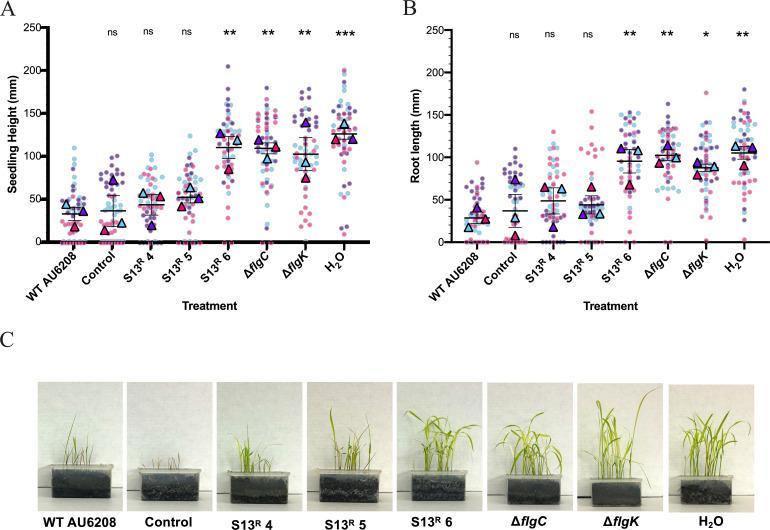
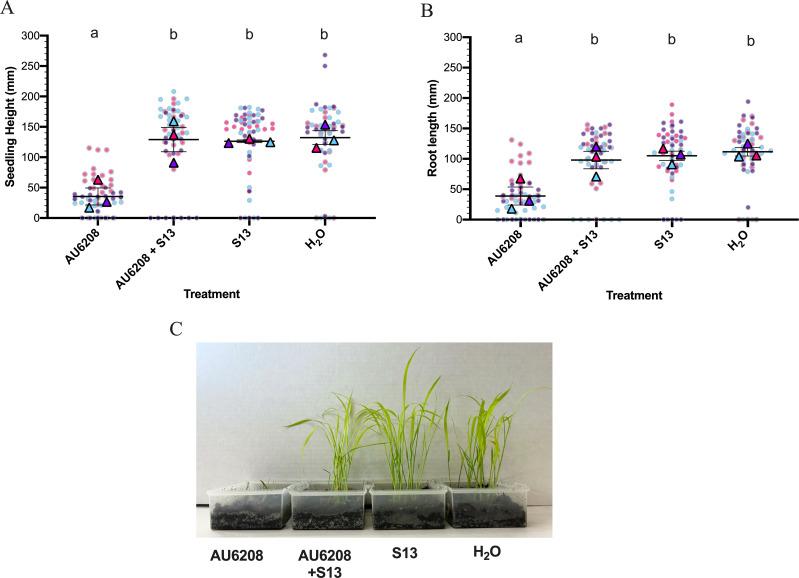
Bacteriophages (phages) are being investigated as potential biocontrol agents for the suppression of bacterial diseases in cultivated crops. Jumbo bacteriophages, which possess genomic DNA larger than 200 kbp, generally have a broader host range than other phages and therefore would be useful as biocontrol agents against a wide range of bacterial strains. Thus, the characterization of novel jumbo phages specific for agricultural pathogens would be of importance for the development of phage biocontrol strategies. Herein, we demonstrate that phage S13 requires flagella for its attachment and infection and that loss of flagella prevents S13 cellular lysis. As flagella is a known virulence factor, loss of flagella results in a surviving population of with reduced virulence. Further experimentation demonstrates that phage S13 can protect rice plants from -sponsored destruction in a rice seedling model of infection.IMPORTANCEBacterial plant pathogens threaten many major food crops and inflict large agricultural losses worldwide. is a bacterial plant pathogen that causes diseases such as rot, wilt, and blight in several food major crops including rice, tomato, hot pepper, and eggplant. infects rice during all developmental stages, causing diseases such as rice seedling rot and bacterial panicle blight (BPB). The incidence of rice plant infection is predicted to increase with warming global temperatures, and several different control strategies targeting are being explored. These include chemical and antibiotic soil amendment, microbiome manipulation, and the use of partially resistant rice cultivars. However, despite rice growth amelioration, the treatment options for plant infections remain limited to cultural practices. Alternatively, phage biocontrol represents a promising new method for eliminating from crop soils and improving rice yields.
噬菌体正作为抑制栽培作物细菌性疾病的潜在生物防治剂进行研究。巨型噬菌体的基因组DNA大于200kbp,通常比其他噬菌体具有更广泛的宿主范围,因此作为针对多种细菌菌株的生物防治剂将很有用。因此,鉴定针对农业病原体的新型巨型噬菌体对于噬菌体生物防治策略的开发具有重要意义。在此,我们证明噬菌体S13附着和感染需要鞭毛,并且鞭毛的缺失会阻止S13细胞裂解。由于鞭毛是一种已知的毒力因子,鞭毛的缺失会导致毒力降低的存活菌群体。进一步的实验表明,在水稻幼苗感染模型中,噬菌体S13可以保护水稻植株免受[病原菌名称]引起的破坏。
重要性
植物细菌性病原菌威胁着许多主要粮食作物,并在全球范围内造成巨大的农业损失。[病原菌名称]是一种植物细菌性病原菌,会在包括水稻、番茄、辣椒和茄子在内的几种主要粮食作物中引起腐烂、枯萎和疫病等疾病。[病原菌名称]在水稻的所有发育阶段都能感染,导致水稻幼苗腐烂和细菌性穗枯病(BPB)等疾病。预计随着全球气温升高,水稻植株感染[病原菌名称]的发生率会增加,目前正在探索几种针对[病原菌名称]的不同控制策略。这些策略包括化学和抗生素土壤改良、微生物群落操纵以及使用部分抗性水稻品种。然而,尽管水稻生长有所改善,但针对[病原菌名称]植物感染的治疗选择仍然仅限于栽培措施。另外,噬菌体生物防治是一种有前景的新方法,可从作物土壤中消除[病原菌名称]并提高水稻产量。


 Zotero 插件