
早年全氟烷基和多氟烷基物质暴露对儿童神经发育的影响:证据及研究空白综述
Effects of Early-life PFAS Exposure on Child Neurodevelopment: A Review of the Evidence and Research gaps.
作者信息
Ames Jennifer L, Sharma Vanshika, Lyall Kristen
机构信息
Division of Research, Kaiser Permanente, Pleasanton, CA, USA.
University of California, Berkeley, USA, CA.
出版信息
Curr Environ Health Rep. 2025 Jan 31;12(1):9. doi: 10.1007/s40572-024-00464-5.
PURPOSE OF REVIEW
Per- and polyfluoroalkyl substances (PFAS) are persistent chemicals with many modern applications, leading to widespread contamination and universal human exposure. PFAS exposure during early life is of particular concern, given susceptibility of the developing fetal and infant brain to toxic exposures. This review aims to synthesize current evidence, discuss methodological challenges, and highlight research gaps to guide future studies on the impact of PFAS on neurodevelopment.
RECENT FINDINGS
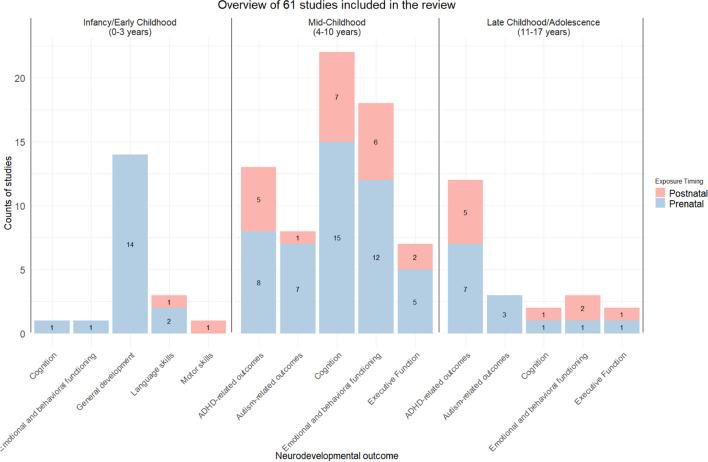
Sixty-one studies in total were published from 2008 to March 2024, with 35 in the last five years. Findings primarily link early life PFAS exposure to reduced cognitive, motor, and language development in infancy and increased behavioral issues like hyperactivity in childhood. Large studies have shown mixed results concerning child cognition, executive function, autism, and ADHD, with some indicating no association or unexpected protective findings. Sex-specific associations have been observed, but not consistently. Most research has addressed low-level exposure, suggesting subtle but potentially significant population-wide neurodevelopmental effects. Recent research also highlights concerns about newer, alternative PFAS, suggesting they too might affect neurodevelopment. The effects of early-life PFAS exposure on neurodevelopment merit further study, particularly the cumulative effects of prenatal and postnatal exposures. Research has not fully explored sensitive subgroups or potential mitigating factors such as breastfeeding and nutrient intake, which will require larger, more diverse samples. Future directions include deeper study of PFAS mixtures, interactions with other neurotoxic environmental chemicals, and effects of newer PFAS types. There is also a need to focus on neuropsychological functioning in later childhood, using direct assessments for more reliable evaluations.
综述目的
全氟和多氟烷基物质(PFAS)是具有多种现代应用的持久性化学物质,导致广泛污染和人类普遍暴露。鉴于发育中的胎儿和婴儿大脑对有毒暴露的易感性,生命早期接触PFAS尤其令人担忧。本综述旨在综合当前证据,讨论方法学挑战,并突出研究空白,以指导未来关于PFAS对神经发育影响的研究。
最新发现
2008年至2024年3月共发表了61项研究,其中35项是在过去五年发表的。研究结果主要将生命早期PFAS暴露与婴儿期认知、运动和语言发育迟缓以及儿童期多动等行为问题增加联系起来。大型研究在儿童认知、执行功能、自闭症和注意力缺陷多动障碍方面显示出混合结果,一些研究表明没有关联或有意外的保护作用。观察到了性别特异性关联,但并不一致。大多数研究关注的是低水平暴露,表明对全人群有微妙但可能很显著的神经发育影响。最近的研究还强调了对新型替代PFAS的担忧,表明它们也可能影响神经发育。生命早期PFAS暴露对神经发育的影响值得进一步研究,特别是产前和产后暴露的累积影响。研究尚未充分探索敏感亚组或潜在的缓解因素,如母乳喂养和营养摄入,这将需要更大、更多样化的样本。未来的方向包括更深入地研究PFAS混合物、与其他神经毒性环境化学物质的相互作用以及新型PFAS类型的影响。还需要关注儿童后期的神经心理功能,使用直接评估进行更可靠的评估。

 Zotero 插件