
用于肾脏评估的计算机算法提高了住院患者肾功能损害的诊断准确性。
The computerized algorithm for renal assessment improves diagnostic accuracy of renal impairment in hospitalized patients.
作者信息
Chen Chun-You, Chang Te-I, Chen Cheng-Hsien, Hsu Shih-Chang, Chu Yen-Ling, Huang Nai-Jen, Sue Yuh-Mou, Chen Tso-Hsiao, Huang Po-Hsun, Liu Chung-Te, Hsieh Hui-Ling
机构信息
Department of Radiation Oncology, Wan Fang Hospital, Taipei Medical University, Taipei, Taiwan.
Department of Surgery, School of Medicine, College of Medicine, Taipei Medical University, Taipei, Taiwan.
出版信息
Sci Rep. 2025 Jan 31;15(1):3856. doi: 10.1038/s41598-025-87424-7.
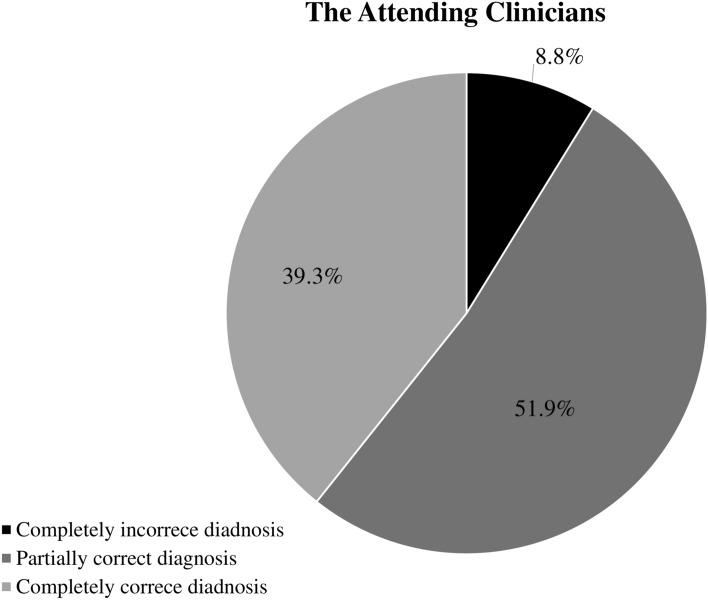
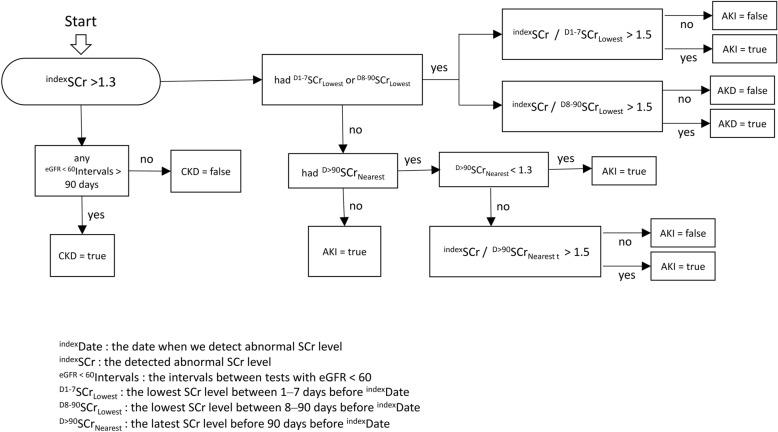
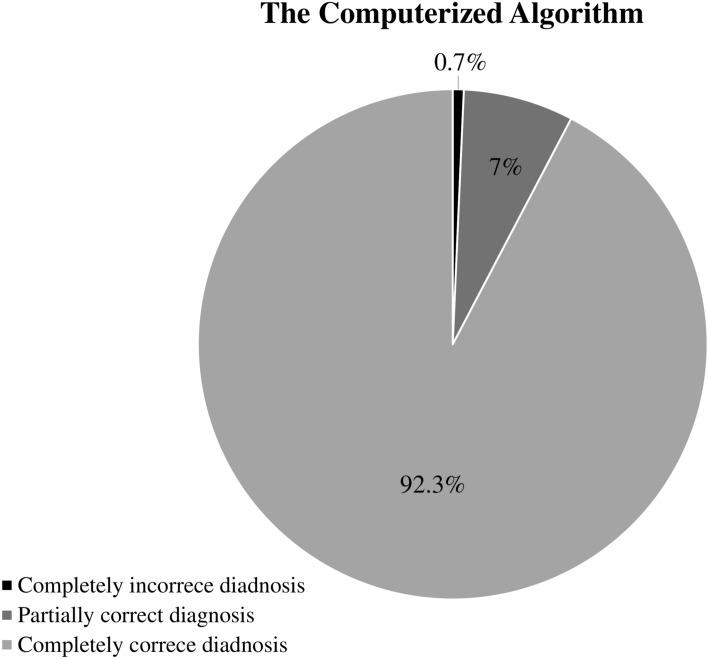
In hospitalized patients, acute kidney injury (AKI) is an important adverse event associated with high mortality and medical costs. Accurate diagnosis and timely management of AKI are essential for improving the outcomes of in-hospital AKI, and delayed diagnosis or misdiagnosis hinders advancements in AKI care. To ameliorate this problem, several electronic AKI alert systems have been proposed but have shown inconsistent effects on AKI outcomes. Before electronic systems can improve AKI outcomes, it is important to confirm their diagnostic accuracy. The purposes of the present study were to establish an easy-to-construct computerized algorithm for the diagnosis of renal impairment and to test its accuracy. The present study retrospectively included 1551 patients hospitalized in Wanfang Hospital with serum creatinine (SCr) levels > 1.3 mg/dL. A computerized algorithm was constructed to identify AKI events and chronic kidney disease (CKD) in these patients. Previous SCr tests were reviewed to define baseline SCr levels. A SCr level increased > 1.5 times from baseline was defined as AKI. An estimated glomerular filtration rate (eGFR) of < 60 mL/min/1.73 m for > 90 days was defined as CKD. Discharge diagnoses made by the attending physicians were defined as "clinician's diagnoses." The researcher's diagnoses, made by experienced nephrologists according to the same criteria, were the gold standard to which the computerized algorithms and the clinician's diagnoses were compared. The diagnoses made by the computerized algorithm and clinician were compared with the researcher's diagnoses to define their accuracy. Among the included patients, the mean age was 73.0 years; in-hospital mortality was 14.8%, and AKI was present in 28.6% of patients. Regarding the diagnostic accuracy for AKI, the computerized algorithm achieved a sensitivity of 85.6% and a specificity of 98.8%. The main cause of false-negative (FN) AKI diagnosis was AKI occurring prior to the outpatient visit, before the indexed hospitalization. Regarding the diagnostic accuracy for CKD, the computerized algorithm achieved a sensitivity of 94.7% and specificity of 100%. The main cause of FN CKD diagnosis was the lack of previous eGFR records. The computerized algorithm exhibited significantly superior accuracy compared to the clinician's diagnoses for both AKI (95.0% vs. 57.0%) and CKD (96.5% vs. 73.6%). We developed a simple and easy-to-construct computerized algorithm for the diagnosis of renal impairment that demonstrated significantly improved diagnostic accuracy for AKI and CKD compared to that of clinicians. In the future, an algorithmic approach for the differential diagnosis of AKI and a decision guide should be incorporated into this system.
在住院患者中,急性肾损伤(AKI)是一种重要的不良事件,与高死亡率和医疗成本相关。准确诊断和及时处理AKI对于改善院内AKI的治疗结果至关重要,而延迟诊断或误诊会阻碍AKI治疗的进展。为改善这一问题,已提出了几种电子AKI警报系统,但对AKI结局的影响并不一致。在电子系统能够改善AKI结局之前,确认其诊断准确性很重要。本研究的目的是建立一种易于构建的用于诊断肾功能损害的计算机算法,并测试其准确性。本研究回顾性纳入了1551例在万方医院住院且血清肌酐(SCr)水平>1.3mg/dL的患者。构建了一种计算机算法来识别这些患者中的AKI事件和慢性肾脏病(CKD)。回顾先前的SCr检测结果以确定基线SCr水平。SCr水平较基线升高>1.5倍被定义为AKI。估算肾小球滤过率(eGFR)<60mL/min/1.73m²持续>90天被定义为CKD。主治医生做出的出院诊断被定义为“临床医生诊断”。由经验丰富的肾病学家根据相同标准做出的研究者诊断是计算机算法和临床医生诊断所比较的金标准。将计算机算法和临床医生做出的诊断与研究者诊断进行比较以确定其准确性。纳入的患者中,平均年龄为73.0岁;住院死亡率为14.8%,28.6%的患者存在AKI。关于AKI的诊断准确性,计算机算法的敏感性为85.6%,特异性为98.8%。AKI诊断假阴性(FN)的主要原因是在门诊就诊前、索引住院之前发生的AKI。关于CKD的诊断准确性,计算机算法的敏感性为94.7%,特异性为100%。CKD诊断FN的主要原因是缺乏先前的eGFR记录。与临床医生的诊断相比,计算机算法在AKI(95.0%对57.0%)和CKD(96.5%对73.6%)的诊断准确性方面均表现出显著优势。我们开发了一种简单且易于构建的用于诊断肾功能损害的计算机算法,与临床医生相比,该算法对AKI和CKD的诊断准确性有显著提高。未来,应将AKI鉴别诊断的算法方法和决策指南纳入该系统。
 Zotero 插件