
汉堡港地区的微塑料——德国易北河上游沉积物深度剖面分析
Microplastics in the Hamburg port area-an analysis of sediment depth profiles along the upper Elbe river, Germany.
作者信息
Motyl Larissa, Fischer Elke Kerstin
机构信息
Microplastic Research at CEN (MRC, Center for Earth System Research and Sustainability), Universität Hamburg, Bundesstrasse 55, 20146, Hamburg, Germany.
出版信息
Environ Sci Pollut Res Int. 2025 Feb;32(8):4825-4840. doi: 10.1007/s11356-025-35972-w. Epub 2025 Feb 1.
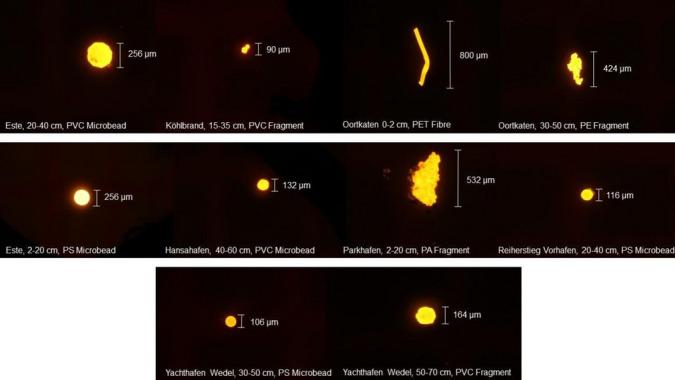
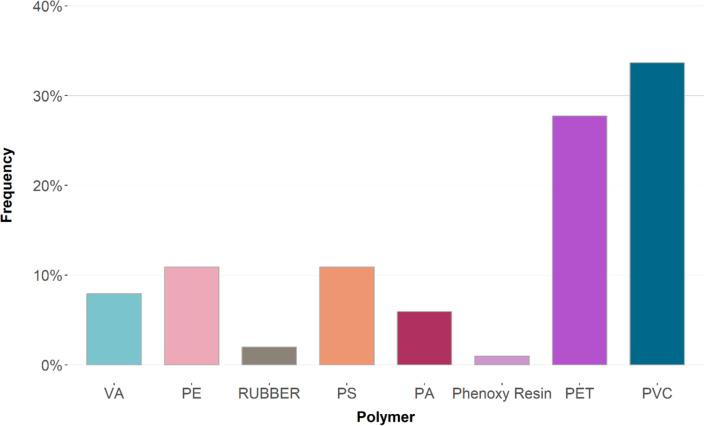
Harbours pose a unique environment of increased anthropogenic pressure and artificial river morphology that are of specific interest concerning microplastic release and accumulation. To address the specific situation in the Hamburg port area, a study in cooperation with the Hamburg Port Authority (HPA) was conducted. Sediment samples at different depth levels were taken at seven sites with similar flow velocity and underlying morphology. Two sites are located upstream and downstream of the port of Hamburg, while four sites are located in the centre area of the port. One additional site takes into account an estuary of a receiving stream flowing into the upper river Elbe. For the analysis of microplastic concentrations in the samples, the biogenic organic matter was removed by oxidative digestion followed by wet sieving and density separation. For identification, the Nile red staining method in combination with fluorescence microscopy was applied. A subset of identified synthetic polymers was investigated for polymer composition via µRaman spectroscopy. In addition, sediment parameters such as grain size distribution, organic matter and water content were analysed. In total, a number of 31 sediment samples divided into different depths below riverbed level were examined. In brief, 11,280 microplastic particles could be identified. Both the highest and lowest number of particles were detected at centre port sites ranging from 60 to 21,799 microplastics per kilogramme dry weight. Fragments are the dominating particle morphology throughout all locations, except for one centre harbour site where microbeads are most common. Frequently appearing synthetic polymers were detected to be polyvinyl chloride (34%) and polyethylene terephthalate (28%). Within this study, a significant correlation between microbead concentrations and the percentage of sand fractions (coarse, middle and fine sand) was detected.
港口构成了一个独特的环境,人为压力增加且河流形态人工化,这在微塑料的释放和积累方面具有特殊意义。为了解决汉堡港区的具体情况,与汉堡港务局(HPA)合作开展了一项研究。在七个流速和底层形态相似的地点采集了不同深度的沉积物样本。两个地点位于汉堡港的上游和下游,而四个地点位于港口中心区域。另外一个地点考虑了一条流入易北河上游的接收河流的河口。为了分析样本中的微塑料浓度,通过氧化消化去除生物源有机物质,然后进行湿筛和密度分离。为了进行鉴定,采用了尼罗红染色法结合荧光显微镜。通过μ拉曼光谱对一部分已鉴定的合成聚合物进行了聚合物组成研究。此外,还分析了沉积物参数,如粒度分布、有机质和含水量。总共检查了31个分为河床以下不同深度的沉积物样本。简而言之,可以识别出11280个微塑料颗粒。在港口中心区域检测到的颗粒数量最多和最少,每千克干重的微塑料数量在60至21799个之间。在所有地点,碎片都是主要的颗粒形态,但有一个港口中心地点除外,那里微珠最为常见。检测到经常出现的合成聚合物是聚氯乙烯(34%)和聚对苯二甲酸乙二酯(28%)。在这项研究中,检测到微珠浓度与砂粒级分(粗砂、中砂和细砂)百分比之间存在显著相关性。
 Zotero 插件