
通过基于生理药代动力学(PBPK)建模优化注射曲线实现个性化节律性放射性药物治疗。
Personalized metronomic radiopharmaceutical therapy through injection profile optimization via physiologically based pharmacokinetic (PBPK) modeling.
作者信息
Golzaryan Aryan, Soltani M, Moradi Kashkooli Farshad, Saboury Babak, Rahmim Arman
机构信息
Department of Mechanical Engineering, K. N. Toosi University of Technology, Tehran, Iran.
Department of Electrical and Computer Engineering, University of Waterloo, Waterloo, ON, Canada.
出版信息
Sci Rep. 2025 Feb 3;15(1):4052. doi: 10.1038/s41598-025-86159-9.
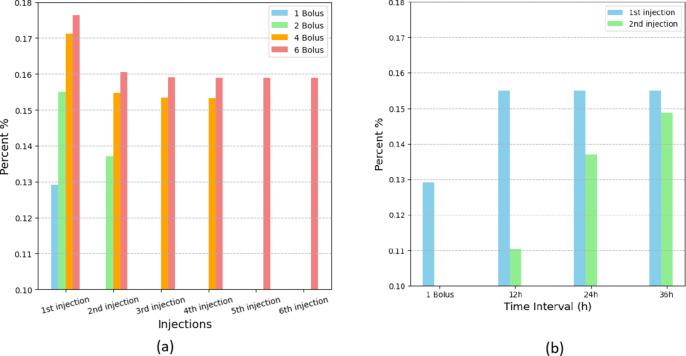
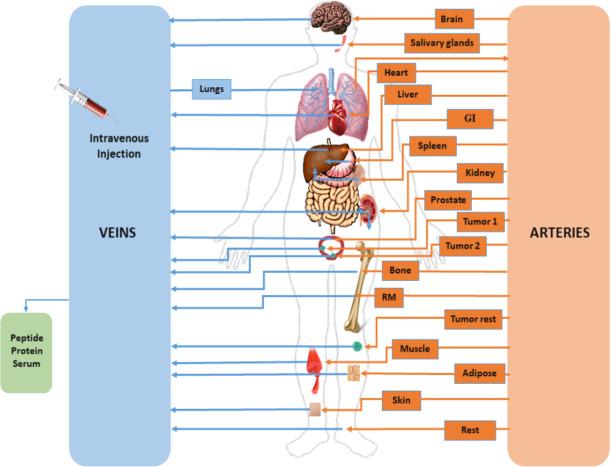
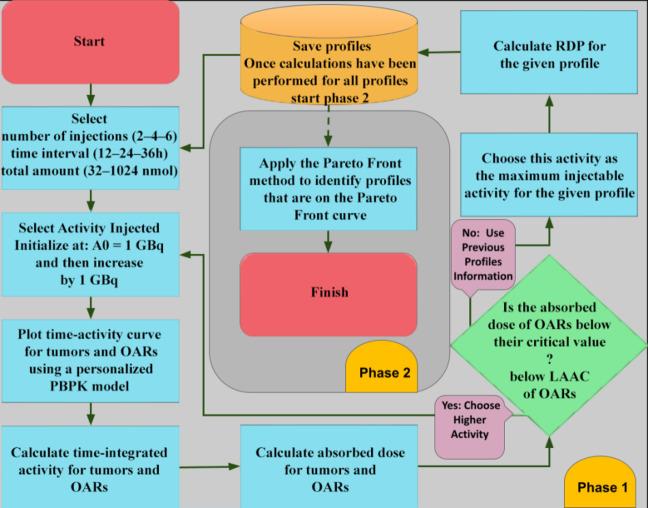
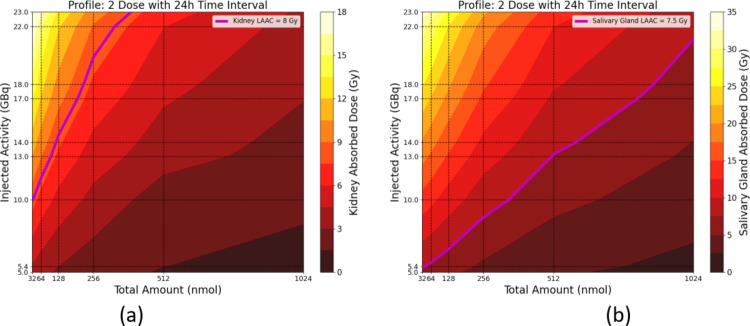
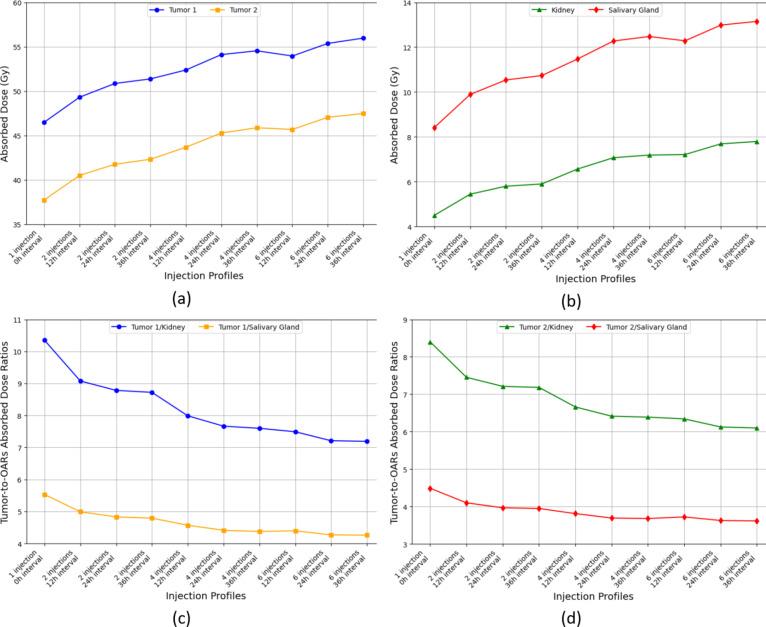
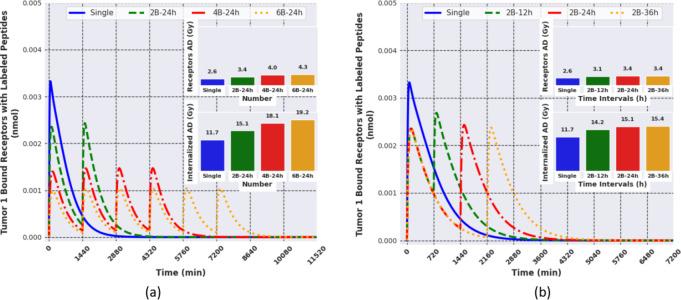
Each treatment cycle of radiopharmaceutical therapy (RPT) is administered as a single dose. We aimed to investigate a personalized metronomic RPT paradigm, employing multiple lower-dose administrations, to evaluate its effect on delivering radiopharmaceuticals to tumors. We developed a physiologically-based pharmacokinetic (PBPK) model applied to metastatic castration-resistant prostate cancer patients to analyze the impact of metronomic framework and various infusion durations (1-4 h) on absorbed doses (ADs) in tumors and organ-at-risk (OAR). We designed a treatment algorithm to select optimal regimens with high AD, while investigating what we term radiopharmaceutical delivery payload (RDP). This metric evaluates the efficiency of radiopharmaceutical delivery by quantifying the proportion of the administered dose that successfully reaches the target tissue. The goal is to optimize trade-offs between RDP and tumors-AD among injection profiles, amongst varying radioactivity (1-22GBq), total radiopharmaceutical mass (2-2nmol), number of injections (2-6), and time intervals (12-36 h) between injections. Our framework applied to five patients led to increased AD between 2 and 358 Gy (between 2 and 146%) higher than normally administered to patients, safeguarding OARs. Using single-dose scenarios to match ADs in metronomic approach, led to significant increase in injected activities, requiring injection of 0 to 9GBq additional activity (reducing RDP by 3-75%). Maintaining total administered radioactivity within clinically therapeutic levels, increasing frequency, time interval, and infusion duration increases tumors and OARs AD by 0.05-73%, while it decreased tumors-to-OARs AD ratios by 0.1-30%. Based on the PBPK modeling approach, metronomic RPT appears to improve efficacy (RDP) in delivered doses to tumors for a given total injected radioactivity.
放射性药物治疗(RPT)的每个治疗周期均作为单剂量给药。我们旨在研究一种个性化的节律性RPT模式,采用多次低剂量给药,以评估其对将放射性药物递送至肿瘤的效果。我们开发了一种基于生理学的药代动力学(PBPK)模型,应用于转移性去势抵抗性前列腺癌患者,以分析节律性给药框架和不同输注持续时间(1 - 4小时)对肿瘤和危及器官(OAR)吸收剂量(AD)的影响。我们设计了一种治疗算法,以选择具有高AD的最佳方案,同时研究我们所称的放射性药物递送有效载荷(RDP)。该指标通过量化成功到达靶组织的给药剂量比例来评估放射性药物递送的效率。目标是在不同的注射方案中,在不同的放射性活度(1 - 22GBq)、总放射性药物质量(2 - 2nmol)、注射次数(2 - 6次)以及注射间隔时间(12 - 36小时)之间,优化RDP与肿瘤AD之间的权衡。我们应用于五名患者的框架导致AD增加2至358 Gy(比通常给予患者的剂量高2至146%),同时保护了OAR。在节律性给药方法中使用单剂量方案来匹配AD,导致注射活度显著增加,需要额外注射0至9GBq的活度(使RDP降低3 - 75%)。在将总给药放射性活度维持在临床治疗水平内,增加给药频率、时间间隔和输注持续时间,可使肿瘤和OAR的AD增加0.05 - 73%,同时使肿瘤与OAR的AD比值降低0.1 - 30%。基于PBPK建模方法,对于给定的总注射放射性活度,节律性RPT似乎能提高向肿瘤递送剂量的疗效(RDP)。

 Zotero 插件