
从湿实验室到人工智能的转变:对CRISPR中人工智能预测因子的系统综述
Transitioning from wet lab to artificial intelligence: a systematic review of AI predictors in CRISPR.
作者信息
Abbasi Ahtisham Fazeel, Asim Muhammad Nabeel, Dengel Andreas
机构信息
Smart Data and Knowledge Services, German Research Center for Artificial Intelligence, 67663, Kaiserslautern, Germany.
Department of Computer Science, Rhineland-Palatinate Technical University Kaiserslautern-Landau, 67663, Kaiserslautern, Germany.
出版信息
J Transl Med. 2025 Feb 4;23(1):153. doi: 10.1186/s12967-024-06013-w.
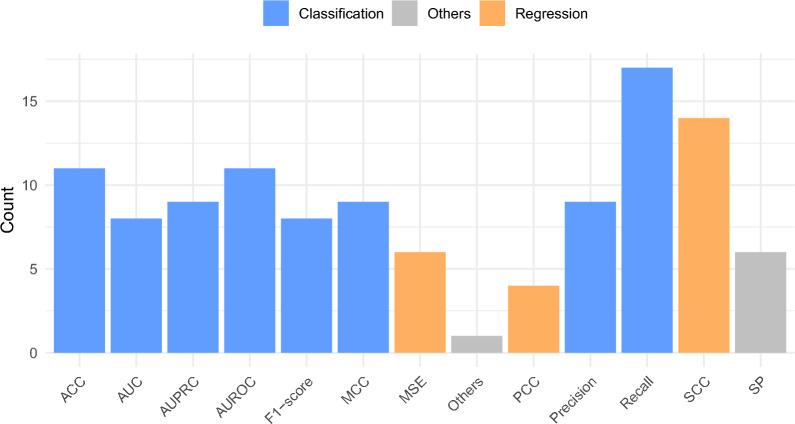
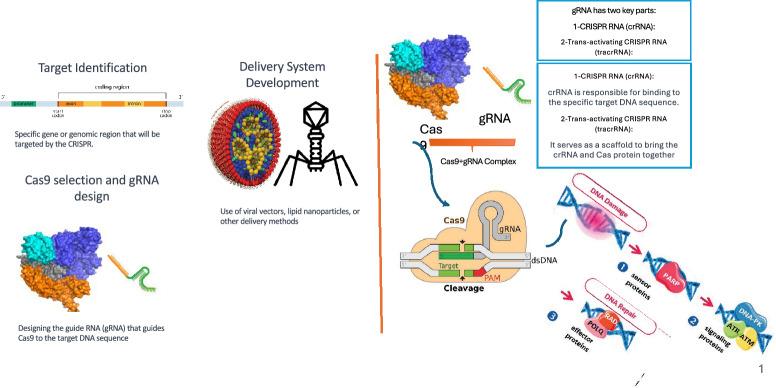
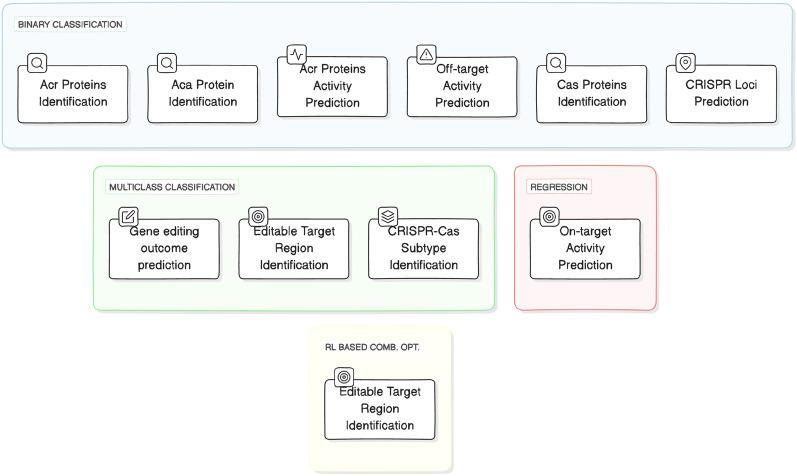
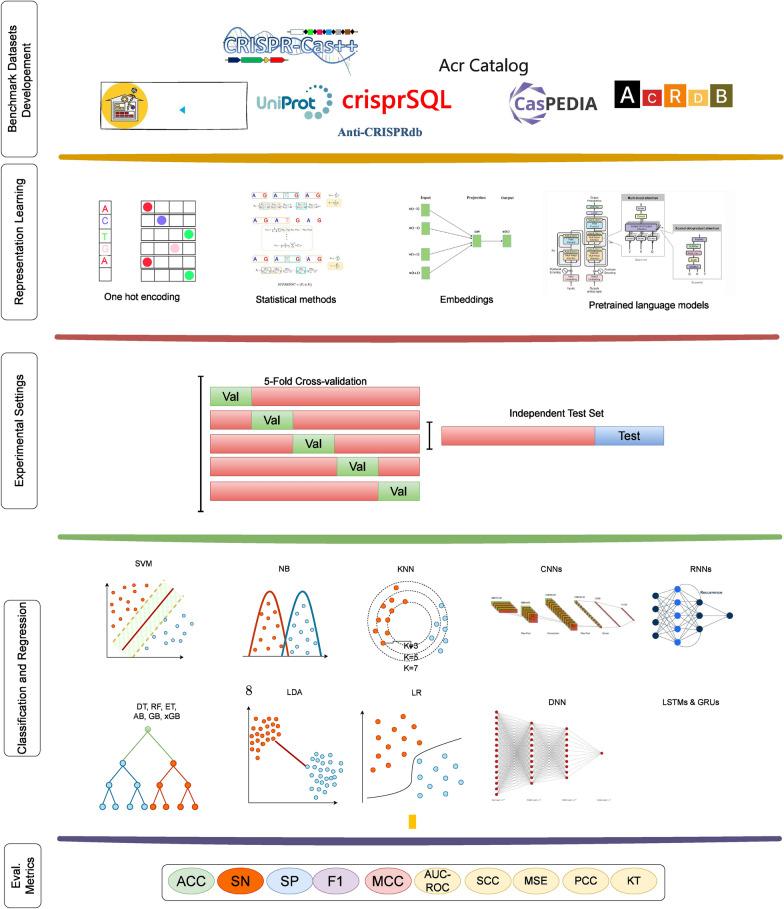
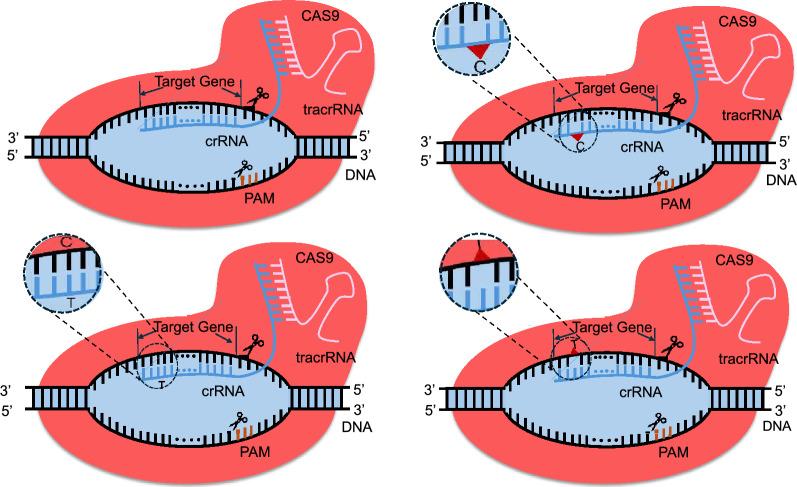
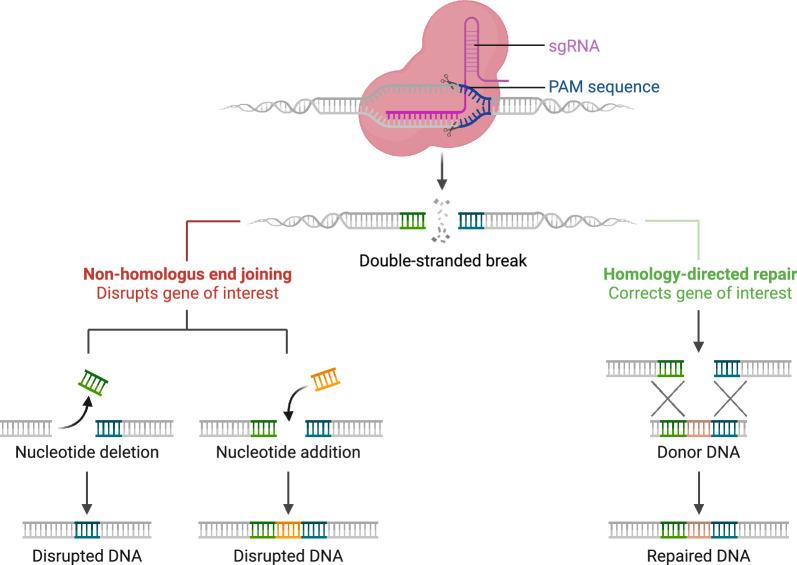
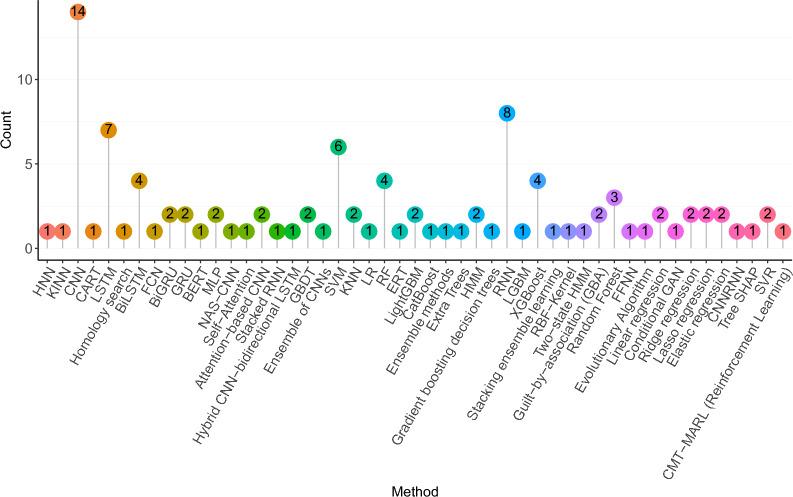
The revolutionary CRISPR-Cas9 system leverages a programmable guide RNA (gRNA) and Cas9 proteins to precisely cleave problematic regions within DNA sequences. This groundbreaking technology holds immense potential for the development of targeted therapies for a wide range of diseases, including cancers, genetic disorders, and hereditary diseases. CRISPR-Cas9 based genome editing is a multi-step process such as designing a precise gRNA, selecting the appropriate Cas protein, and thoroughly evaluating both on-target and off-target activity of the Cas9-gRNA complex. To ensure the accuracy and effectiveness of CRISPR-Cas9 system, after the targeted DNA cleavage, the process requires careful analysis of the resultant outcomes such as indels and deletions. Following the success of artificial intelligence (AI) in various fields, researchers are now leveraging AI algorithms to catalyze and optimize the multi-step process of CRISPR-Cas9 system. To achieve this goal AI-driven applications are being integrated into each step, but existing AI predictors have limited performance and many steps still rely on expensive and time-consuming wet-lab experiments. The primary reason behind low performance of AI predictors is the gap between CRISPR and AI fields. Effective integration of AI into multi-step CRISPR-Cas9 system demands comprehensive knowledge of both domains. This paper bridges the knowledge gap between AI and CRISPR-Cas9 research. It offers a unique platform for AI researchers to grasp deep understanding of the biological foundations behind each step in the CRISPR-Cas9 multi-step process. Furthermore, it provides details of 80 available CRISPR-Cas9 system-related datasets that can be utilized to develop AI-driven applications. Within the landscape of AI predictors in CRISPR-Cas9 multi-step process, it provides insights of representation learning methods, machine and deep learning methods trends, and performance values of existing 50 predictive pipelines. In the context of representation learning methods and classifiers/regressors, a thorough analysis of existing predictive pipelines is utilized for recommendations to develop more robust and precise predictive pipelines.
革命性的CRISPR-Cas9系统利用可编程的引导RNA(gRNA)和Cas9蛋白精确切割DNA序列中的问题区域。这项开创性技术在开发针对多种疾病(包括癌症、遗传疾病和遗传性疾病)的靶向治疗方面具有巨大潜力。基于CRISPR-Cas9的基因组编辑是一个多步骤过程,例如设计精确的gRNA、选择合适的Cas蛋白,以及全面评估Cas9-gRNA复合物的靶向和脱靶活性。为确保CRISPR-Cas9系统的准确性和有效性,在靶向DNA切割后,该过程需要仔细分析产生的结果,如插入缺失和缺失。继人工智能(AI)在各个领域取得成功之后,研究人员现在正在利用AI算法来催化和优化CRISPR-Cas9系统的多步骤过程。为实现这一目标,AI驱动的应用程序正被集成到每个步骤中,但现有的AI预测器性能有限,许多步骤仍依赖于昂贵且耗时的湿实验室实验。AI预测器性能低下的主要原因是CRISPR和AI领域之间的差距。将AI有效整合到多步骤CRISPR-Cas9系统中需要对这两个领域有全面的了解。本文弥合了AI与CRISPR-Cas9研究之间的知识差距。它为AI研究人员提供了一个独特的平台,以深入理解CRISPR-Cas9多步骤过程中每个步骤背后的生物学基础。此外,它还提供了80个可用的与CRISPR-Cas9系统相关的数据集的详细信息,这些数据集可用于开发AI驱动的应用程序。在CRISPR-Cas9多步骤过程中的AI预测器领域,它提供了表示学习方法、机器学习和深度学习方法趋势以及现有50个预测管道的性能值的见解。在表示学习方法和分类器/回归器的背景下,对现有预测管道进行了全面分析,以提出建议,开发更强大、更精确的预测管道。

 Zotero 插件