
房水代谢组学分析揭示了假性剥脱综合征的独特特征。
Aqueous humor metabolomic profiling identifies a distinct signature in pseudoexfoliation syndrome.
作者信息
Zemitis Arturs, Vanags Juris, Schiemer Theresa, Klavins Kristaps, Laganovska Guna
机构信息
Department of Ophthalmology, Riga Stradins University, Riga, Latvia.
Pauls Stradins Clinical University Hospital, Clinic of Ophthalmology, Riga, Latvia.
出版信息
Front Mol Biosci. 2025 Jan 23;11:1487115. doi: 10.3389/fmolb.2024.1487115. eCollection 2024.
PURPOSE
PEXS was first described in 1917, yet its etiology still needs clarification. An imbalance between oxidants and antioxidants plays a significant role. PEXS leads to various ocular complications, including increased risk during cataract surgery due to weak zonules, lens dislocation, and reduced visual outcomes. Our study investigates whether metabolomics can provide insights into this ocular pathology.
METHODS
The study included 183 patients undergoing cataract surgery at Pauls Stradins Clinical University Hospital. 104 patients did not have PEXS, while 79 were diagnosed with the condition. Intraocular fluid samples from these patients were analyzed using targeted metabolite analysis, performed through HILIC liquid chromatography coupled with mass spectrometry detection.
RESULTS
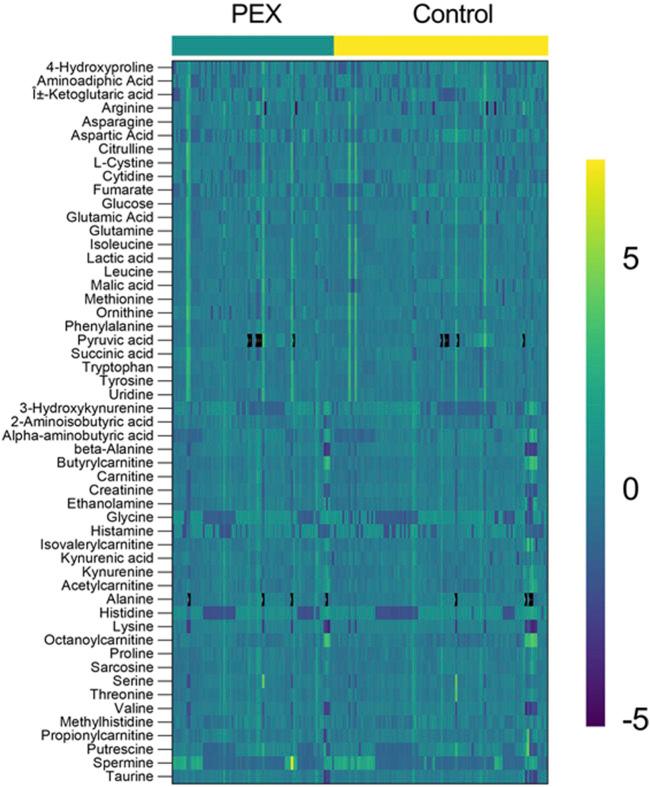
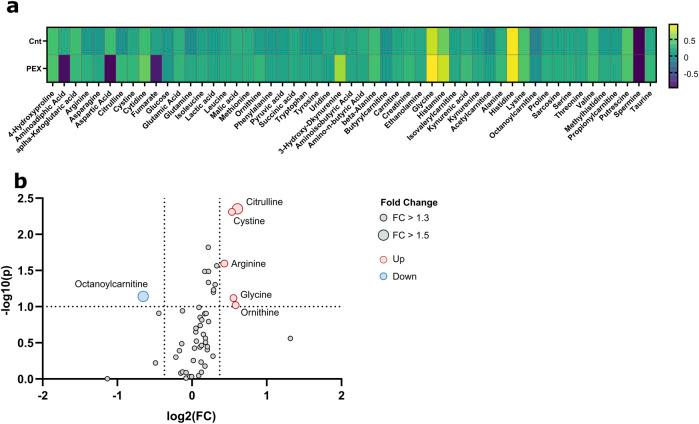
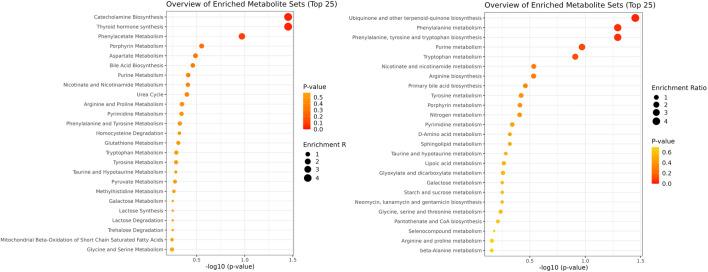
The aqueous humor of PEXS patients contains statistically significant higher levels of cystine ( < 0.001), citrulline ( < 0.001), phenylalanine ( = 0.041), tyrosine ( = 0.025), serine ( = 0.030), arginine ( = 0.017), lactic acid ( = 0.055), tryptophan ( = 0.055), and creatinine ( = 0.022). These results suggest a potential link to ferroptosis.
CONCLUSION
Ferroptosis is a form of programmed cell death characterized by iron-dependent LPO. The inhibition of the antiporter system X leads to increased oxidative stress, suggesting that the changes seen in PEXS could be linked to ferroptosis. Our findings indicate that cysteine synthesis occurs via the transsulfation pathway, attributable to inhibiting the antiporter system X . Treatment of pseudoexfoliation should lower the oxidative stress inside the anterior chamber by reducing the uptake of PUFAs, lower iron levels, and cysteine supplementation.
目的
PEXS最早于1917年被描述,但其病因仍需阐明。氧化剂和抗氧化剂之间的失衡起着重要作用。PEXS会导致各种眼部并发症,包括由于晶状体悬韧带薄弱、晶状体脱位和视力下降而在白内障手术期间风险增加。我们的研究调查代谢组学是否能为这种眼部病理学提供见解。
方法
该研究纳入了在保罗·斯特拉丁斯临床大学医院接受白内障手术的183名患者。104名患者没有PEXS,而79名被诊断患有该疾病。使用通过亲水相互作用液相色谱与质谱检测相结合进行的靶向代谢物分析,对这些患者的眼内液样本进行分析。
结果
PEXS患者的房水中胱氨酸(<0.001)、瓜氨酸(<0.001)、苯丙氨酸(=0.041)、酪氨酸(=0.025)、丝氨酸(=0.030)、精氨酸(=0.017)、乳酸(=0.055)、色氨酸(=0.055)和肌酐(=0.022)的水平在统计学上显著更高。这些结果表明与铁死亡存在潜在联系。
结论
铁死亡是一种程序性细胞死亡形式,其特征是铁依赖性脂质过氧化。反向转运体系统X的抑制导致氧化应激增加,这表明在PEXS中观察到的变化可能与铁死亡有关。我们的研究结果表明,半胱氨酸合成通过转硫途径发生,这归因于抑制反向转运体系统X。假性剥脱的治疗应通过减少多不饱和脂肪酸的摄取、降低铁水平和补充半胱氨酸来降低前房内的氧化应激。

 Zotero 插件