
莫迪克改变:从潜在分子机制到未来研究方向(综述)
Modic changes: From potential molecular mechanisms to future research directions (Review).
作者信息
Zhu Weijian, Yang Zhou, Zhou Sirui, Zhang Jinming, Xu Zhihao, Xiong Wei, Liu Ping
机构信息
Department of Orthopedics, Liyuan Hospital, Tongji Medical College, Huazhong University of Science and Technology, Wuhan, Hubei 430077, P.R. China.
Department of Orthopedics, Hongxin Harmony Hospital, Li Chuan, Hubei 445400 P.R. China.
出版信息
Mol Med Rep. 2025 Apr;31(4). doi: 10.3892/mmr.2025.13455. Epub 2025 Feb 7.
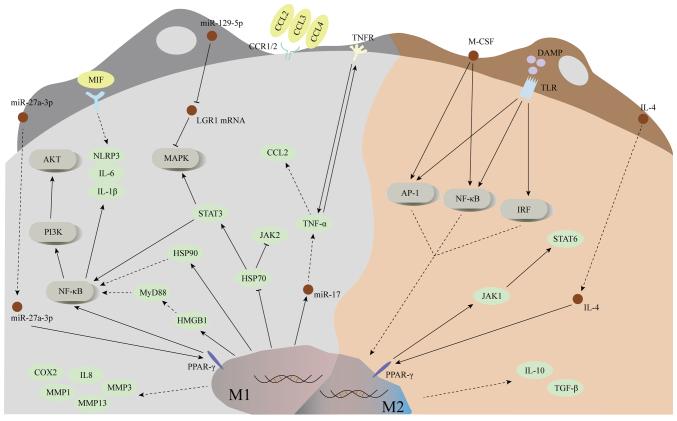
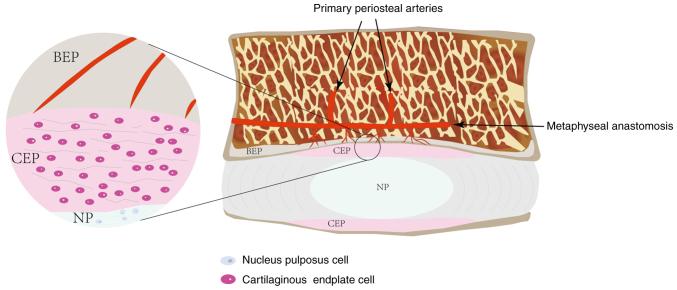
Low back pain (LBP) is a leading cause of disability worldwide. Although not all patients with Modic changes (MCs) experience LBP, MC is often closely associated with LBP and disc degeneration. In clinical practice, the focus is usually on symptoms related to MC, which are hypothesized to be associated with LBP; however, the link between MC and nerve compression remains unclear. In cases of intervertebral disc herniation, nerve compression is often the definitive cause of symptoms. Recent advances have shed light on the pathophysiology of MC, partially elucidating its underlying mechanisms. The pathogenesis of MC involves complex bone marrow‑disc interactions, resulting in bone marrow inflammation and edema. Over time, hematopoietic cells are gradually replaced by adipocytes, ultimately resulting in localized bone marrow sclerosis. This process creates a barrier between the intervertebral disc and the bone marrow, thereby enhancing the stability of the vertebral body. The latest understanding of the pathophysiology of MC suggests that chronic inflammation plays a significant role in its development and hypothesizes that the complement system may contribute to its pathological progression. However, this hypothesis requires further research to be confirmed. The present review we proposed a pathological model based on current research, encompassing the transition from Modic type 1 changes (MC1) to Modic type 2 changes (MC2). It discussed key cellular functions and their alterations in the pathogenesis of MC and outlined potential future research directions to further elucidate its mechanisms. Additionally, it reviewed the current clinical staging and pathogenesis of MC, recommended the development of an updated staging system and explored the prospects of integrating emerging artificial intelligence technologies.
下腰痛(LBP)是全球致残的主要原因。虽然并非所有患有Modic改变(MCs)的患者都会经历下腰痛,但MC通常与下腰痛和椎间盘退变密切相关。在临床实践中,重点通常放在与MC相关的症状上,这些症状被认为与下腰痛有关;然而,MC与神经受压之间的联系仍不清楚。在椎间盘突出症病例中,神经受压往往是症状的决定性原因。最近的进展揭示了MC的病理生理学,部分阐明了其潜在机制。MC的发病机制涉及复杂的骨髓-椎间盘相互作用,导致骨髓炎症和水肿。随着时间的推移,造血细胞逐渐被脂肪细胞取代,最终导致局部骨髓硬化。这个过程在椎间盘和骨髓之间形成了一道屏障,从而增强了椎体的稳定性。对MC病理生理学的最新认识表明,慢性炎症在其发展中起重要作用,并推测补体系统可能促成其病理进展。然而,这一假设需要进一步研究来证实。本综述基于当前研究提出了一个病理模型,涵盖了从Modic 1型改变(MC1)到Modic 2型改变(MC2)的转变。它讨论了MC发病机制中的关键细胞功能及其改变,并概述了未来进一步阐明其机制的潜在研究方向。此外,它回顾了MC的当前临床分期和发病机制,建议开发一个更新的分期系统,并探讨了整合新兴人工智能技术的前景。


 Zotero 插件