
1990年至2021年全球及中国女性肺癌疾病负担的趋势与预测:一项基于2021年全球疾病负担数据库的研究
Global and China trends and forecasts of disease burden for female lung Cancer from 1990 to 2021: a study based on the global burden of disease 2021 database.
作者信息
Li Bilu, Wu Yuyan, Zhang Yanhong, Hu Chengyun, Li Xue, Luo Shanshan, Sun Chenyu, Yousef Iyad, Wang Yefei, Tang Chaoliang
机构信息
Department of Anesthesiology, Division of Life Sciences and Medicine, The First Affiliated Hospital of USTC, University of Science and Technology of China, Hefei, Anhui Province, China.
Department of Anesthesiology, Anhui Provincial Cancer Hospital, Hefei, Anhui Province, China.
出版信息
J Cancer Res Clin Oncol. 2025 Feb 8;151(2):68. doi: 10.1007/s00432-025-06084-2.
BACKGROUND
In recent years, due to various risk factors, the incidence, prevalence, and mortality rates of female lung cancer have been increasing in both China and globally. This has become a significant public health challenge worldwide. Lung cancer not only poses a severe threat to women's health but also places a heavy burden on families and society.
OBJECTIVE
To conduct an in-depth analysis of the trends in disease burden for female lung cancer in China and globally from 1990 to 2021 and to forecast the next 15 years (2022-2037). The aim is to provide a reliable theoretical basis and reference value for clinical research and practice in female lung cancer and offer guidance for resource allocation and policy-making in society.
METHODS
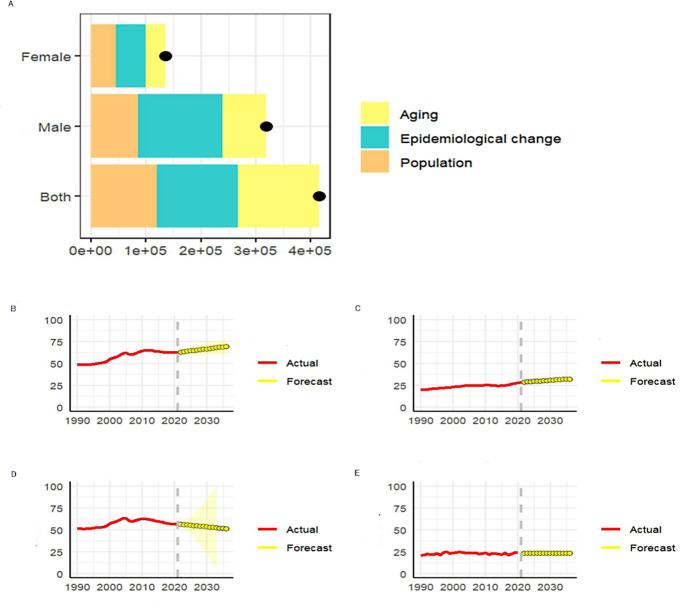
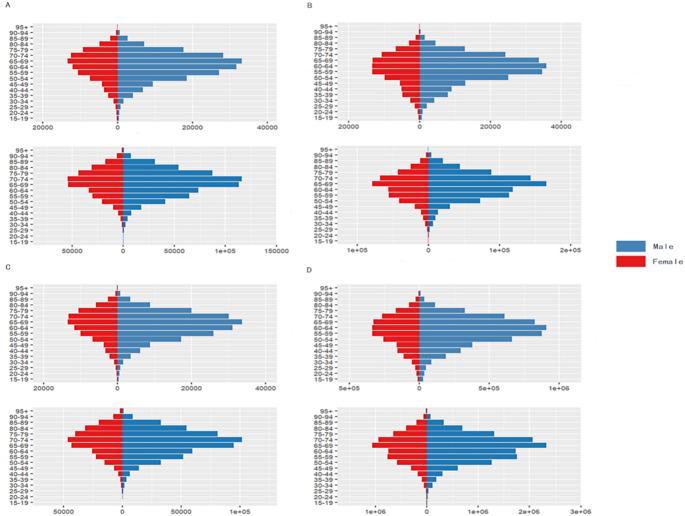
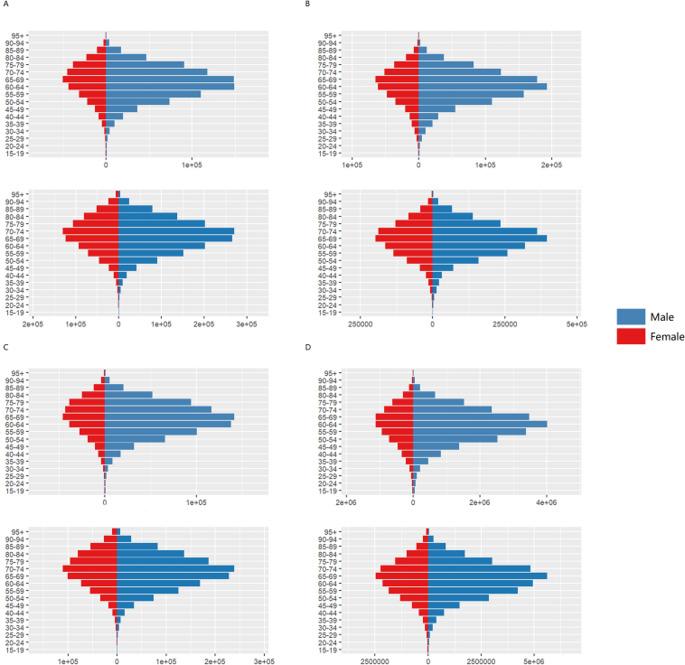
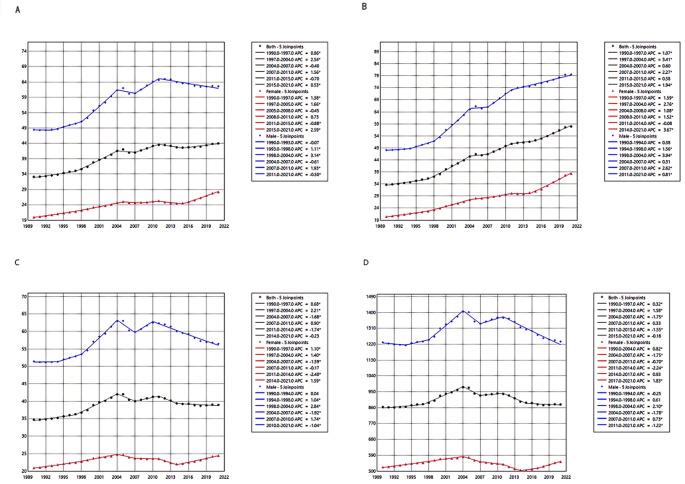
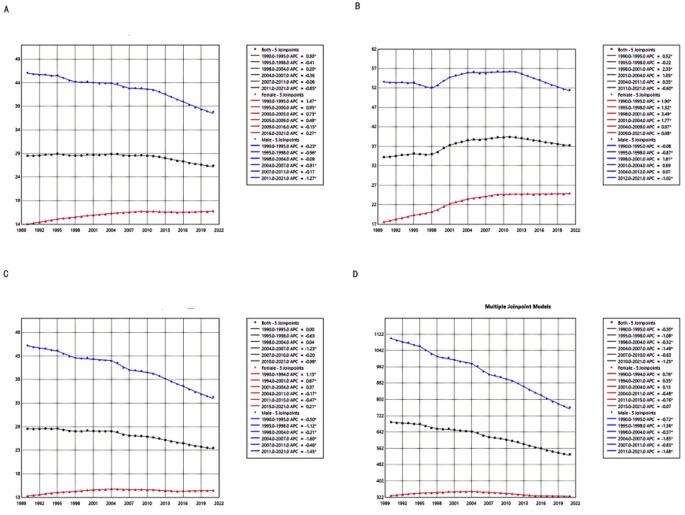
Based on the Global Burden of Disease (GBD) 2021 database, we analyzed the incidence, prevalence, mortality, and disability-adjusted life years (DALYs) of lung cancer in China and globally from 1990 to 2021. These metrics were stratified by gender (BOTH, MALE, FEMALE), and the average annual percentage change (AAPC) was calculated for each metric over this period. The JOINPOINT regression model was used to analyze the trends in female lung cancer in China and globally from 1990 to 2021. The ARIMA model was applied to forecast the changes in age-standardized incidence rates (ASIR) and age-standardized mortality rates (ASDR) for the next fifteen years (2022-2037) for female lung cancer in China and globally.
RESULTS
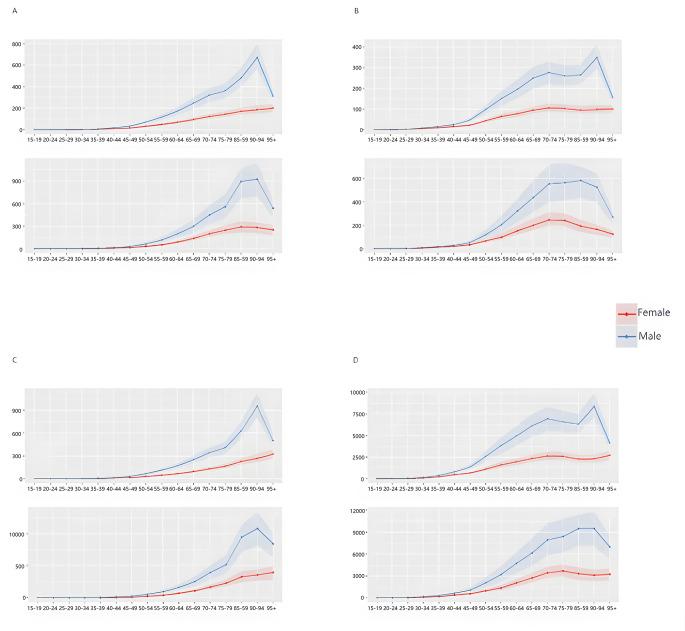
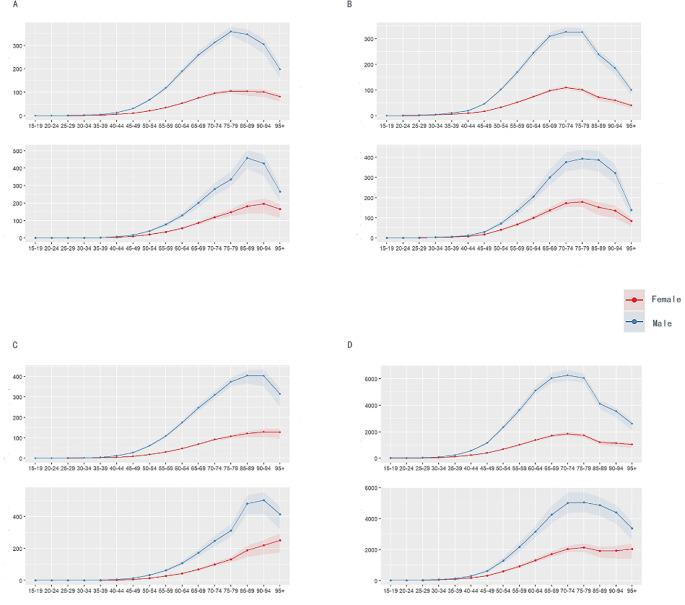
The results indicate an upward trend in incidence, prevalence, mortality, and DALYs for lung cancer in China. Globally, the prevalence of lung cancer showed an increasing trend, while the incidence, mortality, and DALYs demonstrated a declining trend. Both in China and globally, the incidence, prevalence, mortality, and DALY trends for female lung cancer were higher than those for males. From 1990 to 2021, the incidence, prevalence, mortality, and DALYs of female lung cancer in China exhibited an upward trend, with AAPC growth rates of 1.151%, 2.086%, 0.508%, and 0.210%, respectively. Similarly, globally, the incidence, prevalence, and mortality of female lung cancer also showed an upward trend, with growth rates of 0.576%, 1.123%, and 0.276%, respectively, while DALYs showed a slight decline with an AAPC of -0.029%.
CONCLUSION
Although the overall disease burden of female lung cancer is not as high as that of males, the growth rate for female lung cancer is significantly higher than that for males both in China and globally. The overall disease burden and the growth rates of incidence and prevalence of female lung cancer in China are higher than the global average.
背景
近年来,由于各种风险因素,中国和全球女性肺癌的发病率、患病率和死亡率均呈上升趋势。这已成为全球一项重大的公共卫生挑战。肺癌不仅对女性健康构成严重威胁,也给家庭和社会带来沉重负担。
目的
深入分析1990年至2021年中国和全球女性肺癌疾病负担的趋势,并预测未来15年(2022 - 2037年)的情况。旨在为女性肺癌的临床研究和实践提供可靠的理论依据和参考价值,并为社会资源分配和政策制定提供指导。
方法
基于全球疾病负担(GBD)2021数据库,我们分析了1990年至2021年中国和全球肺癌的发病率、患病率、死亡率和伤残调整生命年(DALYs)。这些指标按性别(全部、男性、女性)分层,并计算了这一时期每个指标的年均百分比变化(AAPC)。采用JOINPOINT回归模型分析1990年至2021年中国和全球女性肺癌的趋势。应用ARIMA模型预测中国和全球未来15年(2022 - 2037年)女性肺癌的年龄标准化发病率(ASIR)和年龄标准化死亡率(ASDR)的变化。
结果
结果表明,中国肺癌的发病率、患病率、死亡率和DALYs呈上升趋势。在全球范围内,肺癌患病率呈上升趋势,而发病率、死亡率和DALYs呈下降趋势。在中国和全球,女性肺癌的发病率、患病率、死亡率和DALY趋势均高于男性。1990年至2021年,中国女性肺癌的发病率、患病率、死亡率和DALYs呈上升趋势,AAPC增长率分别为1.151%、2.086%、0.508%和0.210%。同样,在全球范围内,女性肺癌的发病率、患病率和死亡率也呈上升趋势,增长率分别为0.576%、1.123%和0.276%,而DALYs呈轻微下降趋势,AAPC为 - 0.029%。
结论
尽管女性肺癌的总体疾病负担不如男性高,但中国和全球女性肺癌的增长率均显著高于男性。中国女性肺癌的总体疾病负担以及发病率和患病率的增长率均高于全球平均水平。
 Zotero 插件