
基于社会人口统计学状况以及2010年至2021年地理和性别差异的55岁以上成年人气管、支气管和肺癌的全球负担
Global Burden of Tracheal, Bronchus, and Lung Cancer in Adults Over 55 Years Old Based on Socio demographic Status and Geographical and Gender Differences from 2010-2021.
作者信息
Mazidimoradi Afrooz, Shabani Elham, Rezaei Fatemeh, Shahraki-Sanavi Fariba, Shahabinia Zahra, Allahqoli Leila, Salehiniya Hamid
机构信息
Shiraz University of Medical Sciences, Shiraz, Iran.
The Clinical Research Development Unit, Ghaem Hospital, Mashhad University of Medical Sciences, Mashhad, Iran.
出版信息
Thorac Res Pract. 2025 Jun 26;26(4):155-175. doi: 10.4274/ThoracResPract.2024.24081. Epub 2025 Jan 27.
OBJECTIVE
This study presented the tracheal, bronchus, and lung cancer (TBLC) trend in adults ≥55 based on the socio-demographic index and geographical regions.
MATERIAL AND METHODS
We obtained annual TBLC data from 2010 to 2021 from the 2021 Global Burden of Disease (GBD) Study and analyzed the incidence, death rates, and disability-adjusted life years (DALYs) rates across different geographical classifications of 204 national and territorial.
RESULTS
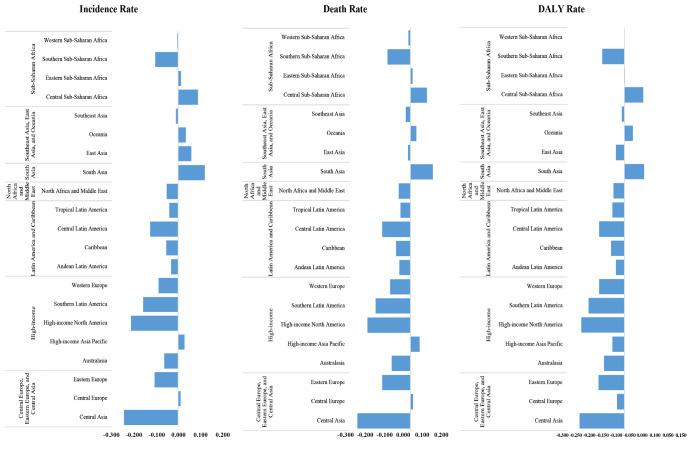
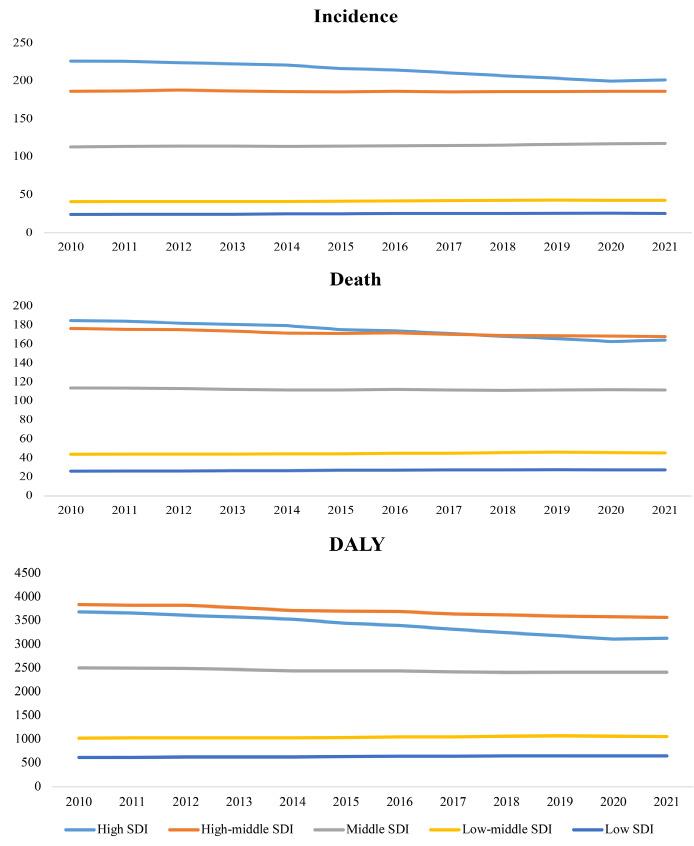
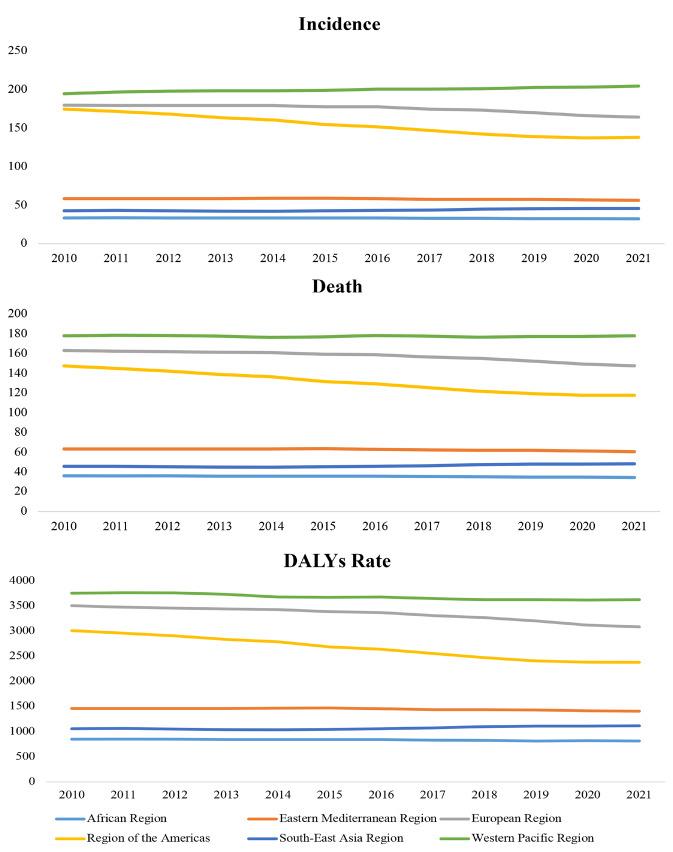
In adults ≥55 years, the TBLC incidence rate decreased from 2010 to 2021 by globally 20.9% and 9.6% in males, while increasing by 3.8% in females. Approximately 60% of TBLC cases occurred in Asian countries. European countries exhibit the highest incidence rate (169.16 per 100,000). Males across all continents showed a decreasing trend, only the Americas reported a decreasing trend for women, with a noted change of 17.3%. The Western Pacific Region (World Health Organization region), East Asia (GBD region), Monaco, and countries with advanced health systems reported the highest incidence, death, and DALY numbers and rates for all genders. World Bank Upper middle-income countries recorded the highest DALY numbers and rates, incidence, and death numbers, all showing a downward trend, similar to high-income countries.
CONCLUSION
The global burden of TBLC is predominantly in Asian countries (mainly East Asia), with a slower decrease in incidence, death, DALY, and burden rates. Therefore, reducing exposure to risk factors, expanding screening and diagnostic programs, especially for high-risk male smokers and females, and improving treatment procedures to reduce the progression of this cancer are urgent.
目的
本研究基于社会人口学指数和地理区域,呈现了55岁及以上成年人气管、支气管和肺癌(TBLC)的发病趋势。
材料与方法
我们从《2021年全球疾病负担(GBD)研究》中获取了2010年至2021年的年度TBLC数据,并分析了204个国家和地区不同地理分类中的发病率、死亡率和伤残调整生命年(DALY)率。
结果
在55岁及以上的成年人中,2010年至2021年期间,全球TBLC发病率下降了20.9%,男性下降了9.6%,而女性上升了3.8%。约60%的TBLC病例发生在亚洲国家。欧洲国家的发病率最高(每10万人中有169.16例)。各大洲的男性均呈下降趋势,只有美洲报告女性呈下降趋势,变化显著,为17.3%。西太平洋地区(世界卫生组织区域)、东亚(GBD区域)、摩纳哥以及拥有先进卫生系统的国家报告的所有性别的发病率、死亡率和DALY数量及率最高。世界银行中高收入国家的DALY数量及率、发病率和死亡人数均最高,且均呈下降趋势,与高收入国家类似。
结论
全球TBLC负担主要集中在亚洲国家(主要是东亚),发病率、死亡率、DALY和负担率的下降较为缓慢。因此,减少接触风险因素、扩大筛查和诊断项目,特别是针对高危男性吸烟者和女性,以及改进治疗程序以减少这种癌症的进展,迫在眉睫。


 Zotero 插件