
用于心理健康的智能手机应用程序:文献系统综述及临床转化的五项建议。
Smartphone apps for mental health: systematic review of the literature and five recommendations for clinical translation.
作者信息
Almuqrin Aljawharah, Hammoud Ryan, Terbagou Ilham, Tognin Stefania, Mechelli Andrea
机构信息
Department of Psychosis Studies, Institute of Psychiatry, Psychology and Neuroscience, King's College London, London, UK.
Department of Health Sciences, Princess Nourah bint Abdulrahman University, Riyadh, Saudi Arabia.
出版信息
BMJ Open. 2025 Feb 11;15(2):e093932. doi: 10.1136/bmjopen-2024-093932.
OBJECTIVES
Providing adequate access to mental health services is a global challenge. Smartphone apps offer a potentially cost-effective, available and accessible solution for monitoring, supporting and treating mental health conditions. This systematic review describes and evaluates the usage of smartphone apps across a wide range of mental health disorders in terms of clinical effectiveness, feasibility and acceptability.
DESIGN
This is a systematic review of studies examining treatment, self-monitoring and multipurpose smartphone apps for mental health disorders.
DATA SOURCES
Studies were identified through a comprehensive search of the Ovid and PubMed databases. Articles published up to 14 January 2024 were included based on predefined criteria.
ELIGIBILITY CRITERIA
We included randomised controlled trials that compared mental health apps (single- or multipurpose) with treatment-as-usual or no treatment for clinical populations with mental health disorders. Studies were excluded if they focused on web-based interventions, combined apps with non-TAU treatments or targeted physical health apps.
DATA EXTRACTION AND SYNTHESIS
Two independent reviewers screened and selected studies, with a third reviewer resolving inconsistencies. Extracted data included study details, participant characteristics, app information and outcome measures related to effectiveness, feasibility and acceptability. A risk-of-bias assessment for each study was conducted.
RESULTS
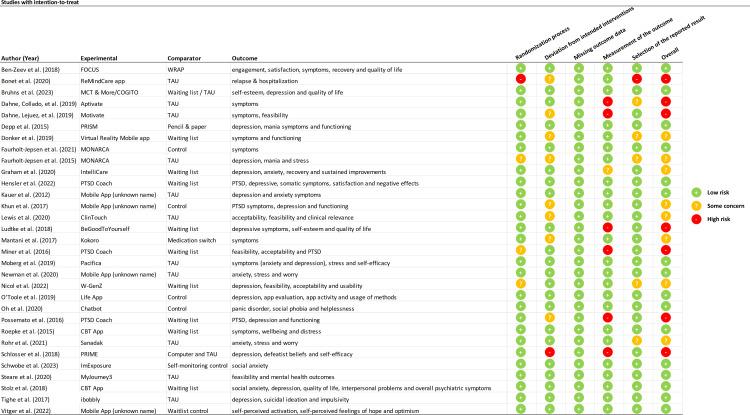
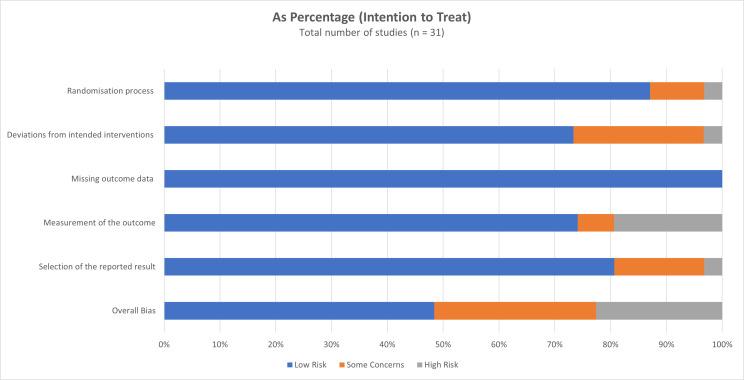
Out of 4153 non-duplicate articles screened, 31 studies met full-text eligibility criteria. These included 6 studies on treatment apps, 4 on self-monitoring apps and 21 on multipurpose apps for a range of mental health disorders. Fifteen were identified as having between some and high concern on the risk-of-bias assessment. While smartphone apps were generally effective and acceptable, their feasibility appeared to decline over time.
CONCLUSIONS
Smartphone apps are promising tools for mental healthcare, demonstrating effectiveness and acceptability. However, challenges such as reduced feasibility over time, potential biases and underrepresented demographics require further research. This review proposes five recommendations for improving clinical translation in future studies.
目标
提供充足的心理健康服务是一项全球性挑战。智能手机应用程序为监测、支持和治疗心理健康状况提供了一种潜在的具有成本效益、可得且易用的解决方案。本系统评价从临床有效性、可行性和可接受性方面描述并评估了智能手机应用程序在广泛的心理健康障碍中的使用情况。
设计
这是一项对研究治疗、自我监测和多功能智能手机心理健康应用程序的研究的系统评价。
数据来源
通过全面检索Ovid和PubMed数据库确定研究。根据预先定义的标准纳入截至2024年1月14日发表的文章。
纳入标准
我们纳入了将心理健康应用程序(单一用途或多用途)与针对患有心理健康障碍的临床人群的常规治疗或不治疗进行比较的随机对照试验。如果研究侧重于基于网络的干预、将应用程序与非常规治疗相结合或针对身体健康应用程序,则将其排除。
数据提取与综合
两名独立的评审员筛选并选择研究,第三名评审员解决不一致之处。提取的数据包括研究细节、参与者特征、应用程序信息以及与有效性、可行性和可接受性相关的结果测量。对每项研究进行了偏倚风险评估。
结果
在筛选的4153篇非重复文章中,31项研究符合全文纳入标准。其中包括6项关于治疗应用程序的研究、4项关于自我监测应用程序的研究以及21项关于一系列心理健康障碍的多用途应用程序的研究。在偏倚风险评估中,有15项被确定存在一定到高度的关注。虽然智能手机应用程序总体上是有效且可接受的,但其可行性似乎随着时间的推移而下降。
结论
智能手机应用程序是心理健康护理的有前途的工具,显示出有效性和可接受性。然而,随着时间推移可行性降低、潜在偏倚和人口统计学代表性不足等挑战需要进一步研究。本综述为未来研究中改善临床转化提出了五项建议。

 Zotero 插件