
间充质基质细胞移植治疗自身免疫性和风湿免疫性疾病的疗效与安全性:随机对照试验的系统评价和荟萃分析
Efficacy and safety of mesenchymal stromal cell transplantation in the treatment of autoimmune and rheumatic immune diseases: a systematic review and meta-analysis of randomized controlled trials.
作者信息
Zeng Liuting, Liu Chang, Wu Yang, Liu Shuman, Zheng Yaru, Hao Wensa, Wang Dandan, Sun Lingyun
机构信息
Department of Rheumatology and Immunology, Nanjing Drum Tower Hospital, Chinese Academy of Medical Sciences and Peking Union Medical College, Graduate School of Peking Union Medical College, Nanjing, China.
Department of Rheumatology, Peking Union Medical College Hospital, Chinese Academy of Medical Science and Peking Union Medical College, Beijing, China.
出版信息
Stem Cell Res Ther. 2025 Feb 11;16(1):65. doi: 10.1186/s13287-025-04184-x.
OBJECTIVE
This study aims to assess the effectiveness and safety of mesenchymal stem cell (MSC) transplantation in the treatment of autoimmune and rheumatic immune diseases through randomized controlled trials (RCTs).
METHODS
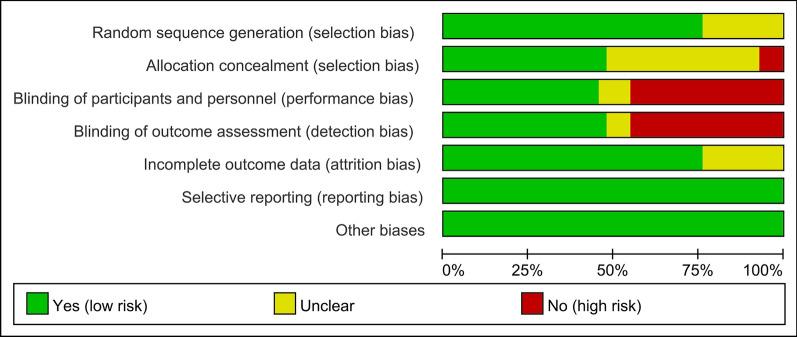
Two researchers conducted a comprehensive search of Chinese and English databases from their inception until Dec. 2023. The literature screening and data extraction were then performed. Statistical analysis was carried out using RevMan 5.4 software.
RESULTS
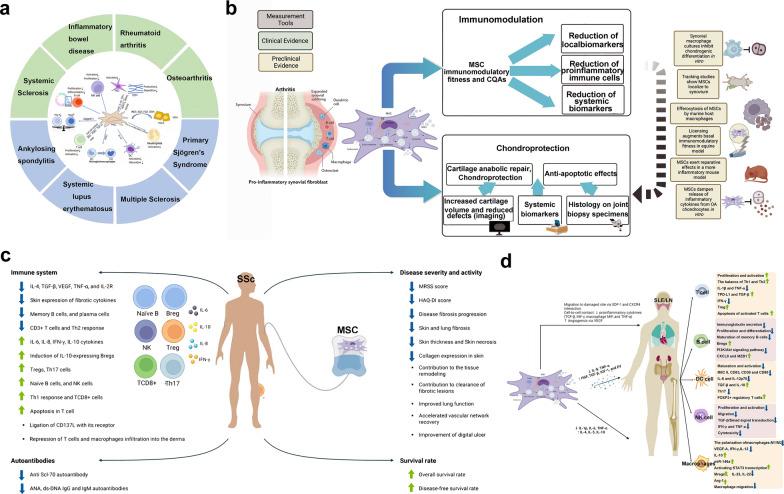
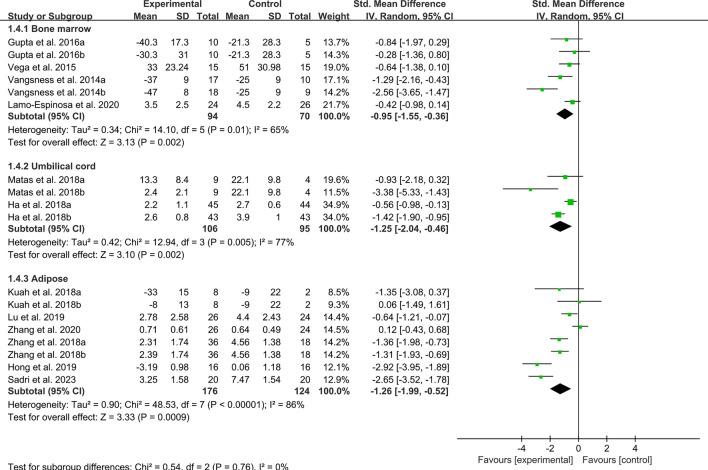
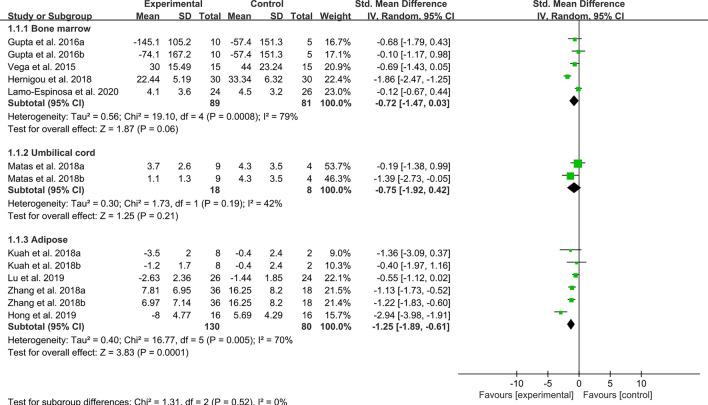
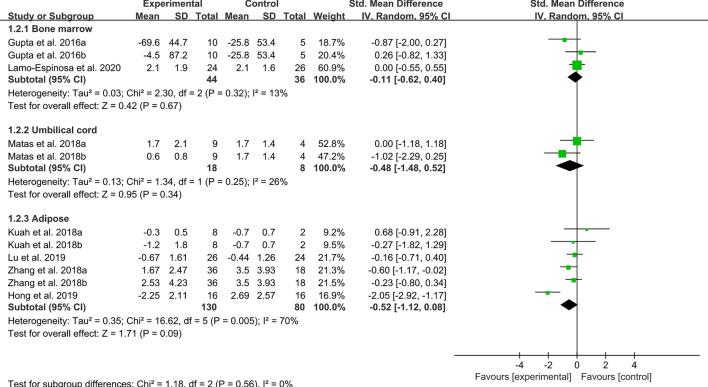
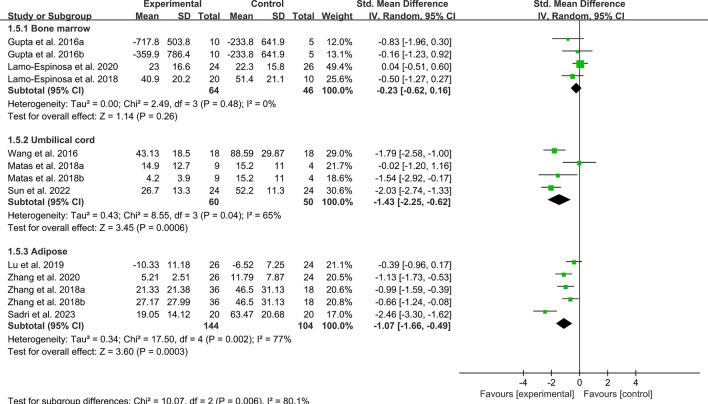
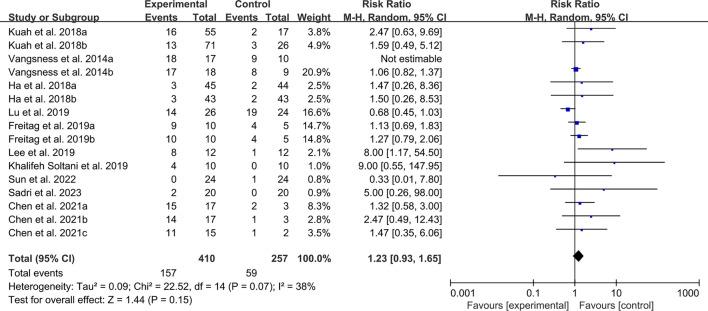
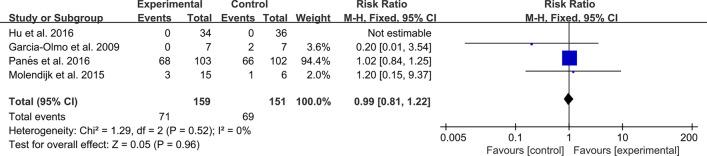
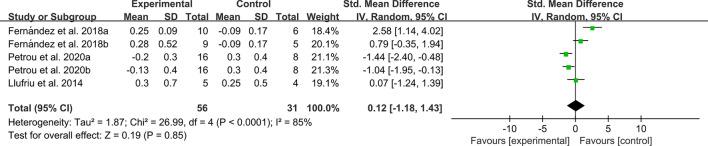
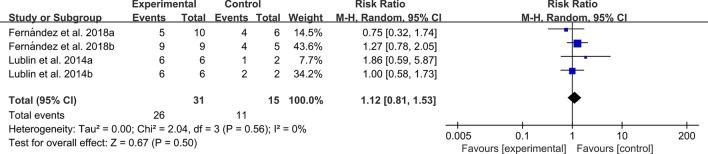
A total of 42 relevant RCTs, involving 2,183 participants, were ultimately included in this study. These RCTs encompassed four types of rheumatic immune and bone diseases, namely rheumatoid arthritis (RA), osteoarthritis (OA), spondyloarthritis, systemic sclerosis arthritis, systemic lupus erythematosus (SLE), inflammatory bowel disease, multiple sclerosis, primary Sjögren's syndrome (PSS). The systematic review indicates that MSC transplantation may improve spondyloarthritis, RA, PSS. The meta-analysis reveals that MSC transplantation significantly improved symptoms in patients with OA [VAS (visual analogue scale): bone marrow: SMD = - 0.95, 95% CI - 1.55 to - 0.36, P = 0.002; umbilical cord: SMD = - 1.25, 95% CI - 2.04 to - 0.46, P = 0.002; adipose tissue: SMD = -1.26, 95% CI -1.99 to - 0.52, P = 0.0009)], SLE [Systemic lupus erythematosus disease activity index (SLEDAI): SMD = - 2.32, 95% CI - 3.59 to - 1.06, P = 0.0003], inflammatory bowel disease [clinical efficacy: RR = 2.02, 95% CI 1.53 to 2.67, P < 0.00001]. However, MSC transplantation may not improve the symptoms of multiple sclerosis and systemic sclerosis (Ssc). Importantly, MSC transplantation did not increase the incidence of adverse events (OA: RR = 1.23, 95% CI 0.93 to 1.65, P = 0.15; SLE: RR = 0.83, 95% CI 0.28 to 2.51, P = 0.76; Inflammatory bowel disease: RR = 0.99, 95% CI 0.81 to 1.22, P = 0.96; Multiple sclerosis: RR = 1.12, 95% CI 0.81 to 1.53, P = 0.50), supporting its safety profile across the included studies. These findings suggest that MSC transplantation holds promise for several rheumatic and autoimmune diseases while highlighting areas where further research is warranted.
CONCLUSION
MSC transplantation may have the potential to treat autoimmune and rheumatic immune diseases. Moreover. MSC transplantation appears to be relatively safe and could be considered as a viable alternative treatment option for autoimmune and rheumatic immune diseases.
目的
本研究旨在通过随机对照试验(RCT)评估间充质干细胞(MSC)移植治疗自身免疫性和风湿性免疫疾病的有效性和安全性。
方法
两名研究人员对中英文数据库从建库至2023年12月进行了全面检索。随后进行文献筛选和数据提取。使用RevMan 5.4软件进行统计分析。
结果
本研究最终纳入42项相关随机对照试验,涉及2183名参与者。这些随机对照试验涵盖四种风湿性免疫和骨病,即类风湿关节炎(RA)、骨关节炎(OA)、脊柱关节炎、系统性硬化症关节炎、系统性红斑狼疮(SLE)、炎症性肠病、多发性硬化症、原发性干燥综合征(PSS)。系统评价表明,间充质干细胞移植可能改善脊柱关节炎、类风湿关节炎、原发性干燥综合征。荟萃分析显示,间充质干细胞移植显著改善了骨关节炎患者的症状[视觉模拟评分(VAS):骨髓:标准化均数差(SMD)=-0.95,95%置信区间(CI)-1.55至-0.36,P=0.002;脐带:SMD=-1.25,95%CI-2.04至-0.46,P=0.002;脂肪组织:SMD=-1.26,95%CI-1.99至-0.52,P=0.0009]、系统性红斑狼疮[系统性红斑狼疮疾病活动指数(SLEDAI):SMD=-2.32,95%CI-3.59至-1.06,P=0.0003]、炎症性肠病[临床疗效:相对危险度(RR)=2.02,95%CI 1.53至2.67,P<0.00001]。然而,间充质干细胞移植可能无法改善多发性硬化症和系统性硬化症(Ssc)的症状。重要的是,间充质干细胞移植并未增加不良事件的发生率(骨关节炎:RR=1.23,95%CI 0.93至1.65,P=0.15;系统性红斑狼疮:RR=0.83,95%CI 0.28至2.51,P=0.76;炎症性肠病:RR=0.99,95%CI 0.81至1.22,P=0.96;多发性硬化症:RR=1.12,95%CI 0.81至1.53,P=0.50),这支持了其在纳入研究中的安全性。这些发现表明,间充质干细胞移植对几种风湿性和自身免疫性疾病具有前景,同时突出了需要进一步研究的领域。
结论
间充质干细胞移植可能具有治疗自身免疫性和风湿性免疫疾病的潜力。此外,间充质干细胞移植似乎相对安全,可被视为自身免疫性和风湿性免疫疾病的一种可行替代治疗选择。










 Zotero 插件