
磁刺激成肌作用激活CRY2-TRPC1光敏信号轴。
Magnetically Stimulated Myogenesis Recruits a CRY2-TRPC1 Photosensitive Signaling Axis.
作者信息
Iversen Jan Nikolas, Tai Yee Kit, Wu Kwan Yu, Wong Craig Jun Kit, Lim Hao Yang, Franco-Obregón Alfredo
机构信息
Department of Surgery, Yong Loo Lin School of Medicine, National University of Singapore, Singapore 119228, Singapore.
Institute of Health Technology and Innovation (iHealthtech), National University of Singapore, Singapore 117599, Singapore.
出版信息
Cells. 2025 Feb 6;14(3):231. doi: 10.3390/cells14030231.
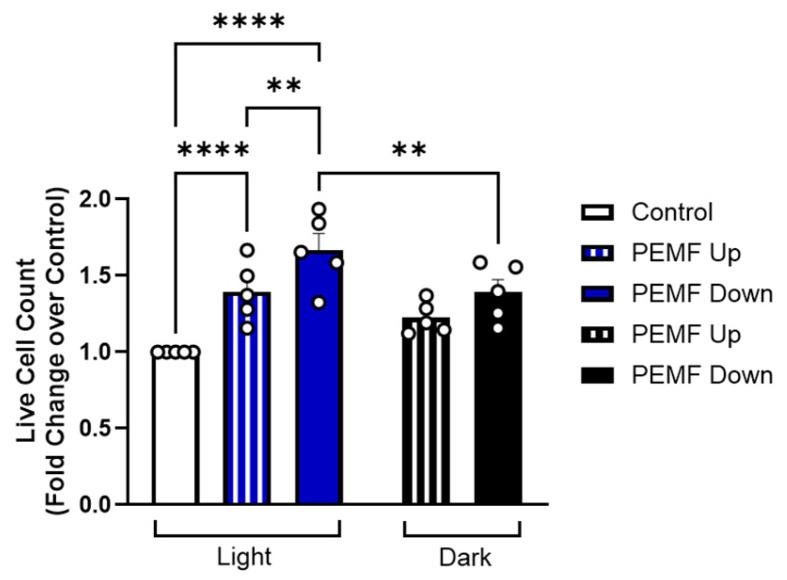
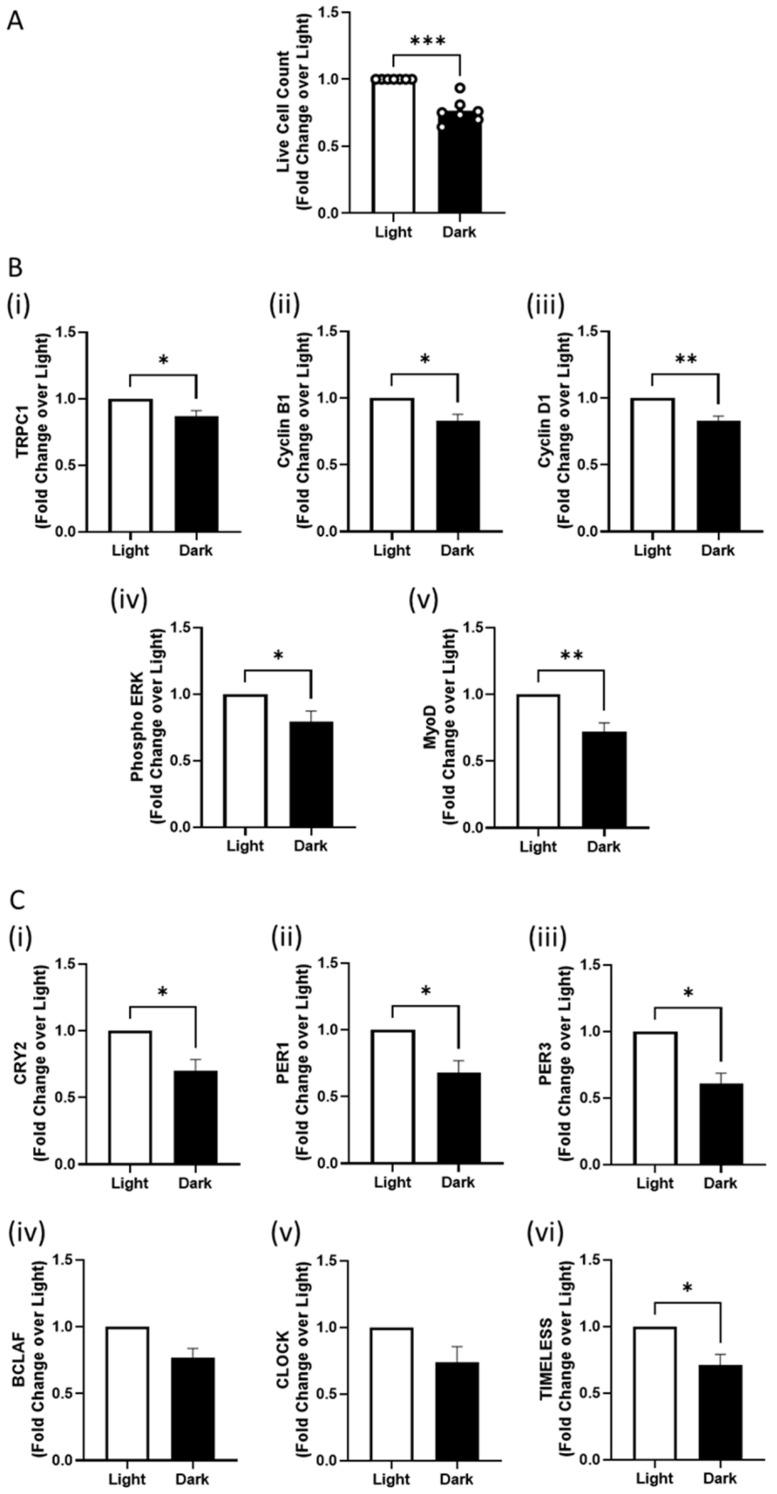
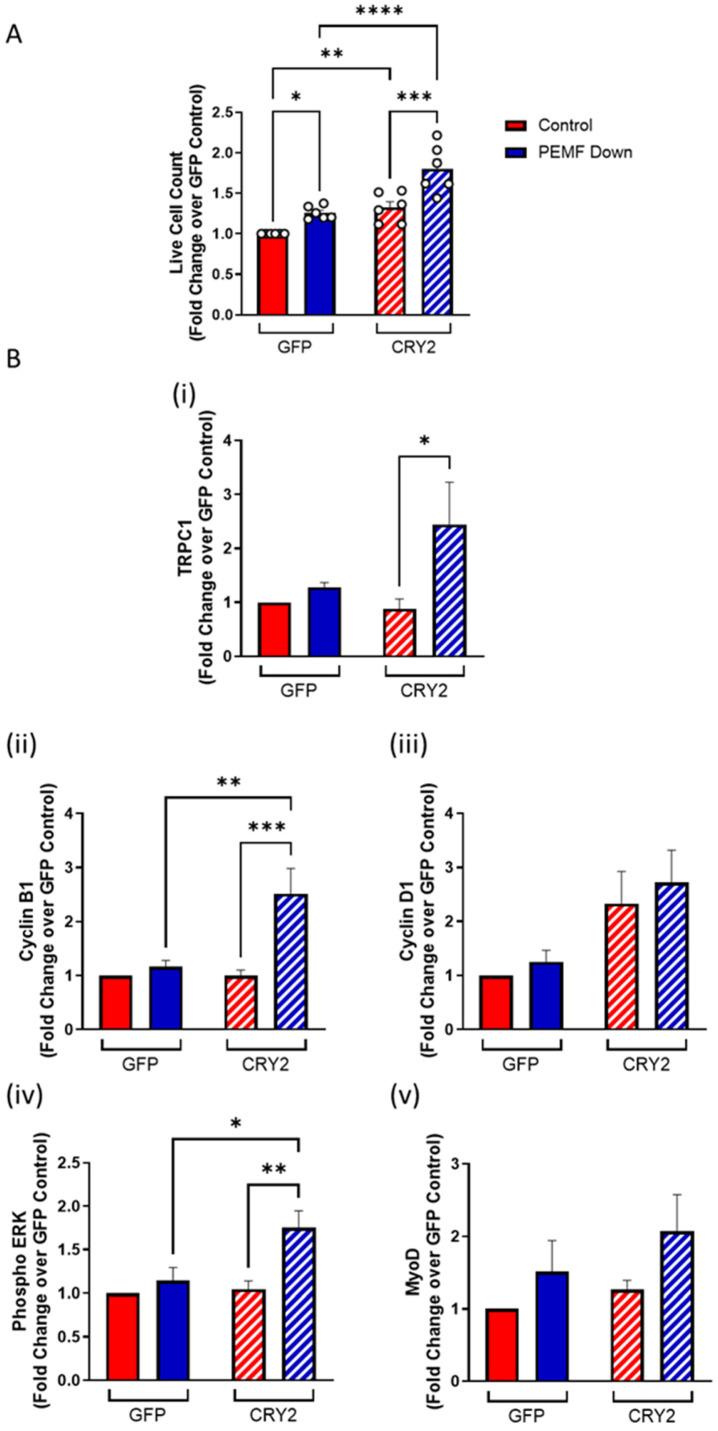
The cryptochromes are flavoproteins that either individually or synergistically respond to light and magnetic field directionality as well as are implicated in circadian rhythm entrainment and development. Single brief exposures (10 min) to low energy (1.5 mT) pulsed electromagnetic fields (PEMFs) were previously shown to enhance myogenesis by stimulating transient receptor potential canonical 1 (TRPC1)-mediated Ca entry, whereby downwardly directed fields produced greater myogenic enhancement than upwardly directed fields. Here, we show that growth in the dark results in myoblasts losing their sensitivity to both magnetic field exposure and directionality. By contrast, overexpressing or silencing cryptochrome circadian regulator 2 (CRY2) in myoblasts enhances or reduces PEMF responses, respectively, under conditions of ambient light. Reducing cellular flavin adenine dinucleotide (FAD) content by silencing riboflavin kinase (RFK) attenuated responsiveness to PEMFs and inhibited selectivity for magnetic field direction. The upregulation of TRPC1 and cell cycle regulatory proteins typically observed in response to PEMF exposure was instead attenuated by upwardly directed magnetic fields, growth in the darkness, magnetic shielding, or the silencing of CRY2 or RFK. A physical interaction between CRY2 and TRPC1 was detected using coimmunoprecipitation and immunofluorescence, revealing their co-translocation into the nucleus after PEMF exposure. These results implicate CRY2 in an identified TRPC1-dependent magnetotransduction myogenic cascade.
隐花色素是黄素蛋白,它们单独或协同响应光和磁场方向性,并且与昼夜节律调节和发育有关。先前的研究表明,单次短暂暴露(10分钟)于低能量(1.5 mT)脉冲电磁场(PEMF)可通过刺激瞬时受体电位阳离子通道亚家族C成员1(TRPC1)介导的钙离子内流来增强成肌作用,由此向下的磁场比向上的磁场产生更大的成肌增强效果。在此,我们表明在黑暗中生长会导致成肌细胞对磁场暴露及其方向性均失去敏感性。相比之下,在环境光条件下,在成肌细胞中过表达或沉默隐花色素昼夜调节因子2(CRY2)分别增强或降低了对PEMF的反应。通过沉默核黄素激酶(RFK)来降低细胞内黄素腺嘌呤二核苷酸(FAD)含量,会减弱对PEMF的反应,并抑制对磁场方向的选择性。通常在PEMF暴露后观察到的TRPC1和细胞周期调节蛋白的上调,反而会因向上的磁场、在黑暗中生长、磁屏蔽或CRY2或RFK的沉默而减弱。使用免疫共沉淀和免疫荧光检测到CRY2与TRPC1之间存在物理相互作用,揭示了PEMF暴露后它们共转位到细胞核中。这些结果表明CRY2参与了已确定的依赖于TRPC1的磁转导成肌级联反应。



 Zotero 插件