
老年患者头颈部癌亚部位的发病率和死亡率趋势:一项基于人群的分析。
Trends in Incidence and Mortality of Head and Neck Cancer Subsites Among Elderly Patients: A Population-Based Analysis.
作者信息
Wierzbicka Małgorzata, Pietruszewska Wioletta, Maciejczyk Adam, Markowski Jarosław
机构信息
Department of Otolaryngology, Regional Specialist Hospital Wroclaw, Research & Development Centre, 51-124 Wroclaw, Poland.
Faculty of Medicine, Wroclaw University of Science and Technology, 50-370 Wroclaw, Poland.
出版信息
Cancers (Basel). 2025 Feb 6;17(3):548. doi: 10.3390/cancers17030548.
UNLABELLED
The incidence of head and neck cancer (HNC) has significantly increased over the past two decades.
MATERIAL AND METHODS
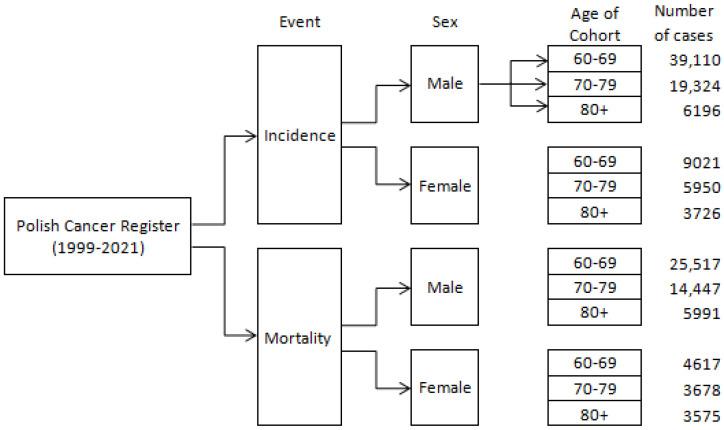
This study analyzed trends in HNC incidence and mortality using data from the Polish Cancer Register (1999-2021) across three age cohorts (60-69, 70-79, and 80+) and projected trends through to 2035. Statistical analyses included regression, correlation, and parallelism tests, with significance levels of α = 0.05 and Bonferroni correction applied (αc ≈ 0.017).
RESULTS
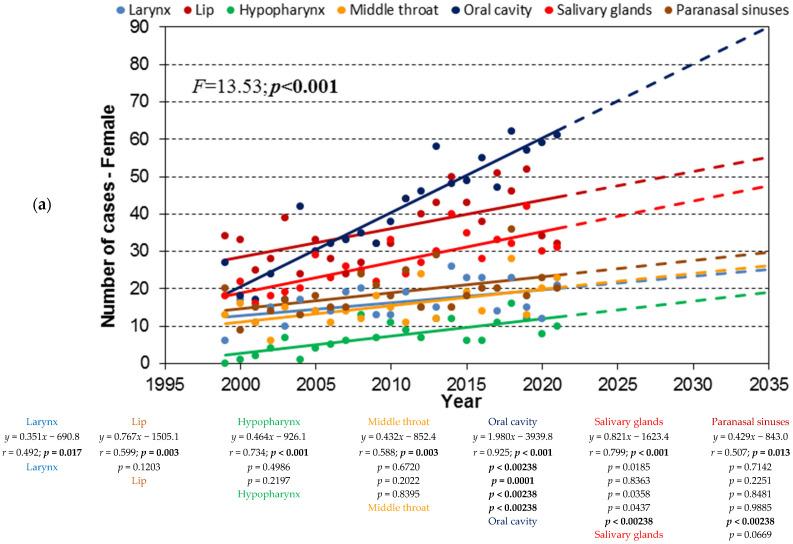
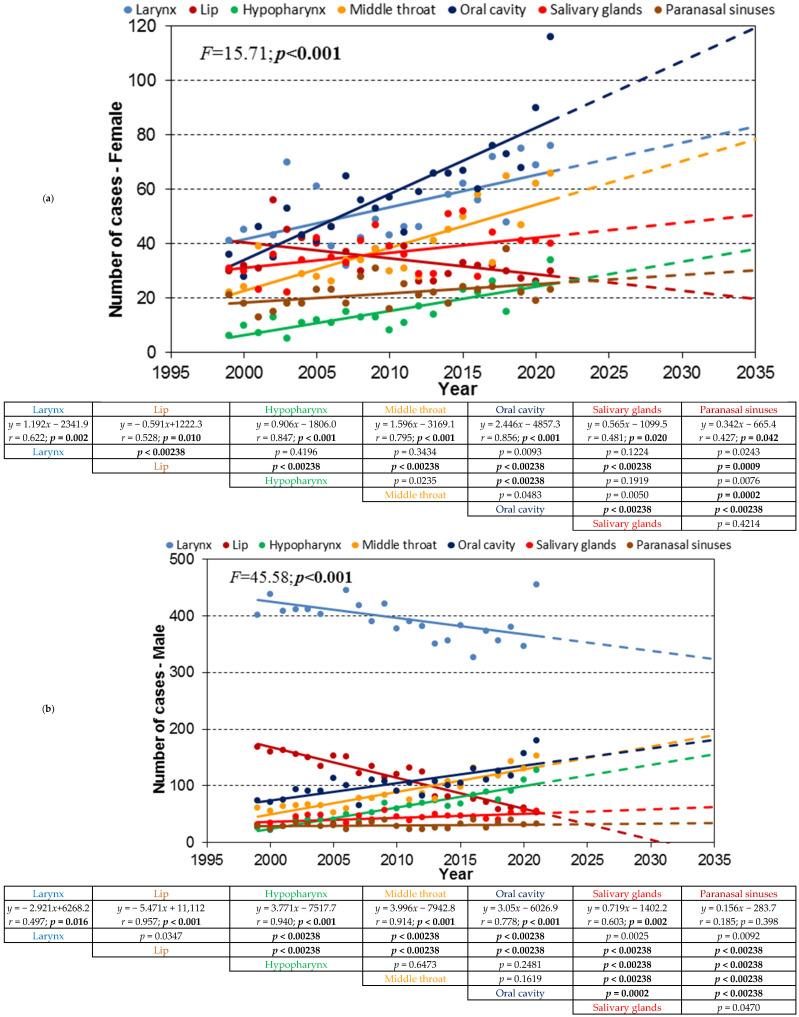
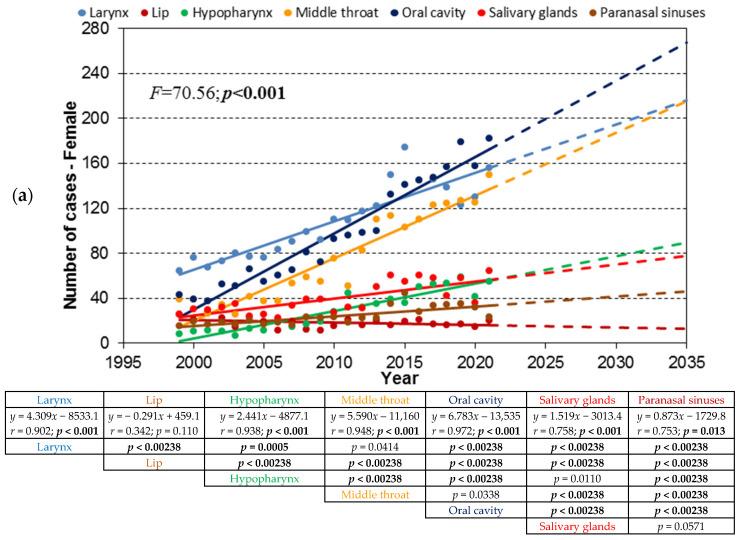
In the 60-69 cohort, incidence rates increased faster than mortality rates ( < 0.001), especially for oral and oropharyngeal cancers in women ( < 0.001). For the 70-79 cohort, mortality rates rose slower than incidence ( < 0.05), most notably for salivary gland cancers across genders and oral cavity cancers in women. In the 80+ group, both incidence and mortality increased ( < 0.05), but mortality rates rose faster for laryngeal, hypopharyngeal, and oral cancers in men and the general population ( < 0.017). The largest increases were observed in oral cancer among women, with a marked rise across all age groups ( < 0.001). Gender-specific patterns highlighted stable or modestly rising trends in males but a notable increase in females, particularly in the 80+ group.
CONCLUSIONS
These findings underscore that older patients are not a homogeneous group in terms of HNC incidence and survival. This study emphasizes age- and gender-specific strategies for prevention and management. Expanding HPV vaccination and improving early detection are crucial, particularly for high-risk groups like older women and those with HPV-related cancers. Tailored approaches could mitigate rising trends and improve survival outcomes.
未标注
在过去二十年中,头颈癌(HNC)的发病率显著上升。
材料与方法
本研究利用波兰癌症登记处(1999 - 2021年)的数据,分析了三个年龄组(60 - 69岁、70 - 79岁和80岁以上)头颈癌发病率和死亡率的趋势,并预测了直至2035年的趋势。统计分析包括回归、相关性和平行性检验,显著性水平为α = 0.05,并应用了Bonferroni校正(αc ≈ 0.017)。
结果
在60 - 69岁年龄组中,发病率的增长速度快于死亡率(< 0.001),尤其是女性口腔和口咽癌(< 0.001)。对于70 - 79岁年龄组,死亡率的上升速度慢于发病率(< 0.05),最明显的是各性别唾液腺癌和女性口腔癌。在80岁以上年龄组中,发病率和死亡率均有所上升(< 0.05),但男性及总体人群中喉癌、下咽癌和口腔癌的死亡率上升更快(< 0.017)。女性口腔癌的增幅最大,在所有年龄组中均显著上升(< 0.001)。特定性别的模式显示,男性的趋势稳定或略有上升,而女性则显著增加,尤其是在80岁以上年龄组。
结论
这些发现强调,老年患者在头颈癌发病率和生存率方面并非同质群体。本研究强调了针对年龄和性别的预防及管理策略。扩大人乳头瘤病毒(HPV)疫苗接种和改善早期检测至关重要,特别是对于老年女性和患有HPV相关癌症等高危群体。量身定制的方法可以缓解上升趋势并改善生存结果。


 Zotero 插件