
六种人类嗅觉受体及其AlphaFold3预测的水溶性QTY变体、与辛酸结合的OR1A2以及与亚精胺结合的TAAR9的结构生物信息学研究。
Structural bioinformatic study of six human olfactory receptors and their AlphaFold3 predicted water-soluble QTY variants and OR1A2 with an odorant octanoate and TAAR9 with spermidine.
作者信息
Johnsson Finn, Karagöl Taner, Karagöl Alper, Zhang Shuguang
机构信息
St Paul's School, Lonsdale Road, London SW13 9JT, UK.
Istanbul Medical Faculty, Istanbul University, Istanbul, Turkey.
出版信息
QRB Discov. 2024 Dec 9;6:e2. doi: 10.1017/qrd.2024.18. eCollection 2025.
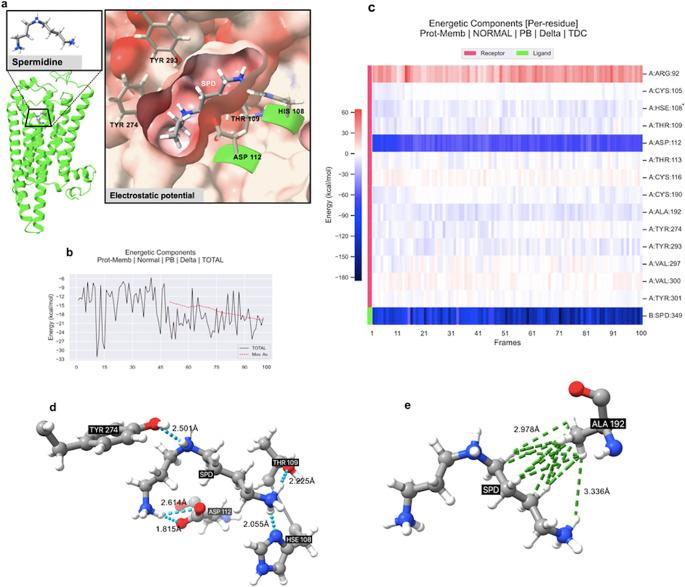
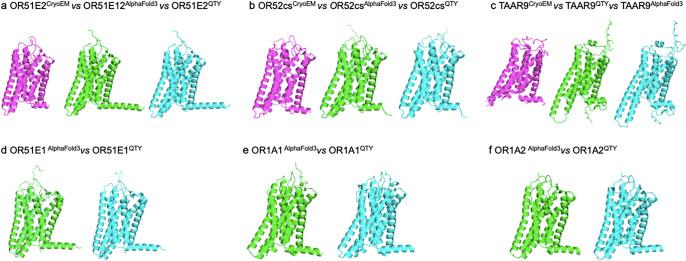
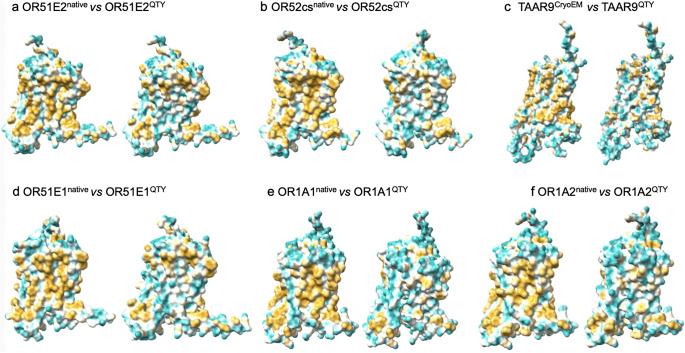
The molecular mechanism of olfaction, namely, how we smell with limited olfactory receptors to recognize exceedingly diverse and large numbers of scents remains unknown despite the recent advances in chemistry, chemical, structural, and molecular biology. Olfactory receptors are notoriously difficult to study because they are fully embedded in the cell membrane. After decades of efforts and significant funding, there are only three olfactory receptor structures known. To understand olfaction, we carried out the structural bioinformatic study of six human olfactory receptors including OR51E1, OR51E2, OR52cs, OR1A1, OR1A2, TAAR9, and their AlphaFold3 predicted water-soluble QTY variants with odorants. We applied the QTY code to replace leucine (L) with glutamine (Q), isoleucine (I) and valine (V) with threonine (T), and phenylalanine (F) with tyrosine (Y) only in the transmembrane helices. Therefore, these QTY variants become water-soluble. We also present the superimposed structures of native olfactory receptors and their water-soluble QTY variants. The superimposed structures show remarkable similarity with RMSDs between 0.441 and 1.275 Å despite significant changes to the protein sequence of the transmembrane domains (43.03%-50.31%). We also show the differences in hydrophobicity surfaces between the native olfactory receptors and their QTY variants. Furthermore, we also used AlphaFold3 and molecular dynamics to study the odorant octanoate with OR1A2 and spermidine with TAAR9. Our bioinformatics studies provide insight into the differences between the hydrophobic helices and hydrophilic helices, and will likely further stimulate designs of water-soluble integral transmembrane proteins and other aggregated proteins.
嗅觉的分子机制,即我们如何利用有限的嗅觉受体来识别极其多样且数量众多的气味,尽管在化学、化学、结构和分子生物学方面取得了最新进展,但仍然未知。嗅觉受体因其完全嵌入细胞膜而 notoriously 难以研究。经过数十年的努力和大量资金投入,目前已知的嗅觉受体结构只有三种。为了理解嗅觉,我们对六种人类嗅觉受体进行了结构生物信息学研究,包括 OR51E1、OR51E2、OR52cs、OR1A1、OR1A2、TAAR9 及其与气味剂的 AlphaFold3 预测水溶性 QTY 变体。我们仅在跨膜螺旋中应用 QTY 编码,用谷氨酰胺(Q)取代亮氨酸(L),用苏氨酸(T)取代异亮氨酸(I)和缬氨酸(V),用酪氨酸(Y)取代苯丙氨酸(F)。因此,这些 QTY 变体变得可溶于水。我们还展示了天然嗅觉受体及其水溶性 QTY 变体的叠加结构。尽管跨膜结构域的蛋白质序列发生了显著变化(43.03%-50.31%),但叠加结构显示出显著的相似性,均方根偏差(RMSD)在 0.441 至 1.275 Å 之间。我们还展示了天然嗅觉受体与其 QTY 变体之间疏水性表面的差异。此外,我们还使用 AlphaFold3 和分子动力学研究了 OR1A2 与辛酸酯以及 TAAR9 与亚精胺之间的相互作用。我们的生物信息学研究深入了解了疏水螺旋和亲水螺旋之间的差异,并且可能会进一步刺激水溶性整合跨膜蛋白和其他聚集蛋白的设计。



 Zotero 插件