
肠道微生物群的变化会影响鸡肌肉组织的DNA甲基化水平和发育。
Changes in gut microbiota affect DNA methylation levels and development of chicken muscle tissue.
作者信息
Xu Yibin, Huang Yunpeng, Wei Shenghua, Tian Jinghong, Huang Yulin, Nie Qinghua, Zhang Dexiang
机构信息
State Key Laboratory of· Livestock· and Poultry Breeding, & Lingnan Guangdong Laboratory of Agriculture, South China Agricultural University, & Guangzhou Provincial Key Lab of Agro-Animal Genomics and Molecular Breeding, and Key Lab of Chicken Genetics, Breeding and Reproduction, Ministry of Agriculture and Rural Affair, South China Agricultural University, Guangzhou 510642, PR China.
Wens Foodstuff Group Co. Ltd., Yunfu 527400, PR China.
出版信息
Poult Sci. 2025 Mar;104(3):104869. doi: 10.1016/j.psj.2025.104869. Epub 2025 Feb 6.
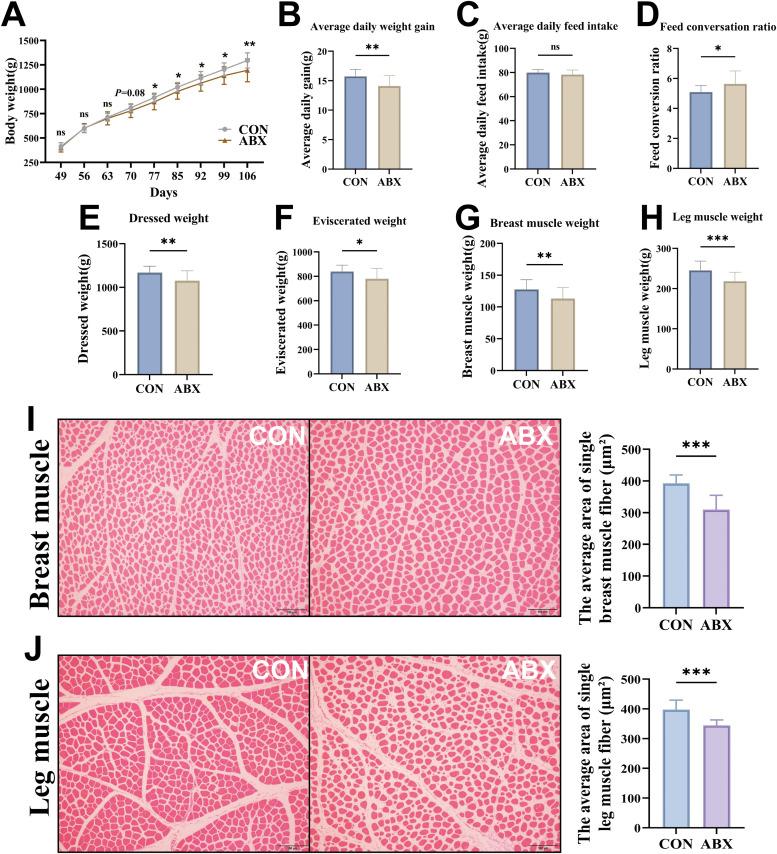
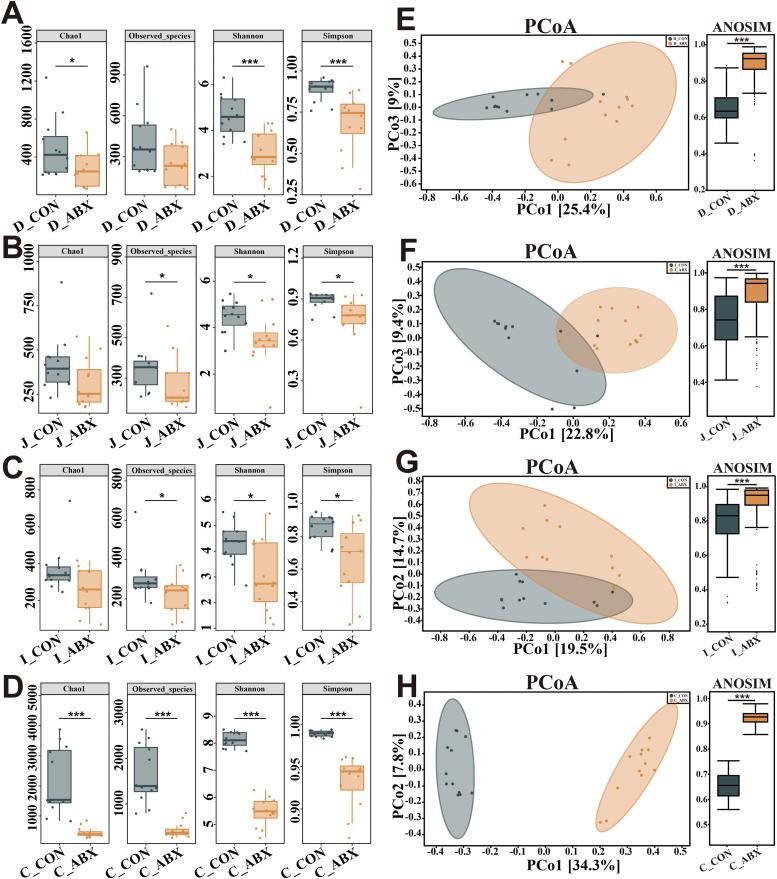
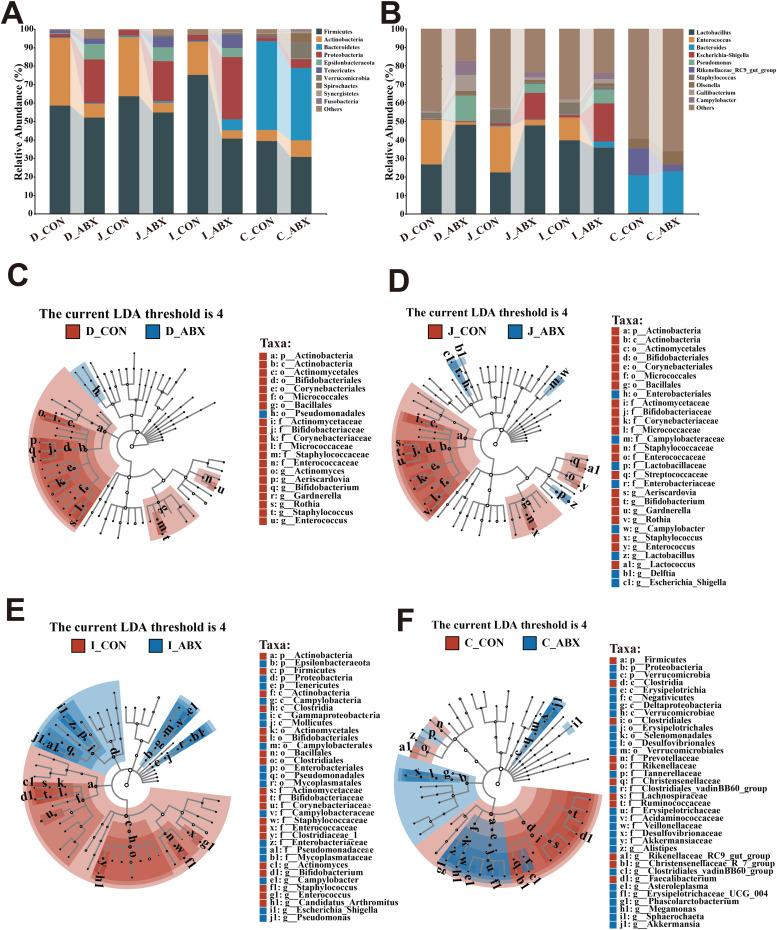
The intestinal microbiome is essential in regulating host muscle growth and development. Antibiotic treatment is commonly used to model dysbiosis of the intestinal microbiota, yet limited research addresses the relationship between gut microbes and muscle growth in yellow-feathered broilers. In this study, Xinghua chickens were administered broad-spectrum antibiotics for eight weeks to induce gut microbiome suppression. We investigated the relationships between the gut microbiome and muscle growth using 16S rRNA sequencing and transcriptomic analysis. Results indicated that antibiotic treatment significantly reduced body weight, dressed weight, eviscerated weight, and breast and leg muscle weight. Microbial diversity and richness in the duodenum, jejunum, ileum, and cecum were significantly decreased. The relative abundances of Firmicutes, Actinobacteria, and Bacteroidetes declined, while Proteobacteria increased. This microbial imbalance led to 298 differentially expressed genes (DEGs) in muscle tissue, of which 67 down-regulated genes were enriched in skeletal muscle development, including MYF6, MYBPC1 and METTL21C genes essential for muscle development. The DEGs were primarily involved in the MAPK signaling pathway, calcium signaling pathway, ECM-receptor interaction, actin cytoskeleton regulation, and nitrogen metabolism. Correlation analysis showed that dysregulation of the cecal microbiome had the most substantial effect on muscle growth and development. Furthermore, intestinal microbiome dysregulation reduced DNMT3b and METTL21C mRNA expression in muscle tissue, lowered overall DNA methylation and SAM levels, and induced methylation changes that impacted skeletal muscle development. This study demonstrates that gut microbiota influence DNA methylation in muscle tissue, thereby associated with muscle growth and development.
肠道微生物群对于调节宿主肌肉生长和发育至关重要。抗生素治疗常用于模拟肠道微生物群的失调,但针对黄羽肉鸡肠道微生物与肌肉生长之间关系的研究有限。在本研究中,对杏花鸡施用广谱抗生素八周以诱导肠道微生物群抑制。我们使用16S rRNA测序和转录组分析研究了肠道微生物群与肌肉生长之间的关系。结果表明,抗生素治疗显著降低了体重、屠体重、去内脏重以及胸肌和腿肌重量。十二指肠、空肠、回肠和盲肠中的微生物多样性和丰富度显著降低。厚壁菌门、放线菌门和拟杆菌门的相对丰度下降,而变形菌门增加。这种微生物失衡导致肌肉组织中有298个差异表达基因(DEG),其中67个下调基因在骨骼肌发育中富集,包括对肌肉发育至关重要的MYF6、MYBPC1和METTL21C基因。这些DEG主要参与丝裂原活化蛋白激酶(MAPK)信号通路、钙信号通路、细胞外基质受体相互作用、肌动蛋白细胞骨架调节和氮代谢。相关性分析表明,盲肠微生物群失调对肌肉生长和发育的影响最大。此外,肠道微生物群失调降低了肌肉组织中DNMT3b和METTL21C mRNA的表达,降低了总体DNA甲基化和S-腺苷甲硫氨酸(SAM)水平,并诱导了影响骨骼肌发育的甲基化变化。本研究表明,肠道微生物群影响肌肉组织中的DNA甲基化,从而与肌肉生长和发育相关。



 Zotero 插件