
通过皮克林乳液用精油功能化的生物基食品包装系统:优势、挑战及当前应用
Biobased Food Packaging Systems Functionalized with Essential Oil via Pickering Emulsion: Advantages, Challenges, and Current Applications.
作者信息
De Farias Patrícia Marques, De Sousa Roberta Vieira, Maniglia Bianca Chieregato, Pascall Melvin, Matthes Julia, Sadzik Anna, Schmid Markus, Fai Ana Elizabeth Cavalcante
机构信息
Sustainable Packaging Institute SPI, Faculty of Life Sciences, Albstadt-Sigmaringen University, Anton-Guenther-Straße 51, 72488 Sigmaringen, Germany.
Food and Nutrition Graduate Program, Federal University of the State of Rio de Janeiro - UNIRIO, Av. Pasteur, 296, Urca, Rio de Janeiro, Rio de Janeiro 22290-240, Brazil.
出版信息
ACS Omega. 2025 Jan 28;10(5):4173-4186. doi: 10.1021/acsomega.4c09320. eCollection 2025 Feb 11.
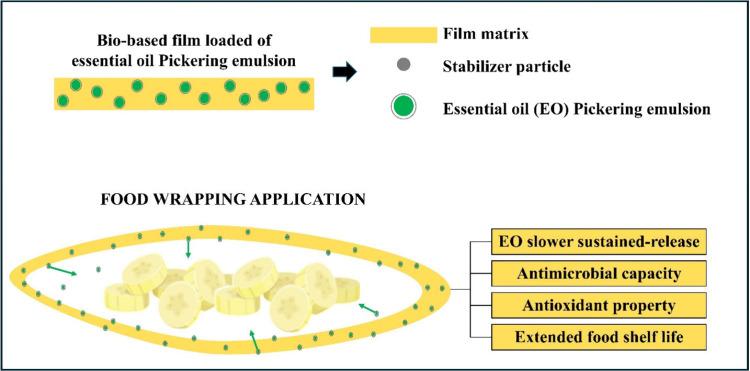
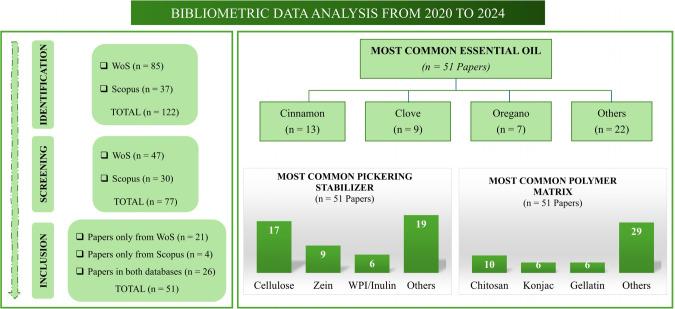
The development of innovative active food packaging is a promising strategy to mitigate food loss and waste while enhancing food safety, extending shelf life, and maintaining overall quality. In this review, Pickering emulsions with essential oils are critically evaluated as active additives for sustainable food packaging films, focusing on their antimicrobial and antioxidant properties, stabilization mechanisms, and physicochemical performances. A bibliometric approach was used to contextualize the current research landscape and new trends. Data were collected from the Web of Science and Scopus databases to find studies published between 2020 and 2024. The analysis of 51 articles shows that cinnamon, clove, and oregano are the most used essential oils, while cellulose and chitosan are the predominant polymer matrices. Pickering emulsions as stabilizers in food science represent a step forward in sustainable emulsion technology. The incorporation of essential oils into biobased films via Pickering emulsions can improve the mechanical and barrier properties, antimicrobial and antioxidant activities, and shelf life of foods. This approach offers a natural, environmentally friendly alternative to conventional materials and is in line with the 2030 Agenda goals for sustainability and responsible consumption. Recent advances show that composite particles combining polysaccharides and proteins have higher stability and functionality compared to single particles due to their optimized interactions at the interfaces. Future research should focus on developing scalable, cost-effective production methods and conducting comprehensive environmental testing and regulatory compliance, particularly for nanotechnology-based packaging. These efforts will be crucial to drive the development of safe and effective biobased active food packaging.
开发创新型活性食品包装是一种很有前景的策略,可减少食品损失和浪费,同时提高食品安全、延长保质期并保持整体质量。在本综述中,对含有精油的Pickering乳液作为可持续食品包装薄膜的活性添加剂进行了批判性评估,重点关注其抗菌和抗氧化性能、稳定机制以及物理化学性能。采用文献计量学方法来梳理当前的研究现状和新趋势。从科学网和Scopus数据库收集数据,以查找2020年至2024年发表的研究。对51篇文章的分析表明,肉桂、丁香和牛至是最常用的精油,而纤维素和壳聚糖是主要的聚合物基质。Pickering乳液作为食品科学中的稳定剂代表了可持续乳液技术的一大进步。通过Pickering乳液将精油掺入生物基薄膜中,可以改善食品的机械性能和阻隔性能、抗菌和抗氧化活性以及保质期。这种方法为传统材料提供了一种天然、环保的替代品,符合2030年可持续发展议程中关于可持续性和负责任消费的目标。最新进展表明,与单一颗粒相比,结合多糖和蛋白质的复合颗粒由于其在界面处的优化相互作用而具有更高的稳定性和功能性。未来的研究应侧重于开发可扩展、具有成本效益的生产方法,并进行全面的环境测试和法规合规性研究,特别是对于基于纳米技术的包装。这些努力对于推动安全有效的生物基活性食品包装的发展至关重要。

 Zotero 插件