
硅减轻干旱对生理、形态测量和解剖特征的不利影响。
Silicon mitigates the adverse effects of drought on physiological, morphometric and anatomical characters.
作者信息
Mastalerczuk Grażyna, Borawska-Jarmułowicz Barbara, Sujkowska-Rybkowska Marzena, Bederska-Błaszczyk Magdalena, Borucki Wojciech, Dąbrowski Piotr
机构信息
Department of Agronomy, Institute of Agriculture, Warsaw University of Life Sciences - SGGW, Warsaw, Poland.
Department of Botany, Institute of Biology, Warsaw University of Life Sciences-SGGW, Warsaw, Poland.
出版信息
PeerJ. 2025 Feb 12;13:e18944. doi: 10.7717/peerj.18944. eCollection 2025.
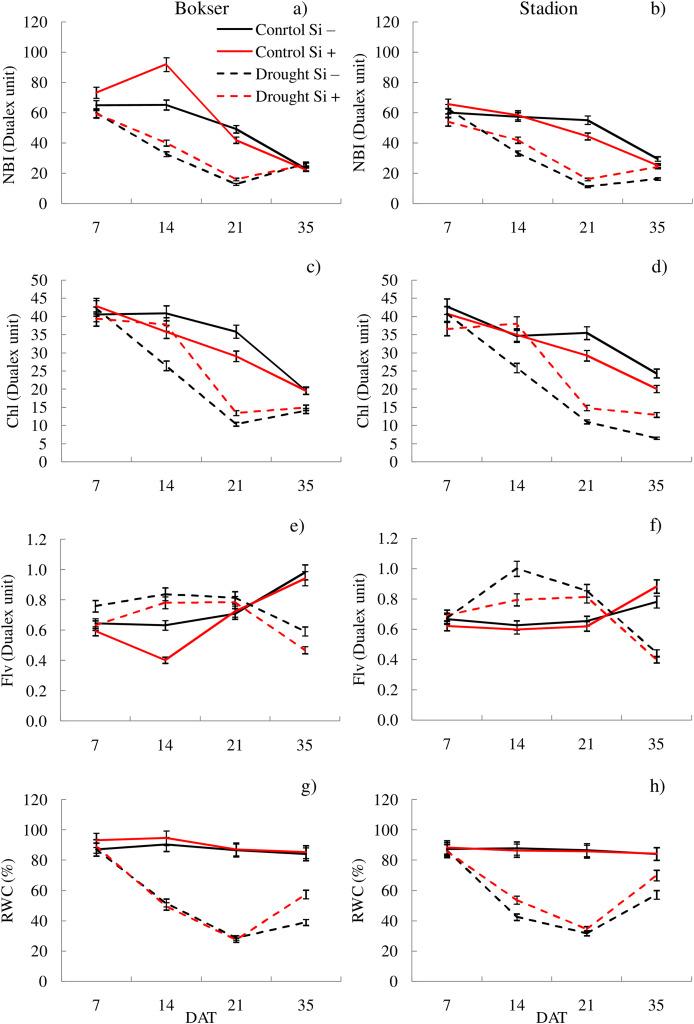
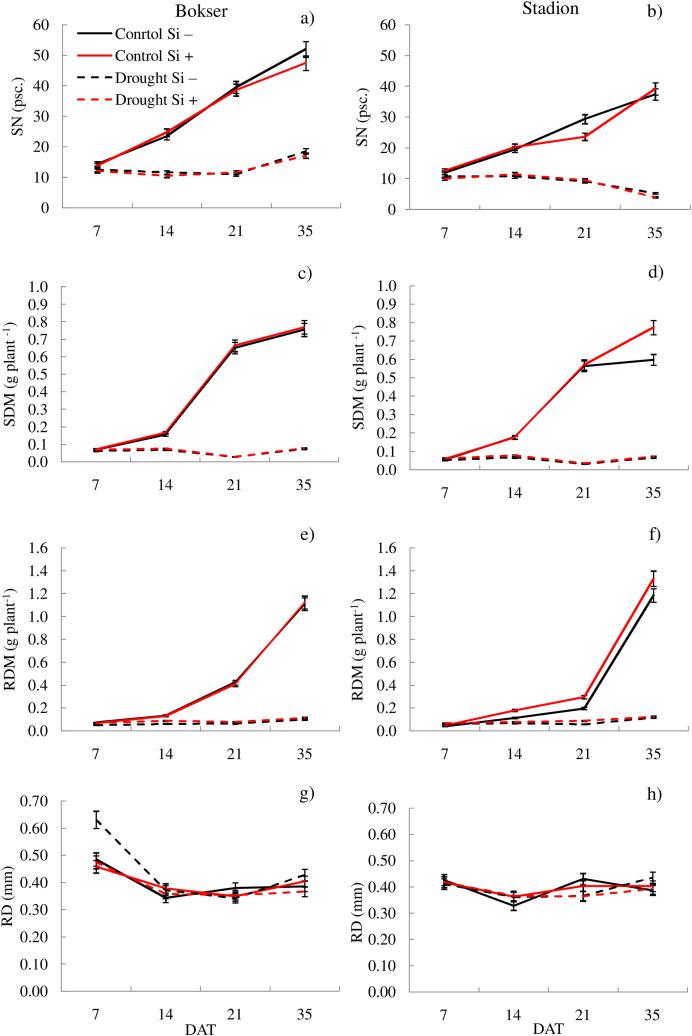
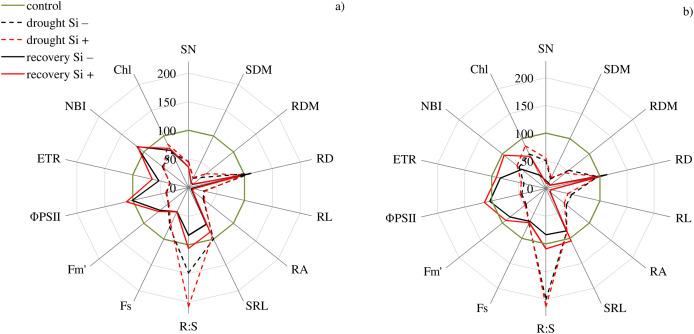
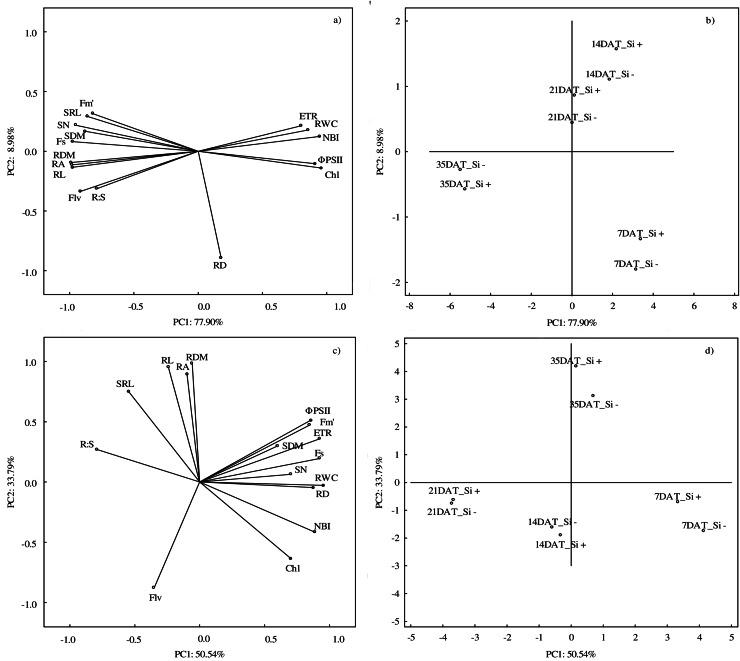
Limited water resources and natural drought may result in reduced water availability for the population's needs and the maintenance of the proper vegetation condition. Understanding the impact of drought on turfgrass species is essential to developing strategies that enhance the adaptability of plants to drought stress. It is vital for maintaining green areas in cities under changing climatic conditions. Therefore, studies on the ability of turfgrasses to recover after periods of drought without irrigation are becoming increasingly essential. We conducted research to determine the possibility of reducing the negative impact of drought stress on the photosynthetic efficiency, the morphometric features of plant shoots and roots, and the distribution of biomass of lawn cultivars in the initial period of growth by applying biostimulant with silicon. We also investigated how drought and silicon (Si) application affect the leaf and root anatomical structure of plants. Studies on the influence of drought on the physiological, biometric parameters and anatomical characteristics of two cultivars were carried out under two levels of soil moisture (well-watered plants-control and drought caused by the cessation of watering) and also two variants of Si application (with and without Si application). Plants were exposed to drought in the tillering phase for 21 days. After this time, all plants were provided with optimal soil moisture conditions for the next 14 days (recovery period). Measurements of physiological parameters and biometric features of plants were evaluated in four terms: after 7, 14 and 21 days of drought and after recovery. Drought stress in cvs. resulted in decreasing values of physiological parameters, especially maximal fluorescence, the quantum efficiency of photosystem II and photosynthetic electron transport rate compared with the values of features in well-watered plants. These adverse impacts were reflected in decreased biomass-related traits: shoot number, shoots and roots biomass, as well as area and length of roots. The application of Si reduced the detrimental effects of drought by accelerating plant growth after stress and increasing the values of most of the investigated physiological parameters. Under drought stress conditions, Si application led to the development of two-cell-layer exodermis, which reduced the water losses in roots and shoots and, as a result, improved the drought tolerance of plants.
水资源有限和自然干旱可能导致可供民众使用的水量减少,以及无法维持适当的植被状况。了解干旱对草坪草种的影响对于制定提高植物对干旱胁迫适应性的策略至关重要。这对于在不断变化的气候条件下维持城市绿地至关重要。因此,研究草坪草在无灌溉干旱期后的恢复能力变得越来越重要。我们进行了研究,以确定通过施用含硅生物刺激剂来降低干旱胁迫对光合效率、植物地上部和根部形态特征以及草坪品种在生长初期生物量分布的负面影响的可能性。我们还研究了干旱和施用硅(Si)如何影响植物的叶和根解剖结构。在两种土壤湿度水平(充分浇水的植株——对照和停止浇水导致的干旱)以及两种硅施用变体(施用硅和不施用硅)下,对两个品种进行了干旱对其生理、生物特征参数和解剖特征影响的研究。植株在分蘖期遭受干旱21天。在此之后,在接下来的14天(恢复期)为所有植株提供最佳土壤湿度条件。在干旱7天、14天和21天后以及恢复后这四个阶段对植株的生理参数和生物特征进行了评估。与充分浇水植株的特征值相比,品种中的干旱胁迫导致生理参数值下降,尤其是最大荧光、光系统II的量子效率和光合电子传递速率。这些不利影响反映在与生物量相关的性状下降上:枝条数量、地上部和根部生物量以及根的面积和长度。施用硅通过在胁迫后加速植物生长并提高大多数研究的生理参数值,减少了干旱的有害影响。在干旱胁迫条件下,施用硅导致形成两层细胞的外皮层,减少了地上部和根部的水分流失,从而提高了植物的耐旱性。




 Zotero 插件