
IgE在哮喘气道上皮中的直接和间接作用
The Direct and Indirect Role of IgE on Airway Epithelium in Asthma.
作者信息
Domingo Christian, Busse William W, Hanania Nicola A, Ertugrul Muyesser, Millette Lauren A, Maio-Twofoot Tina, Jaumont Xavier, Palomares Oscar
机构信息
Department of Pulmonary Medicine, Parc Taulí Hospital Universitari, Institut d'Investigació i Innovació Parc Taulí (I3PT-CERCA), Universitat Autònoma de Barcelona, Sabadell, Spain.
Division of Allergy, Pulmonary and Critical Care Medicine, Department of Medicine, University of Wisconsin School of Medicine and Public Health, Madison, Wisconsin, USA.
出版信息
Allergy. 2025 Apr;80(4):919-931. doi: 10.1111/all.16459. Epub 2025 Feb 18.
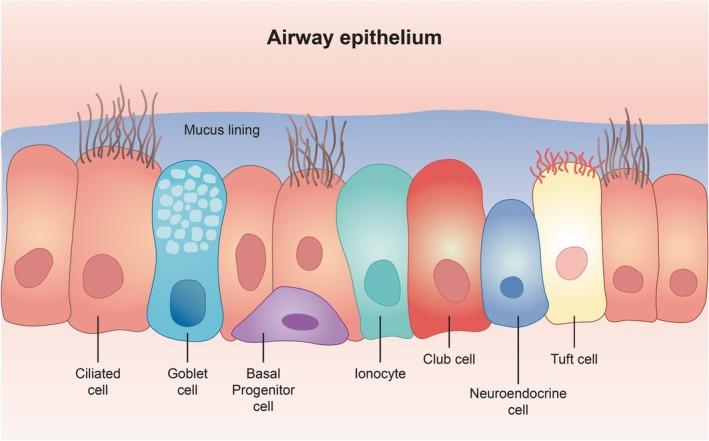
Asthma is a chronic airway inflammatory disorder, affecting over 350 million people worldwide, with allergic asthma being the most common form of the disease. Allergic asthma is characterized by a type 2 (T2) inflammatory response triggered by numerous allergens beginning in the airway epithelium, which acts as a physical barrier to allergens as well as other external irritants including infectious agents, and atmospheric pollutants. T2 inflammation is propagated by several key cell types including T helper 2 (Th2) cells, eosinophils, mast cells, and B cells. Immunoglobulin E (IgE), produced by B cells, is a key molecule in allergic airway disease and plays an important role in T2 inflammation, as well as being central to remodeling processes within the airway epithelium. Blocking IgE with omalizumab has been shown to be efficacious in treating allergic asthma however, the role of IgE on airway epithelial cells is less communicated. Developing a deeper explanation of the complex network of interactions between IgE and the airway epithelium will facilitate an improved understanding of asthma pathophysiology. This review discusses the indirect and direct roles of IgE on airway epithelial cells, with a focus on allergic asthma disease.
哮喘是一种慢性气道炎症性疾病,全球有超过3.5亿人受其影响,其中过敏性哮喘是该疾病最常见的形式。过敏性哮喘的特征是由多种过敏原引发的2型(T2)炎症反应,这种反应始于气道上皮,气道上皮对过敏原以及包括感染因子和大气污染物在内的其他外部刺激物起到物理屏障的作用。T2炎症由几种关键细胞类型介导,包括辅助性T细胞2(Th2)、嗜酸性粒细胞、肥大细胞和B细胞。B细胞产生的免疫球蛋白E(IgE)是过敏性气道疾病中的关键分子,在T2炎症中起重要作用,并且在气道上皮的重塑过程中也至关重要。已证明使用奥马珠单抗阻断IgE在治疗过敏性哮喘方面有效,然而,IgE在气道上皮细胞上的作用鲜为人知。深入解释IgE与气道上皮之间复杂的相互作用网络将有助于更好地理解哮喘的病理生理学。本综述讨论了IgE在气道上皮细胞上的间接和直接作用,重点是过敏性哮喘疾病。



 Zotero 插件