
六种人类整合膜酶及其AlphaFold3预测的水溶性QTY类似物的结构生物信息学:对FACE1和STEA4结合机制的见解
Structure Bioinformatics of Six Human Integral Transmembrane Enzymes and their AlphaFold3 Predicted Water-Soluble QTY Analogs: Insights into FACE1 and STEA4 Binding Mechanisms.
作者信息
Chen Edward, Pan Emily, Zhang Shuguang
机构信息
Carnegie Mellon University, Pittsburgh, PA, USA.
Massachusetts Institute of Technology, 77 Massachusetts Avenue, Cambridge, MA, 02139, USA.
出版信息
Pharm Res. 2025 Feb;42(2):291-305. doi: 10.1007/s11095-025-03822-6. Epub 2025 Feb 18.
OBJECTIVE
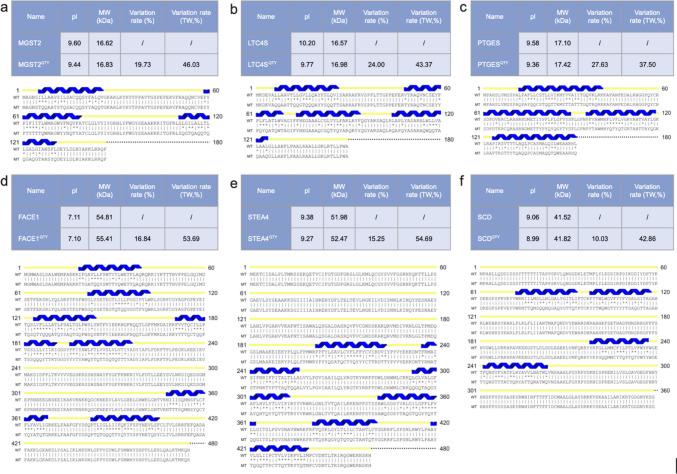
Human integral membrane enzymes are essential for catalyzing a wide range of biochemical reactions and regulating key cellular processes. However, studying these enzymes remains challenging due to their hydrophobic nature, which necessitates the use of detergents. This study explores whether applying the QTY code can reduce the hydrophobicity of these enzymes while preserving their structures and functions, thus facilitating bioinformatics analysis of six key integral membrane enzymes: MGST2, LTC4S, PTGES, FACE1, STEA4, and SCD.
METHODS
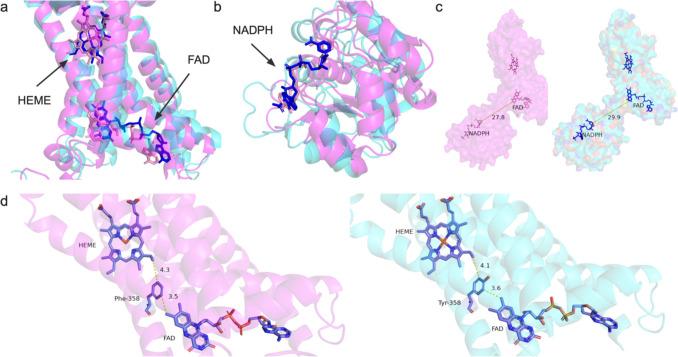
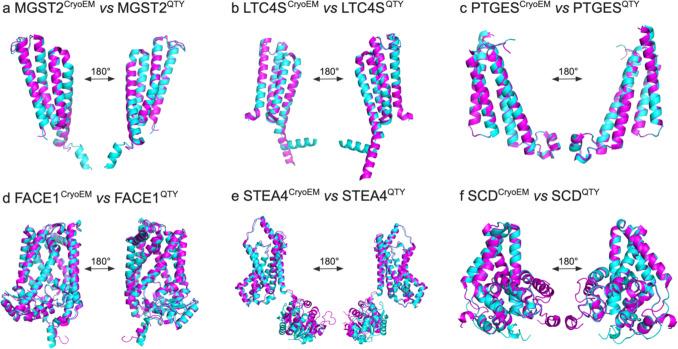
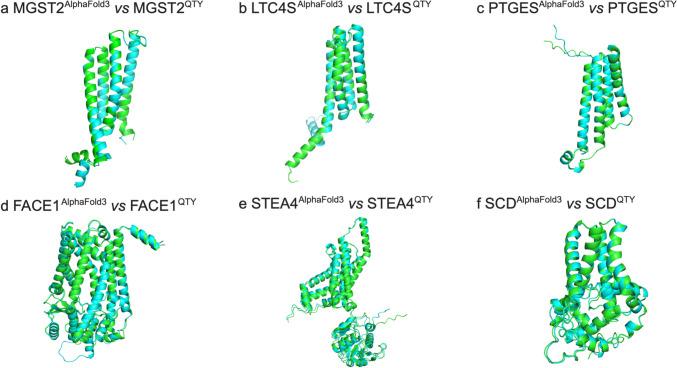
The water-soluble QTY analogs of the six membrane enzymes were predicted using AlphaFold3. The predicted structures were superposed with CyroEM determined native structures in PyMOL to observe changes in structure and protein-ligand binding ability.
RESULTS
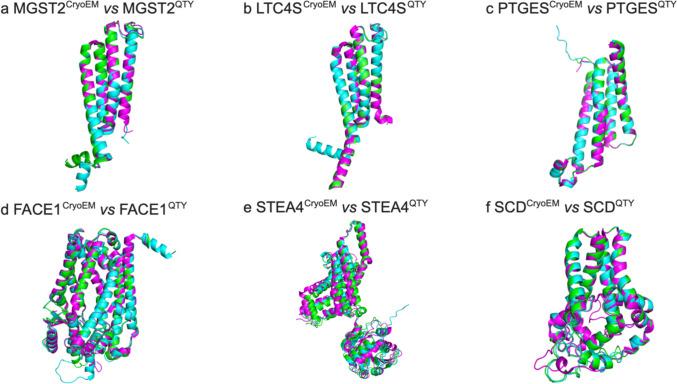
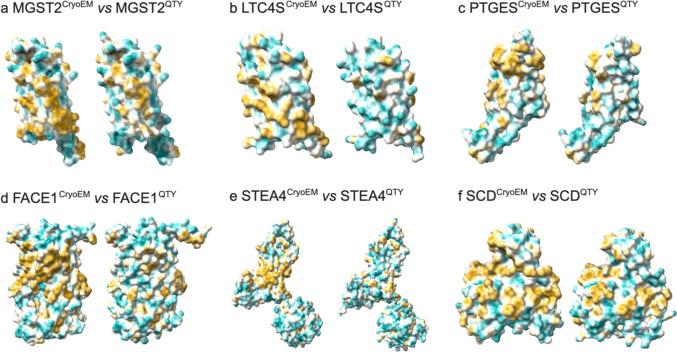
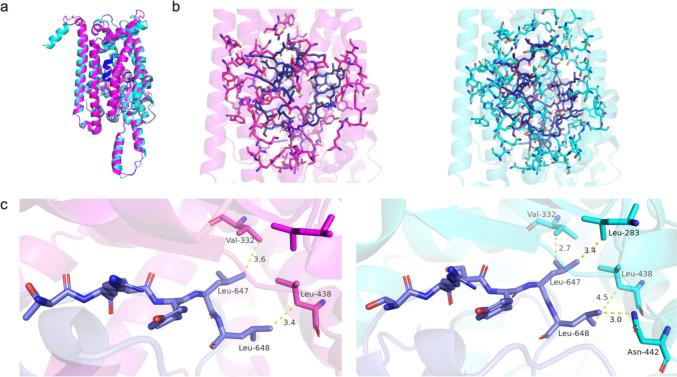
The native membrane enzymes superposed well with their respective QTY analogs, with the root mean square deviation (RMSD) ranging from 0.273 Å to 0.875 Å. Surface hydrophobic patches on the QTY analogs were significantly reduced. Importantly, the protein-ligand interactions in FACE1 and STEA4 were largely preserved, indicating maintained functionality.
CONCLUSION
Our structural bioinformatics studies using the QTY code and AlphaFold3 not only provide the opportunities of designing more water-soluble integral membrane enzymes, but also use these water-soluble QTY analogs as antigens for therapeutic monoclonal antibody discovery to specifically target the key integral membrane enzymes.
目的
人类整合膜酶对于催化广泛的生化反应和调节关键细胞过程至关重要。然而,由于其疏水性,研究这些酶仍然具有挑战性,这就需要使用去污剂。本研究探讨应用QTY编码是否能在保留其结构和功能的同时降低这些酶的疏水性,从而便于对六种关键整合膜酶进行生物信息学分析,这六种酶分别是MGST2、LTC4S、PTGES、FACE1、STEA4和SCD。
方法
使用AlphaFold3预测六种膜酶的水溶性QTY类似物。将预测的结构与在PyMOL中通过冷冻电镜确定的天然结构进行叠加,以观察结构变化和蛋白质 - 配体结合能力。
结果
天然膜酶与其各自的QTY类似物叠加良好,均方根偏差(RMSD)范围为0.273 Å至0.875 Å。QTY类似物上的表面疏水斑块显著减少。重要的是,FACE1和STEA4中的蛋白质 - 配体相互作用在很大程度上得以保留,表明功能得以维持。
结论
我们使用QTY编码和AlphaFold3进行的结构生物信息学研究不仅为设计更多水溶性整合膜酶提供了机会,还可将这些水溶性QTY类似物用作抗原,用于发现治疗性单克隆抗体,以特异性靶向关键整合膜酶。

 Zotero 插件