
肠道类器官的应用:用于研究肠道微生物群的生理学和疾病
The Use of Gut Organoids: To Study the Physiology and Disease of the Gut Microbiota.
作者信息
Deng Ya, Yuan Xiaolu, Lu XianMin, Wu Jiangbo, Luo Chen, Zhang Ting, Liu Qi, Tang Siqi, Li Zhuo, Mu Xingyi, Hu Yanxia, Du Qian, Xu Jingyu, Xie Rui
机构信息
Department of Endoscopy and Digestive System, Guizhou Provincial People's Hospital, Guiyang, Guizhou, China.
Zunyi Medical University, Zunyi, Guizhou, China.
出版信息
J Cell Mol Med. 2025 Feb;29(4):e70330. doi: 10.1111/jcmm.70330.
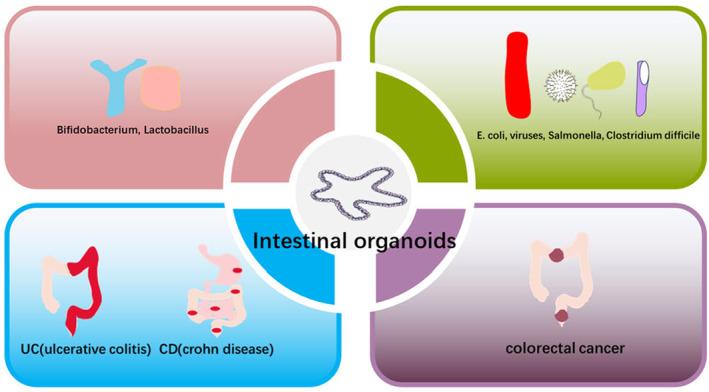
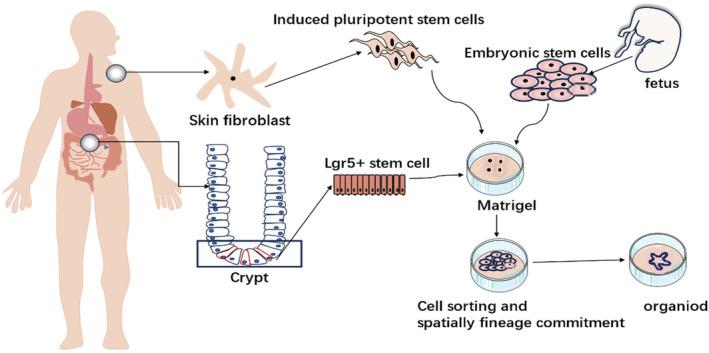
The intestinal flora has attracted much attention in recent years. An imbalance in the intestinal flora can cause not only intestinal diseases but also cause a variety of parenteral diseases, such as endocrine diseases, nervous system diseases and cardiovascular diseases. Research on the mechanism of disease is likely to be hampered by sample accessibility, ethical issues, and differences between cellular animal and physiological studies. However, advances in stem cell culture have made it possible to reproduce 3D human tissues in vitro that mimic the cellular, anatomical and functional characteristics of real organs. Recent studies have shown that organoids can be used to simulate the development and disease of the gut and intestinal flora and have a wide range of applications in intestinal flora physiology and disease. Intestinal organoids provide a preeminent in vitro model system for cultivating microbiota that influence GI physiology, as well as for understanding how they encounter intestinal epithelial cells and cause disease. The mechanistic details obtained from such modelling may provide new avenues for the prevention and treatment of many gastrointestinal (GI) disorders. Researchers are now starting to take inspiration from other fields, such as bioengineering, and the rise of interdisciplinary approaches, including organoid chip technology and microfluidics, has greatly accelerated the development of organoids to generate intestinal organoids that are more physiologically relevant and suitable for gut microbiota studies. Here, we describe the development of organoid models of gut biology and the application of organoids to study the pathophysiology of diseases caused by intestinal dysbiosis.
近年来,肠道菌群备受关注。肠道菌群失衡不仅会引发肠道疾病,还会导致多种肠外疾病,如内分泌疾病、神经系统疾病和心血管疾病。对疾病机制的研究可能会受到样本可获取性、伦理问题以及细胞动物研究与生理学研究之间差异的阻碍。然而,干细胞培养技术的进步使得在体外重现模仿真实器官细胞、解剖和功能特征的三维人体组织成为可能。最近的研究表明,类器官可用于模拟肠道和肠道菌群的发育及疾病情况,在肠道菌群生理学和疾病研究中具有广泛应用。肠道类器官为培养影响胃肠道生理学的微生物群,以及理解它们如何与肠道上皮细胞相互作用并引发疾病提供了卓越的体外模型系统。从这种模型中获得的机制细节可能为许多胃肠道疾病的预防和治疗提供新途径。研究人员现在开始从生物工程等其他领域汲取灵感,包括类器官芯片技术和微流体技术在内的跨学科方法的兴起,极大地加速了类器官的发展,从而产生更具生理相关性且适合肠道微生物群研究的肠道类器官。在此,我们描述肠道生物学类器官模型的发展以及类器官在研究肠道生态失调所致疾病病理生理学中的应用。

 Zotero 插件