
表观基因组回声——解码基因组和表观遗传不稳定性以区分肺癌类型并预测复发
Epigenomic Echoes-Decoding Genomic and Epigenetic Instability to Distinguish Lung Cancer Types and Predict Relapse.
作者信息
Baumann Alexandra A, Buribayev Zholdas, Wolkenhauer Olaf, Salybekov Amankeldi A, Wolfien Markus
机构信息
Department of Systems Biology and Bioinformatics, Institute of Computer Science, University of Rostock, 18051 Rostock, Germany.
Faculty of Medicine Carl Gustav Carus, Institute for Medical Informatics and Biometry, TUD Dresden University of Technology, 01069 Dresden, Germany.
出版信息
Epigenomes. 2025 Feb 5;9(1):5. doi: 10.3390/epigenomes9010005.
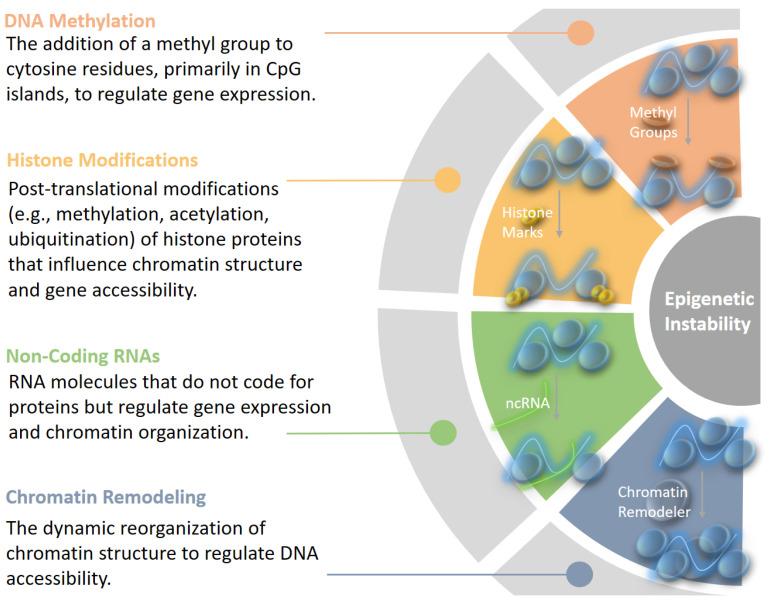
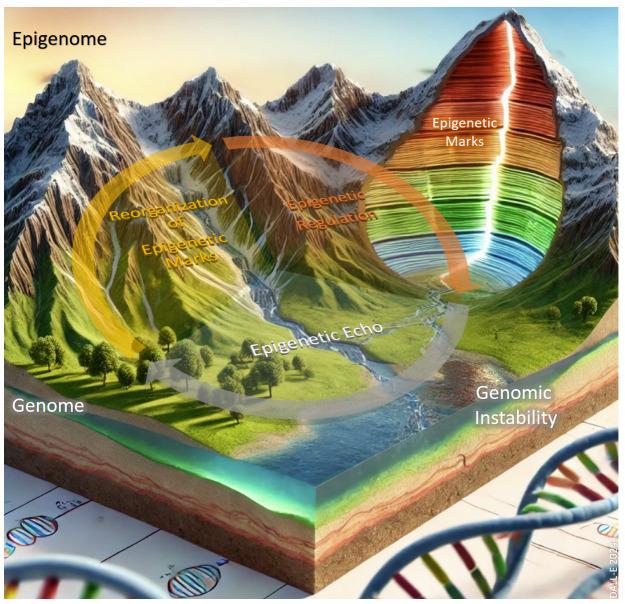
Genomic and epigenomic instability are defining features of cancer, driving tumor progression, heterogeneity, and therapeutic resistance. Central to this process are epigenetic echoes, persistent and dynamic modifications in DNA methylation, histone modifications, non-coding RNA regulation, and chromatin remodeling that mirror underlying genomic chaos and actively influence cancer cell behavior. This review delves into the complex relationship between genomic instability and these epigenetic echoes, illustrating how they collectively shape the cancer genome, affect DNA repair mechanisms, and contribute to tumor evolution. However, the dynamic, context-dependent nature of epigenetic changes presents scientific and ethical challenges, particularly concerning privacy and clinical applicability. Focusing on lung cancer, we examine how specific epigenetic patterns function as biomarkers for distinguishing cancer subtypes and monitoring disease progression and relapse.
基因组和表观基因组不稳定性是癌症的决定性特征,推动肿瘤进展、异质性和治疗耐药性。这一过程的核心是表观遗传回声,即DNA甲基化、组蛋白修饰、非编码RNA调控和染色质重塑中的持续动态修饰,这些修饰反映了潜在的基因组混乱,并积极影响癌细胞行为。本综述深入探讨了基因组不稳定性与这些表观遗传回声之间的复杂关系,阐明了它们如何共同塑造癌症基因组、影响DNA修复机制并促进肿瘤进化。然而,表观遗传变化的动态、上下文依赖性质带来了科学和伦理挑战,尤其是在隐私和临床适用性方面。以肺癌为例,我们研究了特定的表观遗传模式如何作为区分癌症亚型以及监测疾病进展和复发的生物标志物发挥作用。

 Zotero 插件