
引起血流感染的主要细菌病原体、抗菌药物耐药模式及趋势:厄立特里亚阿斯马拉的一项多中心回顾性研究(2014 - 2022年)
Major blood stream infection-causing bacterial pathogens, antimicrobial resistance patterns and trends: a multisite retrospective study in Asmara, Eritrea (2014-2022).
作者信息
Andemichael Yosan Gebremeskel, Habtetsion Eyorusalem Tsehaye, Gulbet Hagos Hayelom, Eman Maedn Hailemariam, Achila Oliver Okoth, Mengistu Samuel Tekle, Andemichael Azania Werede, Buthuamlak Abrehet Marikos, Garoy Eyob Yohannes, Tesfai Berhe, Hamida Mohammed Elfatih
机构信息
Microbiology Department, National Health Laboratory, Ministry of Health, Asmara, Eritrea.
National Blood Transfusion Center, Asmara, Eritrea.
出版信息
Ann Clin Microbiol Antimicrob. 2025 Feb 21;24(1):15. doi: 10.1186/s12941-025-00780-0.
BACKGROUND
An important knowledge gap exists on the epidemiology of blood stream infections (BSIs) in low-middle-income countries (LMICs). In this retrospective analysis, we evaluated the etiology, antimicrobial resistance (AMR) and trends of BSIs in Eritrea.
METHODS
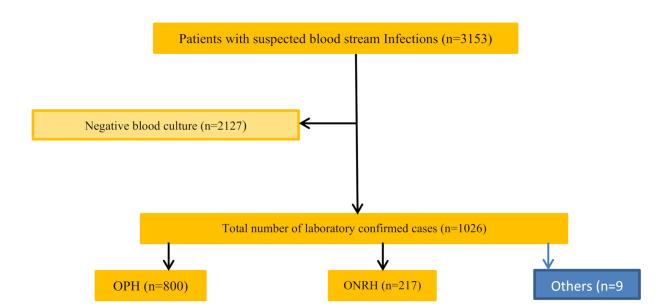
The study reviewed 9-year records (January 2014- December 2022) of 3153 patients with blood culture results available in the National Health Laboratory (NHL) archives. Relevant data included age, sex, hospital/care center, and year.
RESULT
During the surveillance period, we examined data from 3153 patients (1797 (57.0%) men vs. 1356 (43.0%) females, and 1.2 years (Q1: 0.01 months - Q3: 15 years). Of the samples submitted, 1026 (35.5%) samples were positive for the presence of pathogens (663(64.6%) pathogens vs. 363 (35.4%)) potential contaminants. In decreasing frequency, the most common isolates were: Coagulase-negative Staphylococcus (CoNs), 189 (28.6%); Klebsiella spp., 120 (18.2%); Escherichia coli, 66 (10.0%); Citrobacter spp., 48 (7.3%); Staphylococcus aureus, 47(7.1%); Pseudomonas aeruginosa, 34 (5.1%); and Salmonella spp., 33(5.1). The relative prevalence of BSIs changed somewhat over time (p-value < 0.001) with the isolation of multiple isolates trending upward from 2018 and onwards. Additional findings included the likely presence of extended spectrum beta lactamase (ESBL), high frequency of methicillin resistant Staphylococcus aureus (MRSA) (37(80.4%) and high rate of resistance to gentamicin (363(62.5%) and fluoroquinolones. Furthermore, the multiple antimicrobial resistances (MAR) index was relatively high (mean = 0.55, SD: ±0.23) with wide species-level variation. In a related density cluster analysis, we demonstrated a time-dependent increase in the diversity of resistotypes.
CONCLUSION
This study highlights the considerable health burden of AMR/or MDR in BSIs in Eritrea. Additionally, it underscores the urgent need for enhanced laboratory capacity, surveillance, institutionalisation of antibiotic stewardship programs, and robust infection control programs in hospitals across the country. The need for multidisciplinary research was also highlighted.
背景
在低收入和中等收入国家(LMICs),关于血流感染(BSIs)的流行病学存在重要的知识空白。在这项回顾性分析中,我们评估了厄立特里亚血流感染的病因、抗菌药物耐药性(AMR)及趋势。
方法
该研究回顾了国家卫生实验室(NHL)档案中3153例有血培养结果的患者9年(2014年1月至2022年12月)的记录。相关数据包括年龄、性别、医院/护理中心和年份。
结果
在监测期间,我们检查了3153例患者的数据(1797例(57.0%)男性对1356例(43.0%)女性,年龄中位数为1.2岁(第一四分位数:0.01个月 - 第三四分位数:15岁)。在所提交的样本中,1026例(35.5%)样本病原体检测呈阳性(663例(64.6%)为病原体,363例(35.4%)为潜在污染物)。按频率递减,最常见的分离株为:凝固酶阴性葡萄球菌(CoNs),189例(28.6%);克雷伯菌属,120例(18.2%);大肠埃希菌,66例(10.0%);柠檬酸杆菌属,48例(7.3%);金黄色葡萄球菌,47例(7.1%);铜绿假单胞菌,34例(5.1%);沙门菌属,33例(5.1%)。血流感染的相对患病率随时间有所变化(p值<0.001),2018年及以后多重分离株的分离呈上升趋势。其他发现包括可能存在超广谱β-内酰胺酶(ESBL)、耐甲氧西林金黄色葡萄球菌(MRSA)的高频率(37例(80.4%)以及对庆大霉素(363例(62.5%))和氟喹诺酮类的高耐药率。此外,多重抗菌药物耐药(MAR)指数相对较高(平均值 = 0.55,标准差:±0.23),且在物种水平上存在广泛差异。在相关的密度聚类分析中,我们证明了耐药型多样性随时间增加。
结论
本研究突出了厄立特里亚血流感染中抗菌药物耐药/多重耐药的巨大健康负担。此外,它强调了迫切需要加强实验室能力、监测、抗生素管理计划的制度化以及全国各医院强有力的感染控制计划。还强调了多学科研究的必要性。



 Zotero 插件