
癌症干细胞与微环境:免疫治疗耐药性面临的挑战
Cancer stem cells and niches: challenges in immunotherapy resistance.
作者信息
Pan Yonglong, Yuan Chaoyi, Zeng Chenglong, Sun Chaoyang, Xia Limin, Wang Guihua, Chen Xiaoping, Zhang Bixiang, Liu Jianfeng, Ding Ze-Yang
机构信息
Hepatic Surgery Center, Clinical Medical Research Center of Hepatic Surgery at Hubei Province, Tongji Hospital, Tongji Medical College, Huazhong University of Science and Technology, Wuhan, 430030, China.
Hubei Key Laboratory of Hepato-Pancreatic-Biliary Diseases, Tongji Hospital, Tongji Medical College, Huazhong University of Science and Technology, Wuhan, 430030, China.
出版信息
Mol Cancer. 2025 Feb 25;24(1):52. doi: 10.1186/s12943-025-02265-2.
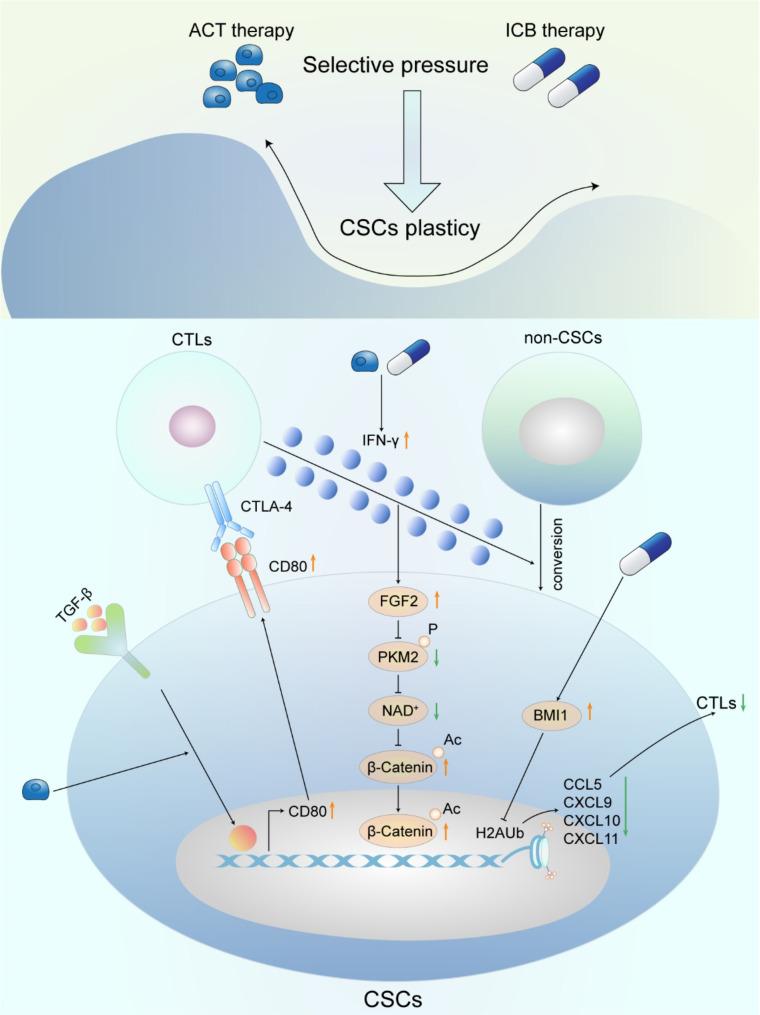
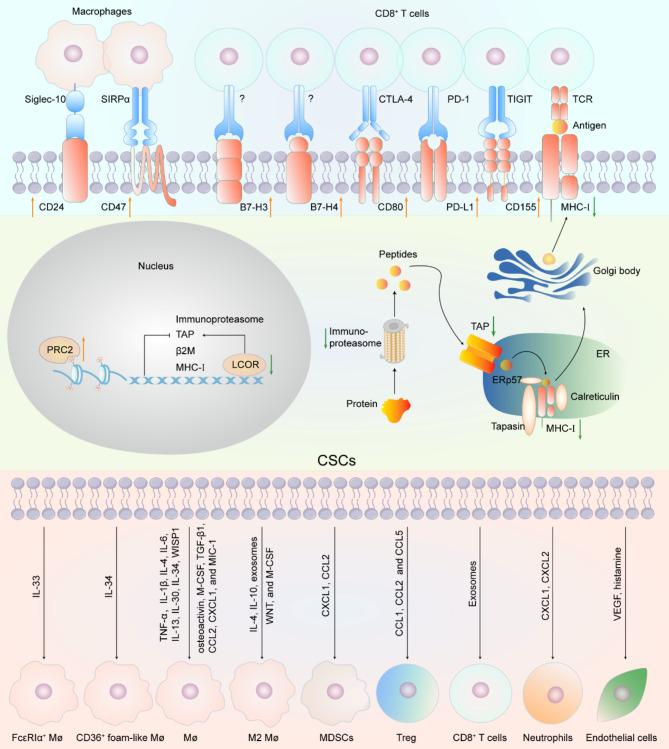
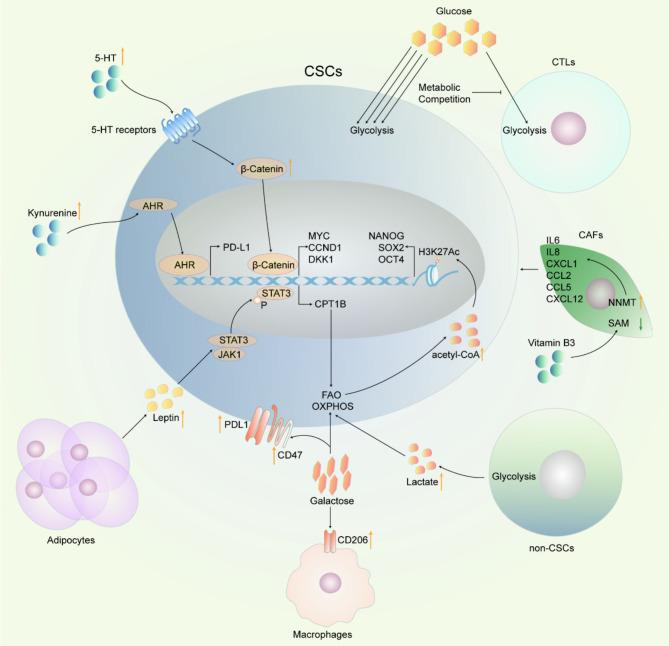
Cancer stem cells (CSCs) are central to tumor progression, metastasis, immune evasion, and therapeutic resistance. Characterized by remarkable self-renewal and adaptability, CSCs can transition dynamically between stem-like and differentiated states in response to external stimuli, a process termed "CSC plasticity." This adaptability underpins their resilience to therapies, including immune checkpoint inhibitors and adoptive cell therapies (ACT). Beyond intrinsic properties, CSCs reside in a specialized microenvironment-the CSC niche-which provides immune-privileged protection, sustains their stemness, and fosters immune suppression. This review highlights the critical role of CSCs and their niche in driving immunotherapy resistance, emphasizing the need for integrative approaches to overcome these challenges.
癌症干细胞(CSCs)是肿瘤进展、转移、免疫逃逸和治疗耐药的核心。CSCs具有显著的自我更新和适应性,能够响应外部刺激在干细胞样状态和分化状态之间动态转变,这一过程称为“CSC可塑性”。这种适应性是它们对包括免疫检查点抑制剂和过继性细胞疗法(ACT)在内的治疗产生抗性的基础。除了内在特性外,CSCs存在于一个特殊的微环境——CSC生态位中,该生态位提供免疫特权保护,维持它们的干性,并促进免疫抑制。本综述强调了CSCs及其生态位在驱动免疫治疗耐药性方面的关键作用,强调需要采用综合方法来克服这些挑战。


 Zotero 插件