
从遗传学到神经炎症:载脂蛋白E4对阿尔茨海默病中小胶质细胞功能的影响
From Genetics to Neuroinflammation: The Impact of ApoE4 on Microglial Function in Alzheimer's Disease.
作者信息
Dias Daniela, Portugal Camila Cabral, Relvas João, Socodato Renato
机构信息
i3S-Instituto de Investigação e Inovação em Saúde da Universidade do Porto, 4200-135 Porto, Portugal.
出版信息
Cells. 2025 Feb 7;14(4):243. doi: 10.3390/cells14040243.
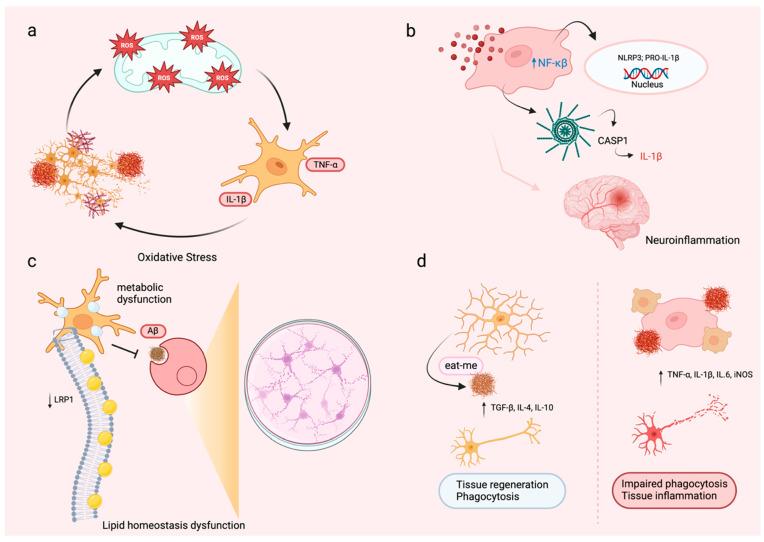
Alzheimer's disease (AD) is a debilitating neurodegenerative disorder marked by progressive cognitive decline and memory loss, impacting millions of people around the world. The apolipoprotein E4 (ApoE4) allele is the most prominent genetic risk factor for late-onset AD, dramatically increasing disease susceptibility and accelerating onset compared to its isoforms ApoE2 and ApoE3. ApoE4's unique structure, which arises from single-amino-acid changes, profoundly alters its function. This review examines the critical interplay between ApoE4 and microglia-the brain's resident immune cells-and how this relationship contributes to AD pathology. We explore the molecular mechanisms by which ApoE4 modulates microglial activity, promoting a pro-inflammatory state, impairing phagocytic function, and disrupting lipid metabolism. These changes diminish microglia's ability to clear amyloid-beta peptides, exacerbating neuroinflammation and leading to neuronal damage and synaptic dysfunction. Additionally, ApoE4 adversely affects other glial cells, such as astrocytes and oligodendrocytes, further compromising neuronal support and myelination. Understanding the ApoE4-microglia axis provides valuable insights into AD progression and reveals potential therapeutic targets. We discuss current strategies to modulate ApoE4 function using small molecules, antisense oligonucleotides, and gene editing technologies. Immunotherapies targeting amyloid-beta and ApoE4, along with neuroprotective approaches to enhance neuronal survival, are also examined. Future directions highlight the importance of personalized medicine based on individual ApoE genotypes, early biomarker identification for risk assessment, and investigating ApoE4's role in other neurodegenerative diseases. This review emphasizes the intricate connection between ApoE4 and microglial dysfunction, highlighting the necessity of targeting this pathway to develop effective interventions. Advancing our understanding in this area holds promise for mitigating AD progression and improving outcomes for those affected by this relentless disease.
阿尔茨海默病(AD)是一种使人衰弱的神经退行性疾病,其特征为进行性认知衰退和记忆丧失,影响着全球数百万人。载脂蛋白E4(ApoE4)等位基因是晚发性AD最主要的遗传风险因素,与它的异构体ApoE2和ApoE3相比,它会显著增加患病易感性并加速疾病发作。ApoE4独特的结构源于单氨基酸变化,这深刻改变了其功能。本综述探讨了ApoE4与小胶质细胞(大脑中的常驻免疫细胞)之间的关键相互作用,以及这种关系如何导致AD病理变化。我们探究了ApoE4调节小胶质细胞活性的分子机制,这种调节会促进促炎状态、损害吞噬功能并扰乱脂质代谢。这些变化削弱了小胶质细胞清除β淀粉样肽的能力,加剧了神经炎症,导致神经元损伤和突触功能障碍。此外,ApoE4对其他胶质细胞,如星形胶质细胞和少突胶质细胞产生不利影响,进一步损害神经元支持和髓鞘形成。了解ApoE4 - 小胶质细胞轴为AD进展提供了有价值的见解,并揭示了潜在的治疗靶点。我们讨论了目前使用小分子、反义寡核苷酸和基因编辑技术调节ApoE4功能的策略。还研究了针对β淀粉样蛋白和ApoE4的免疫疗法,以及增强神经元存活的神经保护方法。未来的方向强调了基于个体ApoE基因型的个性化医疗、用于风险评估的早期生物标志物识别以及研究ApoE4在其他神经退行性疾病中的作用的重要性。本综述强调了ApoE4与小胶质细胞功能障碍之间的复杂联系,突出了针对这一途径开发有效干预措施的必要性。在这一领域加深理解有望减缓AD进展,并改善受这种无情疾病影响者的预后。
 Zotero 插件