
mirvetuximab soravtansine在顺铂耐药性生殖细胞肿瘤细胞中诱导强效细胞毒性和旁观者效应。
Mirvetuximab Soravtansine Induces Potent Cytotoxicity and Bystander Effect in Cisplatin-Resistant Germ Cell Tumor Cells.
作者信息
Kucerova Lucia, Fekiacova Adriana, Udvorkova Natalia, Malcharkova Pavlina, Blahova Viktoria, Jochova Silvia, Kalavska Katarina, Cierna Zuzana, Mego Michal
机构信息
Translational Research Unit, 2nd Oncology Clinic of the Medical Faculty, Comenius University, and the National Cancer Institute, Klenova 1, 833 10 Bratislava, Slovakia.
Cancer Research Institute, Biomedical Research Center, Slovak Academy of Sciences, 845 05 Bratislava, Slovakia.
出版信息
Cells. 2025 Feb 15;14(4):287. doi: 10.3390/cells14040287.
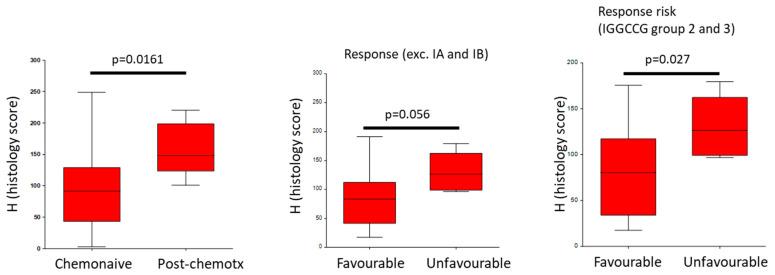
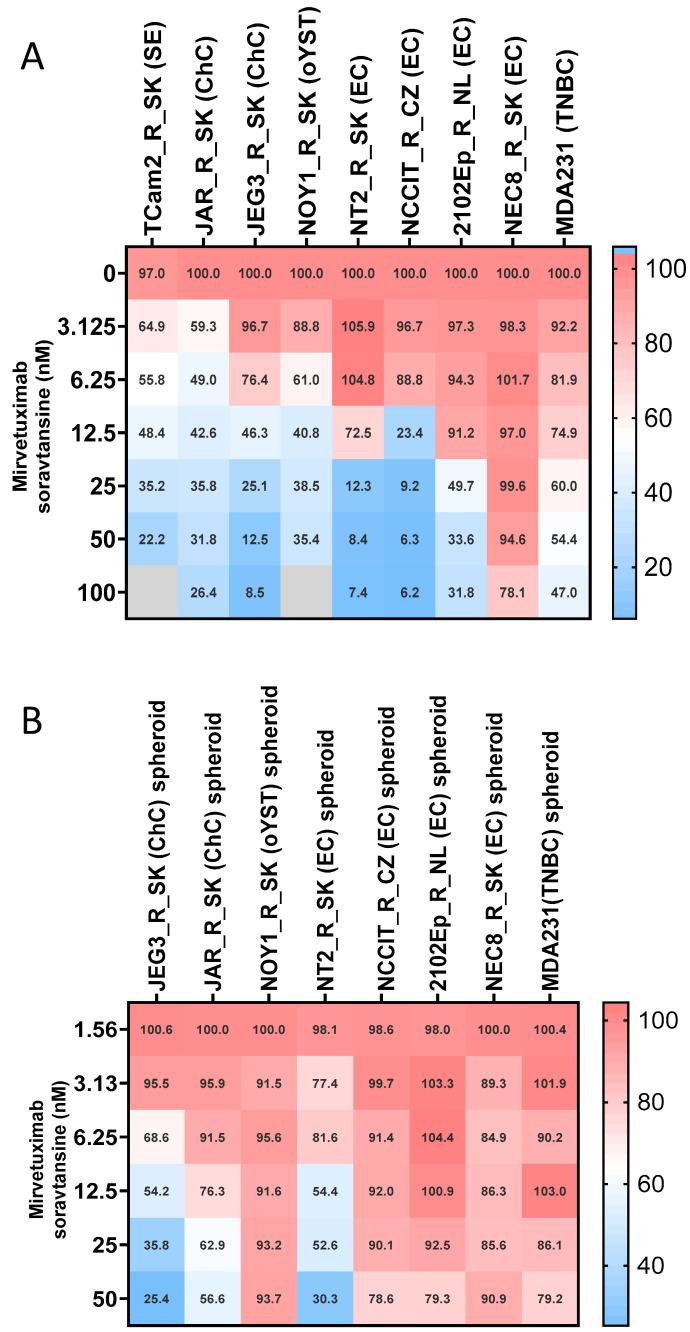
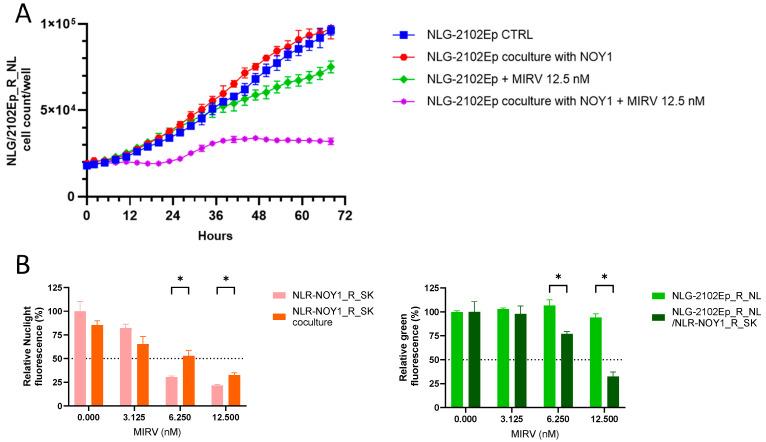
Patients with treatment-refractory/relapsing germ cell tumors (GCTs) have a dismal prognosis due to a lack of any effective therapy. Moreover, the efficacy of newly approved targeted therapies remains unexplored for cisplatin-resistant GCTs. Previously, it was demonstrated that folate receptor α (FRα) is overexpressed in many tumor types and efficiently targeted by the antibody-drug conjugate (ADC) mirvetuximab soravtansine (MIRV) in cisplatin-resistant cancers. We hypothesized that FRα represents an attractive target for treating treatment-refractory GCTs. We determined the expression of the gene in a broad range of GCT cell lines and tumor xenografts. We tested the antitumor efficacy of MIRV on cisplatin-resistant GCT cells in vitro and explored the ability of MIRV treatment to induce a bystander effect in the direct coculture of FRα-high and FRα-low cells. We found that the gene has significantly higher expression in testicular GCTs (TGCTs) than in normal testicular tissue. is highly expressed in the TCam2, JEG3, JAR, and NOY1 cell lines and their respective cisplatin-resistant variants. MIRV treatment induced apoptosis and a potent antiproliferative effect in cisplatin-resistant GCT cells in adherent and 3D spheroid cultures in vitro. A significant decrease in FRα-low 2102EP_R_NL cells was observed in the presence of FRα-high NOY1_R_SK in the presence of 12.5 nM MIRV, showing a potent bystander effect in the direct coculture. Immunohistochemical analysis confirmed significantly higher Folr1 protein expression in patients with TGCTs postchemotherapy than in chemo-naïve patients, as well as in patients with an unfavorable prognosis. In this study, we present data suggesting that the gene is highly expressed in (T)GCT cells in vitro and in vivo, and anti-FRα-targeting therapies should be investigated as a treatment modality in a subset of patients with TGCTs. Moreover, MIRV induced significant antitumor and bystander effects, thus showing its potential in further preclinical exploration and drug repurposing for a salvage treatment regime in refractory (T)GCT disease.
难治性/复发性生殖细胞肿瘤(GCT)患者由于缺乏有效的治疗方法,预后不佳。此外,新批准的靶向治疗对顺铂耐药的GCT的疗效仍未得到探索。此前有研究表明,叶酸受体α(FRα)在许多肿瘤类型中过表达,并且在顺铂耐药癌症中可被抗体药物偶联物(ADC)mirvetuximab soravtansine(MIRV)有效靶向。我们推测FRα是治疗难治性GCT的一个有吸引力的靶点。我们测定了该基因在广泛的GCT细胞系和肿瘤异种移植物中的表达。我们在体外测试了MIRV对顺铂耐药GCT细胞的抗肿瘤疗效,并探讨了MIRV治疗在FRα高表达和FRα低表达细胞直接共培养中诱导旁观者效应的能力。我们发现该基因在睾丸GCT(TGCT)中的表达明显高于正常睾丸组织。该基因在TCam2、JEG3、JAR和NOY1细胞系及其各自的顺铂耐药变体中高表达。在体外贴壁和3D球体培养中,MIRV治疗诱导顺铂耐药GCT细胞凋亡并产生强大的抗增殖作用。在存在12.5 nM MIRV的情况下,在FRα高表达的NOY1_R_SK存在下,观察到FRα低表达的2102EP_R_NL细胞显著减少,在直接共培养中显示出强大的旁观者效应。免疫组化分析证实,化疗后TGCT患者的Folr1蛋白表达明显高于未接受化疗的患者以及预后不良的患者。在本研究中,我们提供的数据表明,该基因在体外和体内的(T)GCT细胞中高表达,针对FRα的靶向治疗应作为一部分TGCT患者的治疗方式进行研究。此外,MIRV诱导了显著的抗肿瘤和旁观者效应,从而显示出其在难治性(T)GCT疾病的进一步临床前探索和药物重新利用以进行挽救治疗方案方面的潜力。



 Zotero 插件