
铁死亡和铜死亡在结核病发病机制中的作用:对治疗策略的启示
The Role of Ferroptosis and Cuproptosis in Tuberculosis Pathogenesis: Implications for Therapeutic Strategies.
作者信息
Dawi John, Affa Stephen, Kafaja Kevin, Misakyan Yura, Kades Samuel, Dayal Surbi, Fardeheb Sabrina, Narasimhan Ananya, Tumanyan Kevin, Venketaraman Vishwanath
机构信息
College of Osteopathic Medicine of the Pacific, Western University of Health Sciences, Pomona, CA 91766, USA.
Department of Chemistry, Physics, and Engineering, Los Angeles Valley College, Valley Glen, CA 91401, USA.
出版信息
Curr Issues Mol Biol. 2025 Feb 5;47(2):99. doi: 10.3390/cimb47020099.
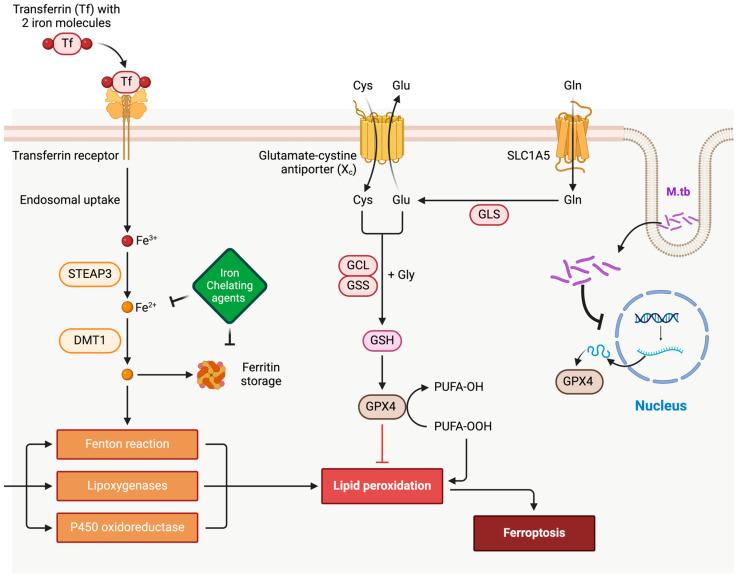
Tuberculosis (TB) caused by () remains a global health crisis, with over 10 million people affected annually. Despite advancements in treatment, has developed mechanisms to evade host immune responses, complicating efforts to eradicate the disease. Two emerging cell death pathways, ferroptosis and cuproptosis, have been linked to TB pathogenesis. Ferroptosis, an iron-dependent form of cell death, is driven by lipid peroxidation and reactive oxygen species (ROS) accumulation. This process can limit replication by depleting intracellular iron and inducing macrophage necrosis. However, excessive ferroptosis may lead to tissue damage and aid bacterial dissemination. Cuproptosis, triggered by copper accumulation, disrupts mitochondrial metabolism, leading to protein aggregation and cell death. exploits both iron and copper metabolism to survive within macrophages, manipulating these processes to resist oxidative stress and immune responses. This review examines the roles of ferroptosis and cuproptosis in TB, discussing how manipulates these pathways for survival. While therapeutic strategies targeting these processes, such as ferroptosis inducers (Erastin, RSL3) and inhibitors (Ferrostatin-1) and copper ionophores (Disulfiram, Elesclomol) and chelators, show promise, the limited understanding of these pathways and potential off-target effects remains a significant challenge. Further exploration of these pathways may provide insights into the development of targeted therapies aimed at controlling infection while minimizing host tissue damage. By elucidating the complex interactions between ferroptosis, cuproptosis, and TB, future therapies could better address bacterial resistance and improve clinical outcomes.
由()引起的结核病(TB)仍然是一场全球健康危机,每年有超过1000万人受到影响。尽管治疗取得了进展,但()已发展出逃避宿主免疫反应的机制,使根除该疾病的努力变得复杂。两种新兴的细胞死亡途径,铁死亡和铜死亡,已与结核病发病机制相关联。铁死亡是一种铁依赖性细胞死亡形式,由脂质过氧化和活性氧(ROS)积累驱动。这个过程可以通过耗尽细胞内铁和诱导巨噬细胞坏死来限制()复制。然而,过度的铁死亡可能导致组织损伤并有助于细菌传播。铜死亡由铜积累引发,扰乱线粒体代谢,导致蛋白质聚集和细胞死亡。()利用铁和铜代谢在巨噬细胞内存活,操纵这些过程以抵抗氧化应激和免疫反应。这篇综述探讨了铁死亡和铜死亡在结核病中的作用,讨论了()如何操纵这些途径以生存。虽然针对这些过程的治疗策略,如铁死亡诱导剂(艾拉司群、RSL3)和抑制剂(铁抑素-1)以及铜离子载体(双硫仑、依来氯铵)和螯合剂显示出前景,但对这些途径的有限理解和潜在的脱靶效应仍然是一个重大挑战。对这些途径的进一步探索可能为开发旨在控制()感染同时最小化宿主组织损伤的靶向治疗提供见解。通过阐明铁死亡、铜死亡和结核病之间的复杂相互作用,未来的治疗方法可以更好地应对细菌耐药性并改善临床结果。


 Zotero 插件