
循环核小体和组蛋白在肺损伤和脓毒症发展中的作用
Circulating Nucleosomes and Histones in the Development of Lung Injury and Sepsis.
作者信息
Dutta Saugata, Dutta Sauradeep, Somanath Payaningal R, Narayanan S Priya, Wang Xiaoyun, Zhang Duo
机构信息
Clinical and Experimental Therapeutics, College of Pharmacy, University of Georgia and Charlie Norwood VA Medical Center, Augusta, GA 30912, USA.
Department of Computer Science & Engineering, Southern University Bangladesh, Chattogram 4210, Bangladesh.
出版信息
Curr Issues Mol Biol. 2025 Feb 19;47(2):133. doi: 10.3390/cimb47020133.
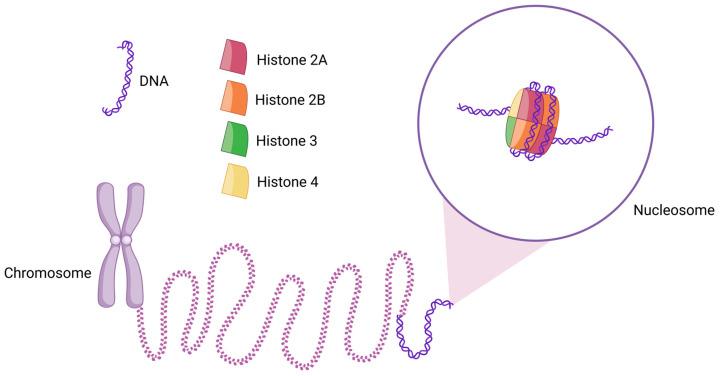
Cellular nucleosomes-the structural and functional units of chromatin-are inherently present in cells. During cellular damage or cell death, nucleosomes are released into circulation, either actively or passively. Once released, nucleosomes can become immunogenic entities through various mechanisms. The nucleosomal proteins in nucleosomes, called histones, play a pivotal role in inducing immunogenicity. However, intact nucleosomes are more immunogenic than the histones alone, as nucleosomal double-stranded deoxyribonucleic acid (dsDNA) enhances its immunogenic potential. Our recent study has shown that circulating histones are predominantly nucleosomal histones rather than free histones. Consequently, circulating histones primarily function as integral parts of circulating nucleosomes rather than acting independently. Circulating nucleosomes and their associated histones are implicated in the pathogenesis of a wide array of diseases. Notably, they are critical in the pathogenesis of lung injury and sepsis. These diseases have high morbidity and mortality rates and lack early diagnostic biomarkers. Further investigation is required to fully elucidate the role of circulating nucleosomes and their associated histones in disease processes. This review aims to discuss the current understanding of circulating nucleosomes and histones in the pathogenesis of lung injury and sepsis, with a focus on the underlying mechanisms.
细胞内核小体——染色质的结构和功能单位——天然存在于细胞中。在细胞损伤或细胞死亡过程中,核小体以主动或被动的方式释放到循环系统中。一旦释放,核小体可通过多种机制成为免疫原性实体。核小体中的核小体蛋白,即组蛋白,在诱导免疫原性方面起关键作用。然而,完整的核小体比单独的组蛋白更具免疫原性,因为核小体双链脱氧核糖核酸(dsDNA)增强了其免疫原性潜力。我们最近的研究表明,循环中的组蛋白主要是核小体组蛋白而非游离组蛋白。因此,循环中的组蛋白主要作为循环核小体的组成部分发挥作用,而非独立发挥作用。循环核小体及其相关组蛋白与多种疾病的发病机制有关。值得注意的是,它们在肺损伤和脓毒症的发病机制中至关重要。这些疾病的发病率和死亡率很高,且缺乏早期诊断生物标志物。需要进一步研究以充分阐明循环核小体及其相关组蛋白在疾病过程中的作用。本综述旨在讨论目前对循环核小体和组蛋白在肺损伤和脓毒症发病机制中的认识,重点关注其潜在机制。



 Zotero 插件