
预测原发性腮腺鳞状细胞癌患者术后总体生存率和癌症特异性生存率的列线图:一项基于人群的研究。
A nomogram to predict postoperative overall and cancer specific survival in patients with primary parotid squamous cell carcinoma: a population based study.
作者信息
Liu Xudong, Xue Jincai, Dong Fang, Wang Xingyue, Tian Youxin, Liu Qinjiang, Wang Jun, Wang Yunsheng
机构信息
Department of Head and Neck Surgery, Gansu Provincial Cancer Hospital, Lanzhou, 730000, China.
Department of Radiotherapy, Gansu Provincial Cancer Hospital, Lanzhou, 730000, China.
出版信息
Sci Rep. 2025 Feb 25;15(1):6774. doi: 10.1038/s41598-025-90480-8.
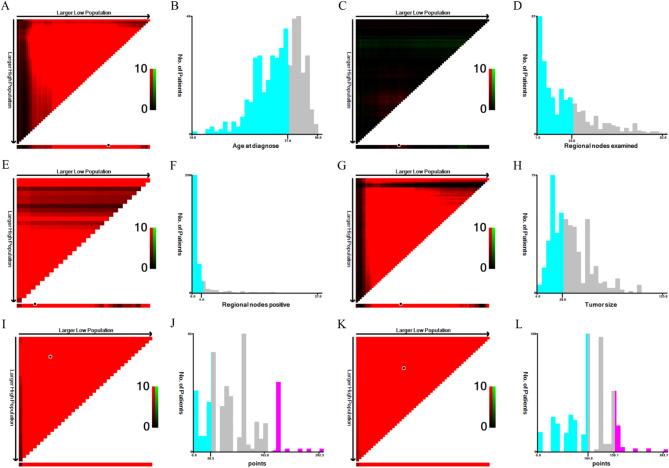
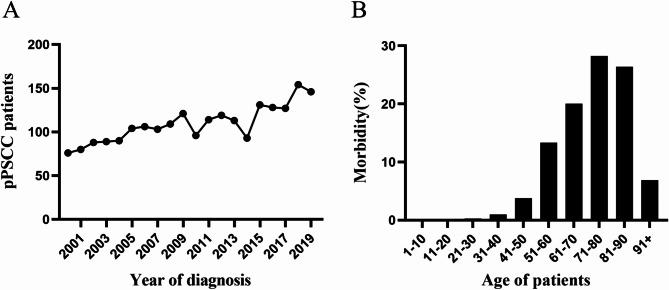
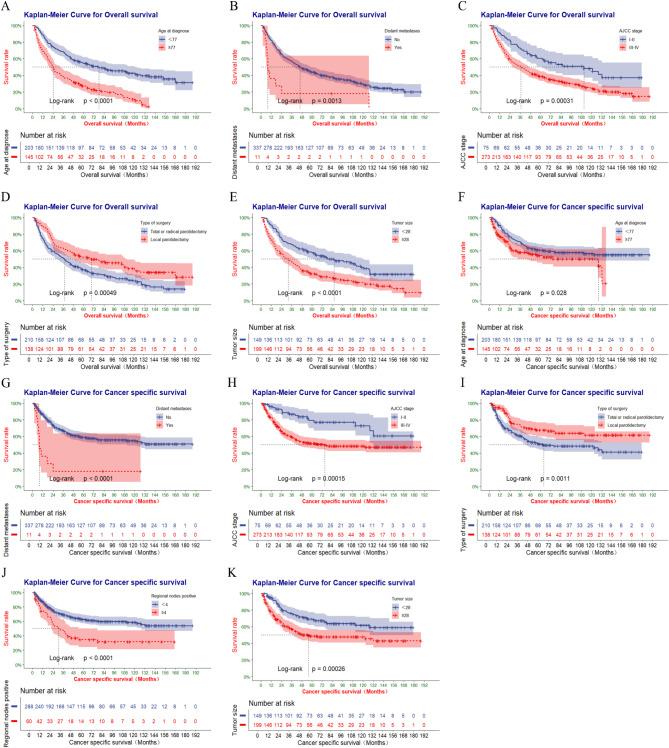
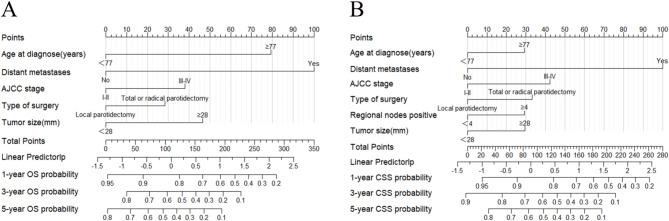
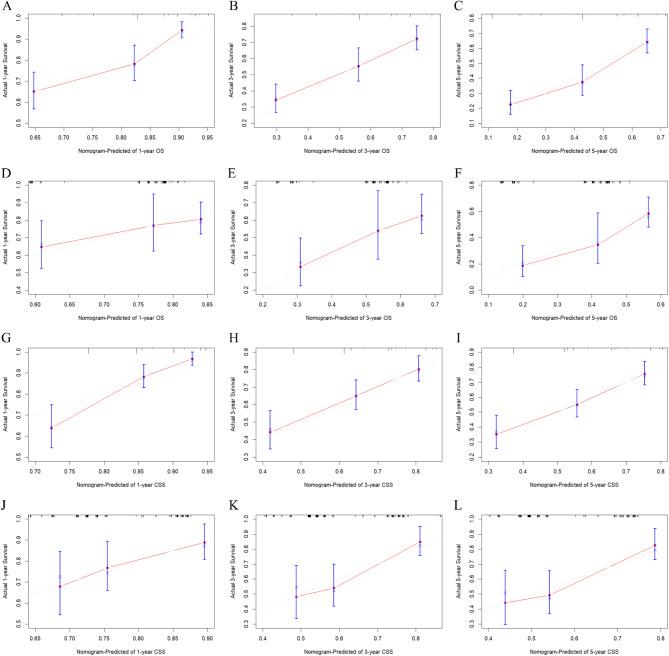
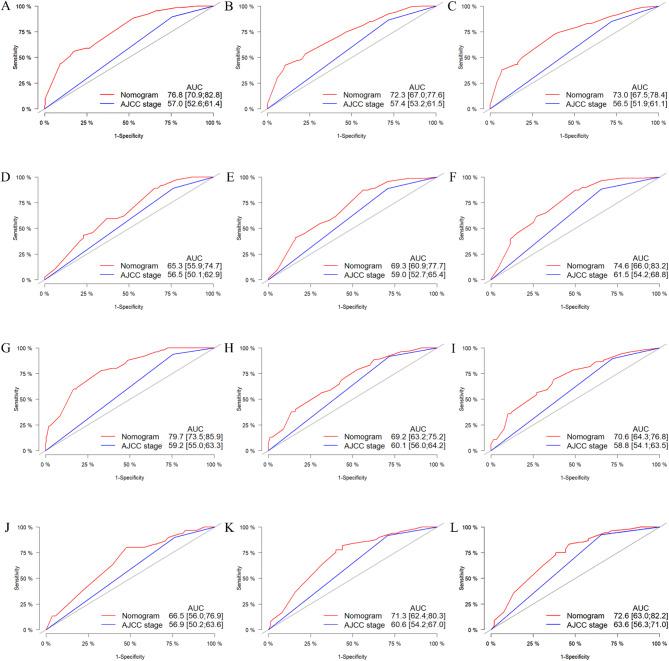
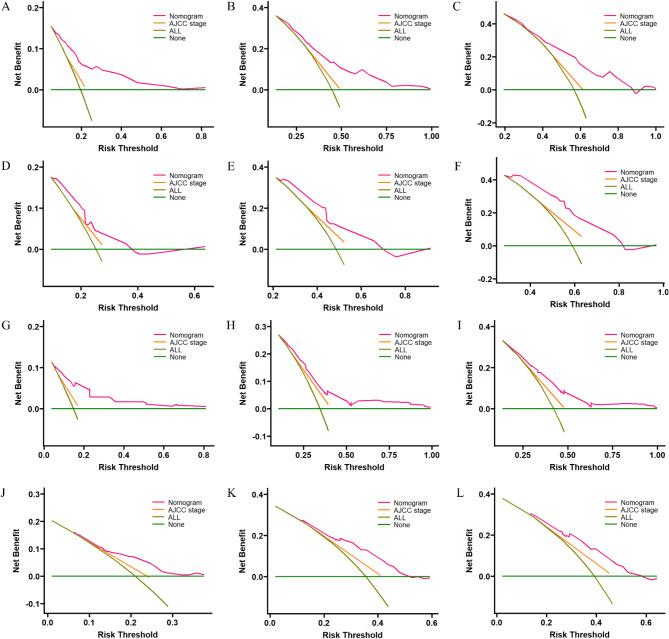
Primary parotid squamous cell carcinoma (pPSCC) is a rare salivary gland neoplasm. Due to the low incidence of pPSCC, there is a lack of clinical studies with large samples. The aim of this study was to identify prognostic factors and develop a nomogram for predicting overall survival (OS) and cancer specific survival (CSS) of pPSCC, with the goal of guiding clinical decision making. We identified eligible pPSCC patients from the Surveillance, Epidemiology, and End Results (SEER) database. All patients were randomly allocated to either the training or validation cohort in a 7:3 ratio. The X-tile software was utilized to determine the optimal cut-off values for age at diagnose, regional nodes examined, regional nodes positive, and tumor size, and changes continuous variables into categorical variables. Univariate and multivariate Cox regression analyses were used to identify independent prognostic factors. Based on the identified variables, two nomograms were developed and validated to predict the 1-, 3-, and 5-year OS and CSS of pPSCC. The accuracy of the prediction was evaluated using the C-index and calibration curve. Decision curve analysis (DCA) and receiver operating characteristic (ROC) were utilized to compare the nomogram with the American Joint Committee on Cancer (AJCC) stage system in order to assess its superiority. Furthermore, two risk stratification systems were established based on the constructed nomograms. From 2000 to 2019, a total of 2,187 pPSCC patients were screened from the SEER database. The incidence of pPSCC showed an overall upward trend, with the highest incidence in patients aged 71-80 years. The 495 patients with pPSCC ultimately identified from the SEER database were randomly allocated into a training cohort (n = 348) and a validation cohort (n = 147).Five independent prognostic variables were identified for OS, including age at diagnose, distant metastasis, AJCC stage, type of surgery, and tumor size. However, six independent prognostic variables were identified for CSS, with the addition of regional lymph node positivity as an additional variable. Nomograms of OS and CSS were established based on the results. In the training cohort and the validation cohort, the C-index of OS and CSS was 0.679, 0.677, 0.650 and 0.650 respectively. Calibration curve demonstrate that the predictions of 1-, 3-, and 5-year survival probability models for OS and CSS were generally consistent with actual observations in both the training cohort and the validation cohort. Our nomogram demonstrated a superior clinical net benefit compared to the AJCC 7th version, as indicated by DCA and ROC analysis. Additionally, patients were stratified into low-, middle-, and high-risk groups based on the nomogram risk score. The Kaplan-Meier curve demonstrated significant differences in survival among the three groups. In this study, new nomograms and risk classification systems were successfully developed to predict the 1-, 3-, and 5-year OS and CSS of pPSCC patients, which has good accuracy and superiority and can help doctors and patients make clinical decisions.
原发性腮腺鳞状细胞癌(pPSCC)是一种罕见的涎腺肿瘤。由于pPSCC发病率低,缺乏大样本临床研究。本研究旨在确定预后因素并建立列线图,以预测pPSCC的总生存期(OS)和癌症特异性生存期(CSS),指导临床决策。我们从监测、流行病学和最终结果(SEER)数据库中识别符合条件的pPSCC患者。所有患者按7:3的比例随机分配到训练队列或验证队列。利用X-tile软件确定诊断年龄、检查的区域淋巴结、区域淋巴结阳性和肿瘤大小的最佳截断值,并将连续变量转换为分类变量。采用单因素和多因素Cox回归分析确定独立预后因素。基于识别出的变量,开发并验证了两个列线图,以预测pPSCC的1年、3年和5年OS及CSS。使用C指数和校准曲线评估预测准确性。采用决策曲线分析(DCA)和受试者操作特征(ROC)将列线图与美国癌症联合委员会(AJCC)分期系统进行比较,以评估其优越性。此外,基于构建的列线图建立了两个风险分层系统。2000年至2019年,共从SEER数据库中筛选出2187例pPSCC患者。pPSCC发病率总体呈上升趋势,71-80岁患者发病率最高。最终从SEER数据库中确定的495例pPSCC患者被随机分配到训练队列(n =3^48)和验证队列(n =147)。确定了5个OS独立预后变量,包括诊断年龄、远处转移、AJCC分期、手术类型和肿瘤大小。然而,CSS确定了6个独立预后变量,增加了区域淋巴结阳性作为额外变量。根据结果建立了OS和CSS列线图。在训练队列和验证队列中,OS和CSS的C指数分别为0.679、0.677、0.650和0.650。校准曲线表明,训练队列和验证队列中OS和CSS的1年、3年和5年生存概率模型预测与实际观察结果总体一致。DCA和ROC分析表明,我们的列线图显示出比AJCC第7版更高的临床净效益。此外,根据列线图风险评分将患者分为低、中、高风险组。Kaplan-Meier曲线显示三组生存存在显著差异。本研究成功开发了新的列线图和风险分类系统,以预测pPSCC患者的1年、3年和5年OS及CSS,具有良好的准确性和优越性,有助于医生和患者做出临床决策。


 Zotero 插件