
人工智能和机器学习模型在公共卫生抗菌药物管理中的作用:一项叙述性综述。
The Role of Artificial Intelligence and Machine Learning Models in Antimicrobial Stewardship in Public Health: A Narrative Review.
作者信息
Pennisi Flavia, Pinto Antonio, Ricciardi Giovanni Emanuele, Signorelli Carlo, Gianfredi Vincenza
机构信息
Faculty of Medicine, University Vita-Salute San Raffaele, 20132 Milan, Italy.
PhD National Program in One Health Approaches to Infectious Diseases and Life Science Research, Department of Public Health, Experimental and Forensic Medicine, University of Pavia, 27100 Pavia, Italy.
出版信息
Antibiotics (Basel). 2025 Jan 30;14(2):134. doi: 10.3390/antibiotics14020134.
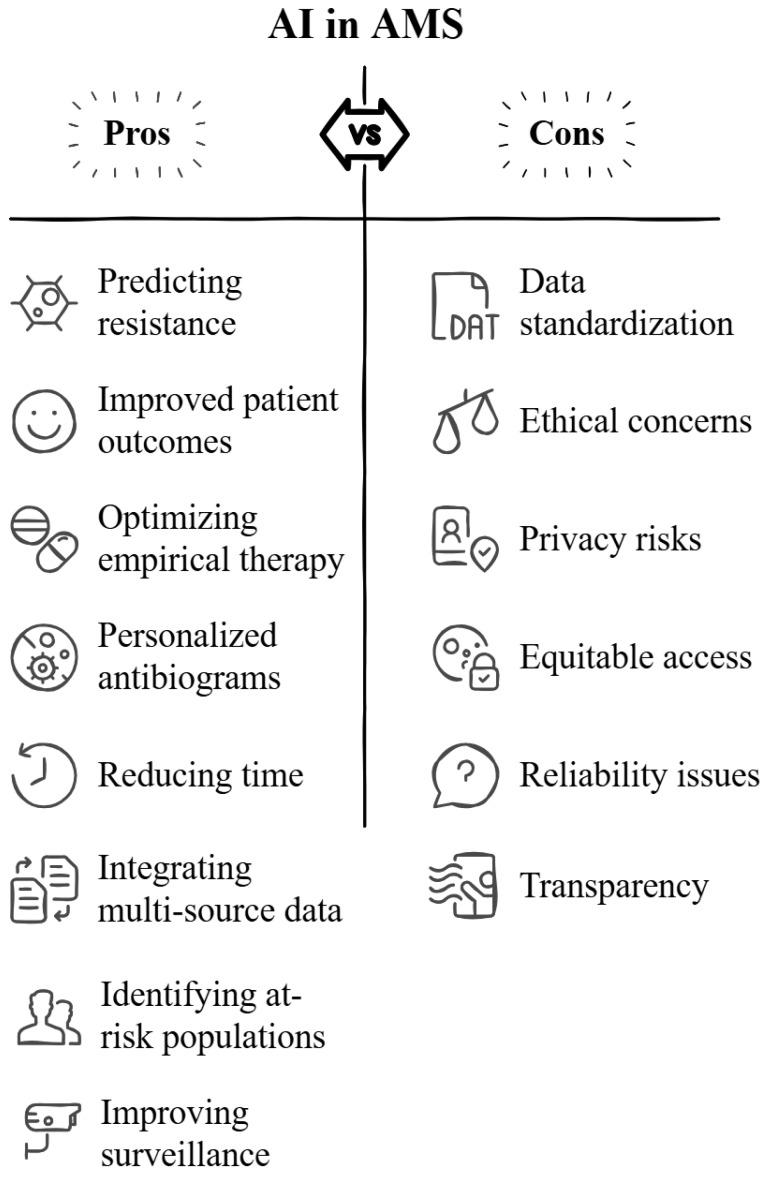
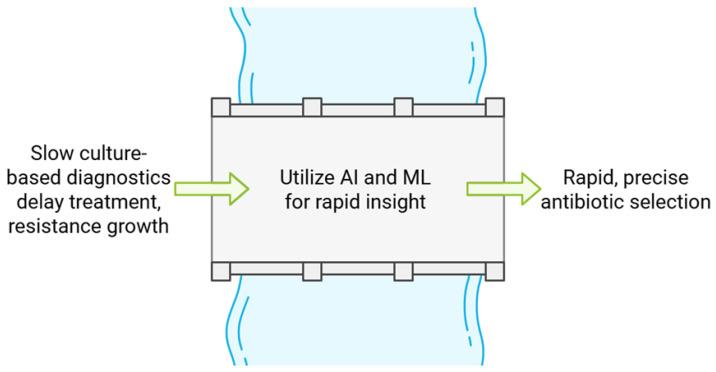
Antimicrobial resistance (AMR) poses a critical global health threat, necessitating innovative approaches in antimicrobial stewardship (AMS). Artificial intelligence (AI) and machine learning (ML) have emerged as transformative tools in this domain, enabling data-driven interventions to optimize antibiotic use and combat resistance. This comprehensive review explores the multifaceted role of AI and ML models in enhancing antimicrobial stewardship efforts across healthcare systems. AI-powered predictive analytics can identify patterns of resistance, forecast outbreaks, and guide personalized antibiotic therapies by leveraging large-scale clinical and epidemiological data. ML algorithms facilitate rapid pathogen identification, resistance profiling, and real-time monitoring, enabling precise decision making. These technologies also support the development of advanced diagnostic tools, reducing the reliance on broad-spectrum antibiotics and fostering timely, targeted treatments. In public health, AI-driven surveillance systems improve the detection of AMR trends and enhance global monitoring capabilities. By integrating diverse data sources-such as electronic health records, laboratory results, and environmental data-ML models provide actionable insights to policymakers, healthcare providers, and public health officials. Additionally, AI applications in antimicrobial stewardship programs (ASPs) promote adherence to prescribing guidelines, evaluate intervention outcomes, and optimize resource allocation. Despite these advancements, challenges such as data quality, algorithm transparency, and ethical considerations must be addressed to maximize the potential of AI and ML in this field. Future research should focus on developing interpretable models and fostering interdisciplinary collaborations to ensure the equitable and sustainable integration of AI into antimicrobial stewardship initiatives.
抗菌药物耐药性(AMR)对全球健康构成了重大威胁,因此在抗菌药物管理(AMS)方面需要创新方法。人工智能(AI)和机器学习(ML)已成为该领域具有变革性的工具,能够实现数据驱动的干预措施,以优化抗生素使用并对抗耐药性。这篇全面综述探讨了AI和ML模型在加强整个医疗系统抗菌药物管理工作中的多方面作用。由AI驱动的预测分析可以通过利用大规模临床和流行病学数据来识别耐药模式、预测疫情爆发并指导个性化抗生素治疗。ML算法有助于快速进行病原体鉴定、耐药性分析和实时监测,从而实现精确决策。这些技术还支持先进诊断工具的开发,减少对广谱抗生素的依赖,并促进及时、有针对性的治疗。在公共卫生领域,由AI驱动的监测系统可改善对AMR趋势的检测并增强全球监测能力。通过整合各种数据源,如电子健康记录、实验室结果和环境数据,ML模型为政策制定者、医疗服务提供者和公共卫生官员提供可操作的见解。此外,抗菌药物管理计划(ASP)中的AI应用可促进对处方指南的遵守、评估干预结果并优化资源分配。尽管取得了这些进展,但仍必须解决数据质量、算法透明度和伦理考量等挑战,以最大限度地发挥AI和ML在该领域的潜力。未来的研究应专注于开发可解释的模型并促进跨学科合作,以确保将AI公平且可持续地整合到抗菌药物管理举措中。
 Zotero 插件