
褪黑素在调节四氯化碳中毒后大鼠骨骼肌组织炎症和损伤中的作用
Role of Melatonin in Regulating Rat Skeletal Muscle Tissue Inflammation and Damage Following Carbon Tetrachloride Intoxication.
作者信息
Antić Vladimir Milan, Antic Milorad, Stojiljkovic Nenad, Stanković Nemanja, Pavlović Miljana, Sokolović Dušan
机构信息
Faculty of Sports and Physical Education, University of Niš, 18000 Niš, Serbia.
Department of Anatomy, Faculty of Medicine, University of Niš, 18000 Niš, Serbia.
出版信息
Int J Mol Sci. 2025 Feb 17;26(4):1718. doi: 10.3390/ijms26041718.
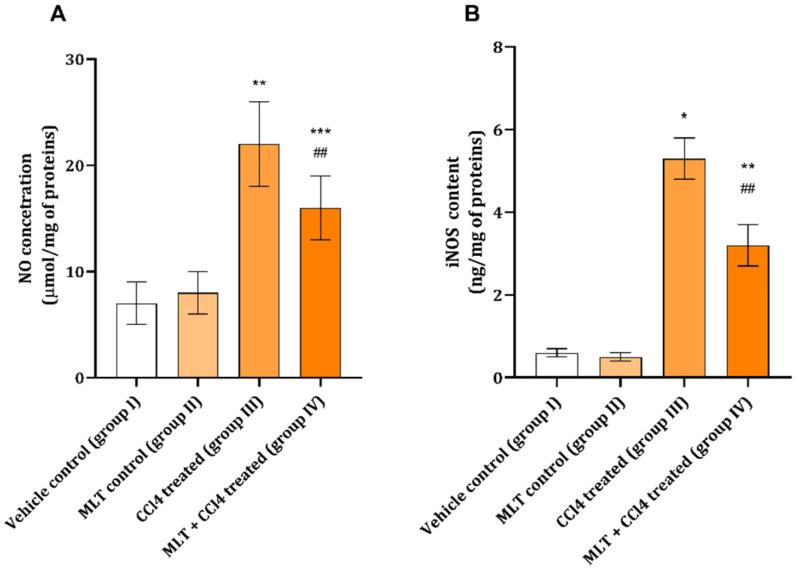
Carbon tetrachloride (CCl) is a toxic compound that causes severe oxidative stress and inflammation in skeletal muscles, resulting in structural damage, mitochondrial dysfunction, and impaired contractile function. While CD45 and melatonin (MLT) are implicated in immune modulation and antioxidative defense, their precise roles in mitigating CCl-induced muscle damage remain incompletely understood, warranting further investigation. This study used 24 Wistar rats divided into four groups to evaluate the effects of MLT on CCl-induced muscle inflammation. The first group was used as a control group, the second received only MLT (50 mg/kg), and the third group received CCl, while the fourth group received MLT (50 mg/kg) and CCl. Muscle tissues, obtained 24 h after the commencement of the experiment, were analyzed using biochemical assays for inflammatory markers, histological staining, and immunohistochemistry to assess structural and cellular changes. CCl exposure significantly increased NF-κB activity, nitric oxide levels, iNOS expression, and CD45-positive immune cell infiltration in skeletal muscles, indicating heightened inflammation and oxidative stress. Pretreatment with MLT markedly reduced these inflammatory markers, restoring damaged tissue and diminishing immune cell infiltration. Histological analyses confirmed reduced inflammatory cell presence and tissue damage in MLT-treated animals, highlighting its protective effects. Melatonin demonstrates significant protective effects against CCl-induced skeletal muscle damage by reducing inflammation, oxidative stress, and immune cell infiltration, highlighting its potential as a therapeutic agent.
四氯化碳(CCl₄)是一种有毒化合物,可导致骨骼肌出现严重的氧化应激和炎症,进而造成结构损伤、线粒体功能障碍以及收缩功能受损。虽然CD45和褪黑素(MLT)与免疫调节和抗氧化防御有关,但其在减轻CCl₄诱导的肌肉损伤中的具体作用仍不完全清楚,值得进一步研究。本研究将24只Wistar大鼠分为四组,以评估MLT对CCl₄诱导的肌肉炎症的影响。第一组作为对照组,第二组仅接受MLT(50 mg/kg),第三组接受CCl₄,而第四组接受MLT(50 mg/kg)和CCl₄。在实验开始24小时后获取肌肉组织,使用生化分析检测炎症标志物、组织学染色和免疫组织化学来评估结构和细胞变化。CCl₄暴露显著增加了骨骼肌中NF-κB活性、一氧化氮水平、诱导型一氧化氮合酶(iNOS)表达以及CD45阳性免疫细胞浸润,表明炎症和氧化应激加剧。MLT预处理显著降低了这些炎症标志物,修复了受损组织并减少了免疫细胞浸润。组织学分析证实,接受MLT治疗的动物体内炎症细胞数量减少且组织损伤减轻,突出了其保护作用。褪黑素通过减轻炎症、氧化应激和免疫细胞浸润,对CCl₄诱导的骨骼肌损伤具有显著的保护作用,凸显了其作为治疗剂的潜力。



 Zotero 插件