
基于计算机模拟的抗菌药物发现方法:针对……的虚拟多菌株抑制剂的PTML建模
In Silico Approach for Antibacterial Discovery: PTML Modeling of Virtual Multi-Strain Inhibitors Against .
作者信息
Kleandrova Valeria V, Cordeiro M Natália D S, Speck-Planche Alejandro
机构信息
LAQV@REQUIMTE/Department of Chemistry and Biochemistry, Faculty of Sciences, University of Porto, 4169-007 Porto, Portugal.
出版信息
Pharmaceuticals (Basel). 2025 Jan 31;18(2):196. doi: 10.3390/ph18020196.
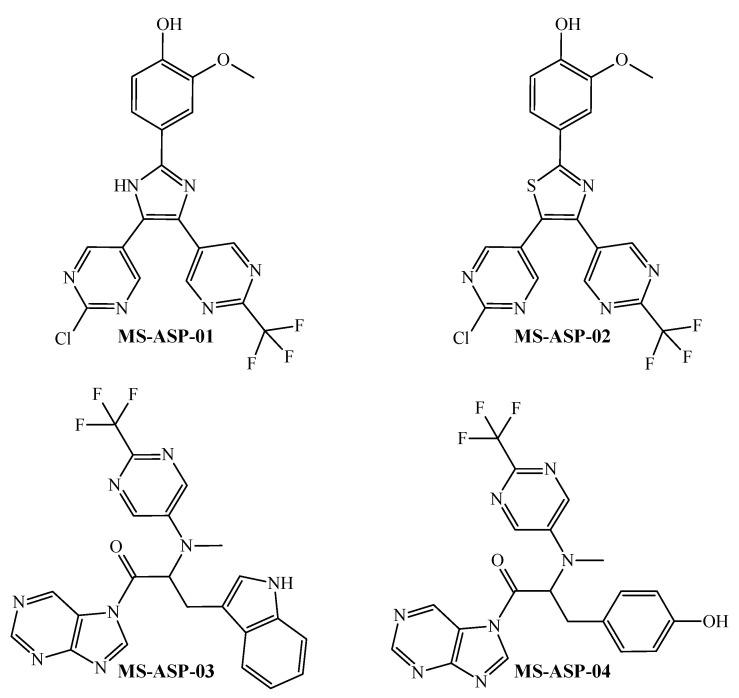
: Infectious diseases caused by () have become alarming health issues worldwide due to the ever-increasing emergence of multidrug resistance. In silico approaches can accelerate the identification and/or design of versatile antibacterial chemicals with the ability to target multiple strains with varying degrees of drug resistance. Here, we develop a perturbation theory machine learning model based on a multilayer perceptron neural network (PTML-MLP) for the prediction and design of versatile virtual inhibitors against strains. : To develop the PTML-MLP model, chemical and biological data associated with antibacterial activity against strains were retrieved from the ChEMBL database. We applied the Box-Jenkins approach to convert the topological indices into multi-label graph-theoretical indices; the latter were used as inputs for the creation of the PTML-MLP model. : The PTML-MLP model exhibited accuracy higher than 80% in both training and test sets. The physicochemical and structural interpretation of the PTML-MLP model was performed through the fragment-based topological design (FBTD) approach. Such interpretations permitted the analysis of different molecular fragments with favorable contributions to the multi-strain antibacterial activity and the design of four new drug-like molecules using different fragments as building blocks. The designed molecules were predicted/confirmed by our PTML model as multi-strain inhibitors of diverse strains, thus representing promising chemotypes to be considered for future synthesis and biological testing of versatile anti- agents. : This work envisages promising applications of PTML modeling for early antibacterial drug discovery and related antimicrobial research areas.
由()引起的传染病由于多重耐药性的不断增加已成为全球令人担忧的健康问题。计算机模拟方法可以加速具有针对不同耐药程度的多种菌株能力的通用抗菌化学品的鉴定和/或设计。在此,我们基于多层感知器神经网络(PTML-MLP)开发了一种微扰理论机器学习模型,用于预测和设计针对多种菌株的通用虚拟抑制剂。:为了开发PTML-MLP模型,从ChEMBL数据库中检索了与针对多种菌株的抗菌活性相关的化学和生物学数据。我们应用Box-Jenkins方法将拓扑指数转换为多标签图论指数;后者用作创建PTML-MLP模型的输入。:PTML-MLP模型在训练集和测试集中均表现出高于80%的准确率。通过基于片段的拓扑设计(FBTD)方法对PTML-MLP模型进行了物理化学和结构解释。这种解释允许分析对多菌株抗菌活性有有利贡献的不同分子片段,并使用不同片段作为构建块设计了四种新的类药物分子。我们的PTML模型预测/证实所设计的分子为多种菌株的多菌株抑制剂,因此代表了有前景的化学类型,可用于未来通用抗菌剂的合成和生物学测试。:这项工作设想了PTML建模在早期抗菌药物发现及相关抗菌研究领域的有前景的应用。


 Zotero 插件