
健康、疾病与晶状体衰老中的细胞衰老
Cellular Senescence in Health, Disease, and Lens Aging.
作者信息
Qin Ying, Liu Haoxin, Wu Hongli
机构信息
Pharmaceutical Sciences, College of Pharmacy, University of North Texas Health Science Center, Fort Worth, TX 76107, USA.
North Texas Eye Research Institute, University of North Texas Health Science Center, Fort Worth, TX 76107, USA.
出版信息
Pharmaceuticals (Basel). 2025 Feb 12;18(2):244. doi: 10.3390/ph18020244.
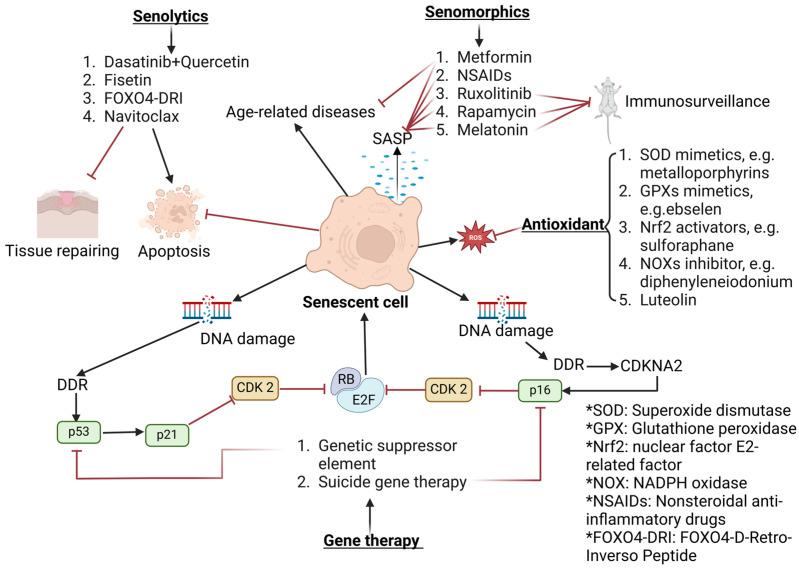
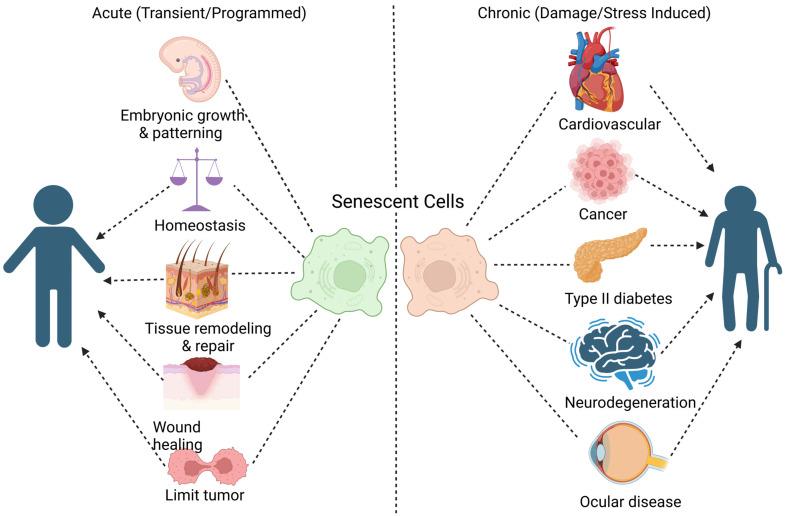
: Cellular senescence is a state of irreversible cell cycle arrest that serves as a critical regulator of tissue homeostasis, aging, and disease. While transient senescence contributes to development, wound healing, and tumor suppression, chronic senescence drives inflammation, tissue dysfunction, and age-related pathologies, including cataracts. Lens epithelial cells (LECs), essential for maintaining lens transparency, are particularly vulnerable to oxidative stress-induced senescence, which accelerates lens aging and cataract formation. This review examines the dual role of senescence in LEC function and its implications for age-related cataractogenesis, alongside emerging senotherapeutic interventions. : This review synthesizes findings on the molecular mechanisms of senescence, focusing on oxidative stress, mitochondrial dysfunction, and the senescence-associated secretory phenotype (SASP). It explores evidence linking LEC senescence to cataract formation, highlighting key studies on stress responses, DNA damage, and antioxidant defense. Recent advances in senotherapeutics, including senolytics and senomorphics, are analyzed for their potential to mitigate LEC senescence and delay cataract progression. : LEC senescence is driven by oxidative damage, mitochondrial dysfunction, and impaired redox homeostasis. These factors activate senescence path-ways, including p53/p21 and p16/Rb, resulting in cell cycle arrest and SASP-mediated inflammation. The accumulation of senescent LECs reduces regenerative capacity, disrupts lens homeostasis, and contributes to cataractogenesis. Emerging senotherapeutics, such as dasatinib, quercetin, and metformin, show promise in reducing the senescent cell burden and modulating the SASP to preserve lens transparency.
细胞衰老状态是一种不可逆的细胞周期停滞状态,它是组织稳态、衰老和疾病的关键调节因子。短暂性衰老有助于发育、伤口愈合和肿瘤抑制,而慢性衰老则会引发炎症、组织功能障碍以及包括白内障在内的与年龄相关的病理变化。晶状体上皮细胞(LECs)对于维持晶状体透明度至关重要,特别容易受到氧化应激诱导的衰老影响,这种衰老会加速晶状体老化和白内障形成。本综述探讨了衰老在晶状体上皮细胞功能中的双重作用及其对年龄相关性白内障发生的影响,以及新兴的衰老治疗干预措施。 本综述综合了关于衰老分子机制的研究结果,重点关注氧化应激、线粒体功能障碍和衰老相关分泌表型(SASP)。它探讨了将晶状体上皮细胞衰老与白内障形成联系起来的证据,突出了关于应激反应、DNA损伤和抗氧化防御的关键研究。分析了衰老治疗的最新进展,包括衰老细胞溶解剂和衰老细胞形态调节剂,探讨它们减轻晶状体上皮细胞衰老和延缓白内障进展的潜力。 晶状体上皮细胞衰老由氧化损伤、线粒体功能障碍和氧化还原稳态受损驱动。这些因素激活衰老途径,包括p53/p21和p16/Rb,导致细胞周期停滞和SASP介导的炎症。衰老的晶状体上皮细胞的积累会降低再生能力,破坏晶状体稳态,并促进白内障的发生。新兴的衰老治疗药物,如达沙替尼、槲皮素和二甲双胍,有望减轻衰老细胞负担并调节SASP以维持晶状体透明度。



 Zotero 插件