
探索微生物群-肠道-脑轴:对脑结构和功能的影响。
Exploring the microbiota-gut-brain axis: impact on brain structure and function.
作者信息
Yassin Lidya K, Nakhal Mohammed M, Alderei Alreem, Almehairbi Afra, Mydeen Ayishal B, Akour Amal, Hamad Mohammad I K
机构信息
Department of Anatomy, College of Medicine and Health Sciences, United Arab Emirates University, Al Ain, United Arab Emirates.
Department of Pharmacology and Therapeutics, College of Medicine and Health Sciences, United Arab Emirates University, Al Ain, United Arab Emirates.
出版信息
Front Neuroanat. 2025 Feb 12;19:1504065. doi: 10.3389/fnana.2025.1504065. eCollection 2025.
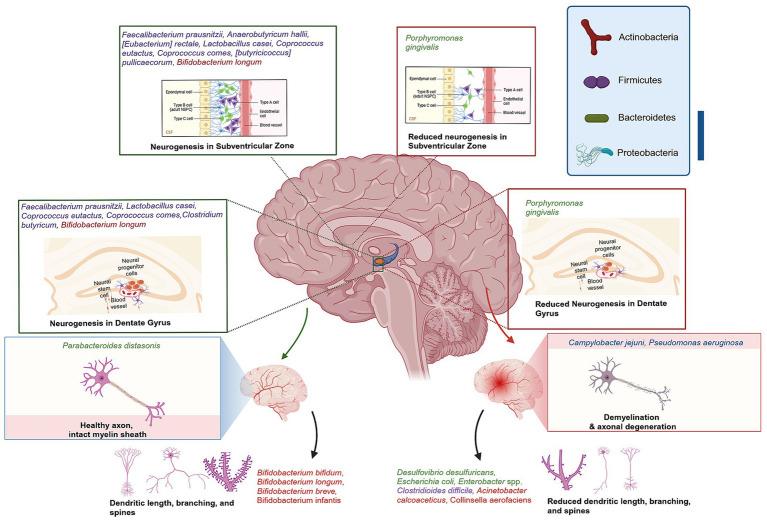
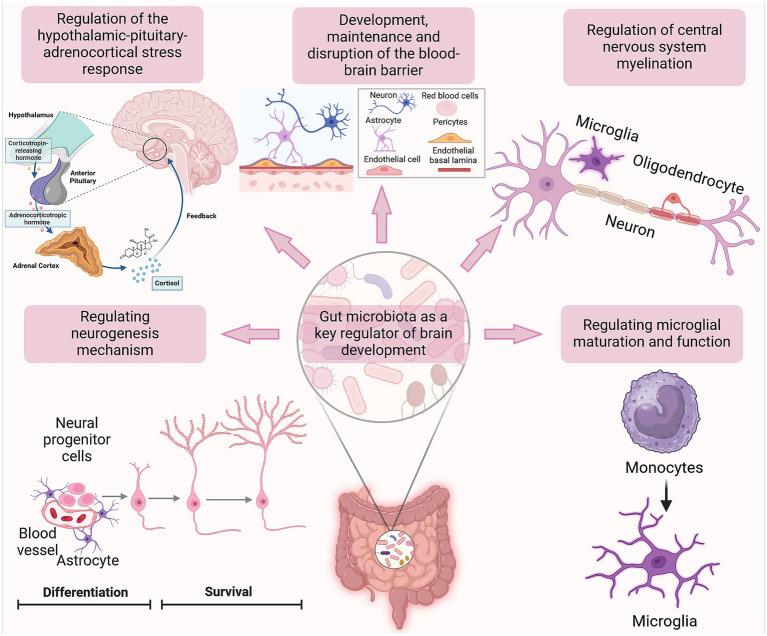
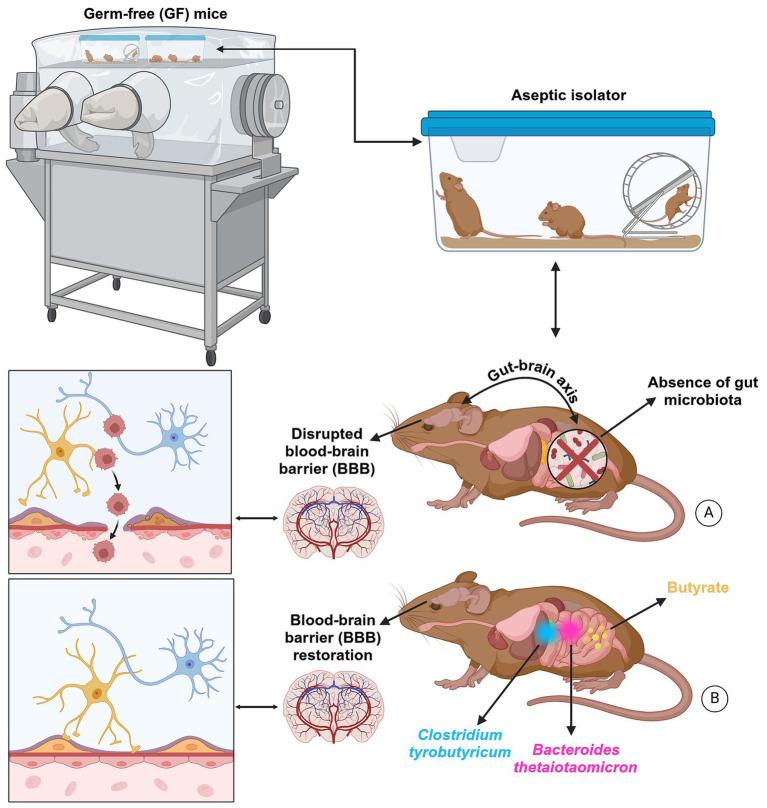
The microbiota-gut-brain axis (MGBA) plays a significant role in the maintenance of brain structure and function. The MGBA serves as a conduit between the CNS and the ENS, facilitating communication between the emotional and cognitive centers of the brain via diverse pathways. In the initial stages of this review, we will examine the way how MGBA affects neurogenesis, neuronal dendritic morphology, axonal myelination, microglia structure, brain blood barrier (BBB) structure and permeability, and synaptic structure. Furthermore, we will review the potential mechanistic pathways of neuroplasticity through MGBA influence. The short-chain fatty acids (SCFAs) play a pivotal role in the MGBA, where they can modify the BBB. We will therefore discuss how SCFAs can influence microglia, neuronal, and astrocyte function, as well as their role in brain disorders such as Alzheimer's disease (AD), and Parkinson's disease (PD). Subsequently, we will examine the technical strategies employed to study MGBA interactions, including using germ-free (GF) animals, probiotics, fecal microbiota transplantation (FMT), and antibiotics-induced dysbiosis. Finally, we will examine how particular bacterial strains can affect brain structure and function. By gaining a deeper understanding of the MGBA, it may be possible to facilitate research into microbial-based pharmacological interventions and therapeutic strategies for neurological diseases.
微生物群-肠道-脑轴(MGBA)在维持脑结构和功能方面发挥着重要作用。MGBA充当中枢神经系统(CNS)和肠神经系统(ENS)之间的通道,通过多种途径促进大脑情感和认知中心之间的交流。在本综述的初始阶段,我们将研究MGBA影响神经发生、神经元树突形态、轴突髓鞘形成、小胶质细胞结构、血脑屏障(BBB)结构和通透性以及突触结构的方式。此外,我们将回顾通过MGBA影响实现神经可塑性的潜在机制途径。短链脂肪酸(SCFAs)在MGBA中起关键作用,它们可以改变血脑屏障。因此,我们将讨论SCFAs如何影响小胶质细胞、神经元和星形胶质细胞的功能,以及它们在阿尔茨海默病(AD)和帕金森病(PD)等脑部疾病中的作用。随后,我们将研究用于研究MGBA相互作用的技术策略,包括使用无菌(GF)动物、益生菌、粪便微生物群移植(FMT)和抗生素诱导的菌群失调。最后,我们将研究特定细菌菌株如何影响脑结构和功能。通过更深入地了解MGBA,可能有助于开展针对神经疾病的基于微生物的药理干预和治疗策略的研究。


 Zotero 插件