
老年人群中与非适宜温度相关的缺血性心脏病全球负担:过去(1990 - 2021年)与未来(2022 - 2050年)分析
Global burden of ischemic heart disease in older adult populations linked to non-optimal temperatures: past (1990-2021) and future (2022-2050) analysis.
作者信息
Liu Lihui, He Yisong, Huang Gang, Zeng Yangxi, Lu Jiaan, He Ru, Chen Haiqing, Gu Yuheng, Hu Qingwen, Liao Bin, Wan Juyi
机构信息
Department of Cardiovascular Surgery, The Affiliated Hospital, Southwest Medical University Metabolic Vascular Diseases Key Laboratory of Sichuan Province, Key Laboratory of Cardiovascular Remodeling and Dysfunction, Luzhou, China.
Clinical Medical College, Southwest Medical University, Luzhou, China.
出版信息
Front Public Health. 2025 Feb 12;13:1548215. doi: 10.3389/fpubh.2025.1548215. eCollection 2025.
BACKGROUND
Ischemic heart disease (IHD) is a leading cause of death and disability, particularly affecting the older adult population. Extreme temperatures, especially very low and very high temperatures, are known to exacerbate cardiovascular disease burden. With the ongoing global climate change, understanding the impact of non-optimal temperatures on IHD burden becomes increasingly important, especially in vulnerable populations such as the older adult.
METHODS
This study used data from the Global Burden of Disease Study 2021 (GBD 2021) to analyze the spatiotemporal trends of low and high temperatures on IHD burden in the older adult population (aged 60 and above) from 1990 to 2021. We used age-standardized rates (ASR), annual percentage change (EAPC), and the Bayesian age-period-cohort (BAPC) model to forecast 2050. Additionally, the geographic differences in IHD burden were analyzed using World Bank regions.
RESULTS
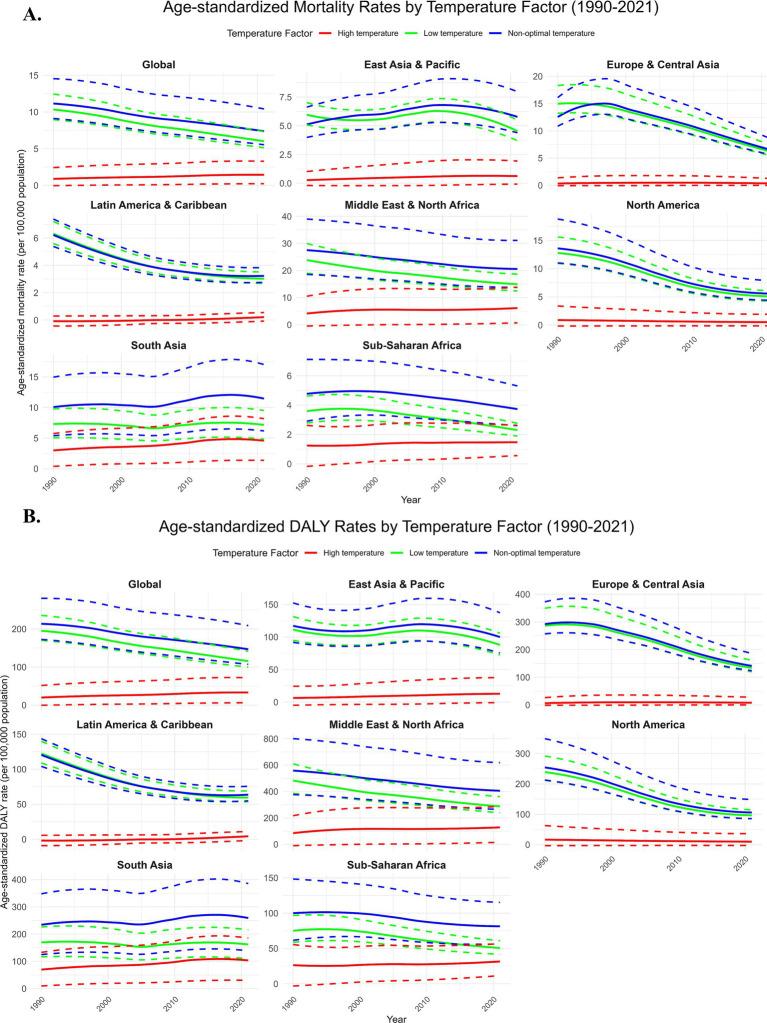
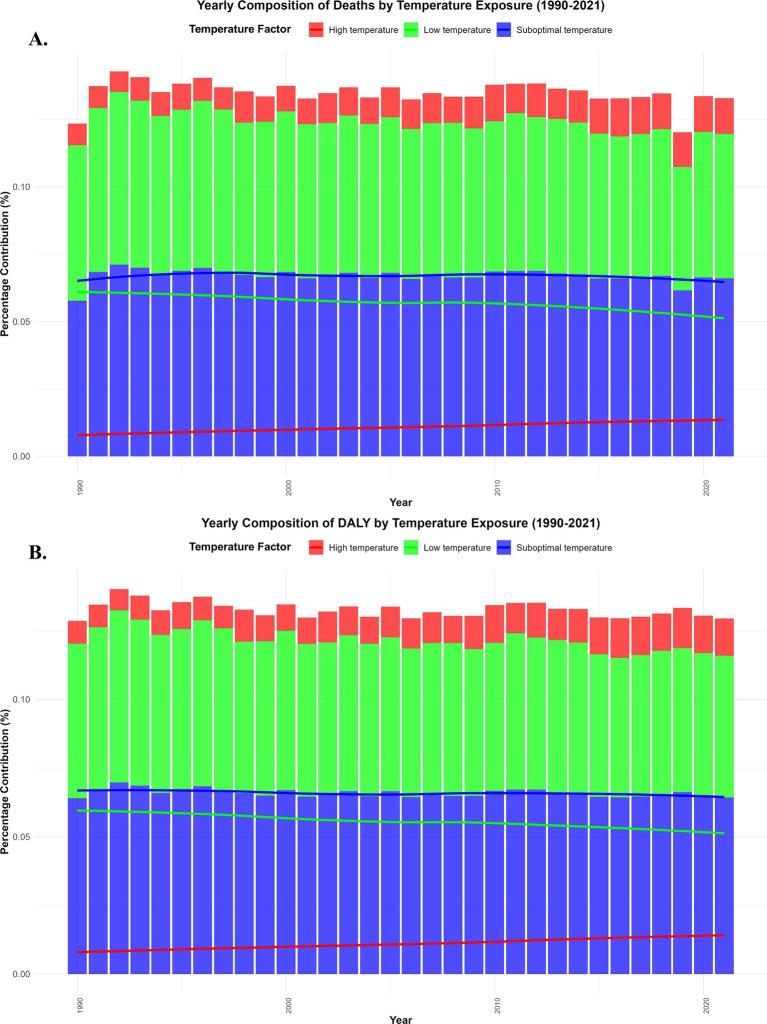
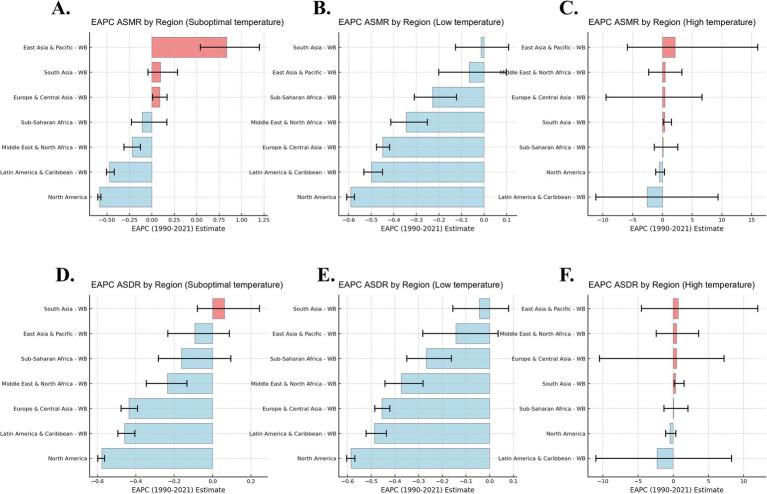
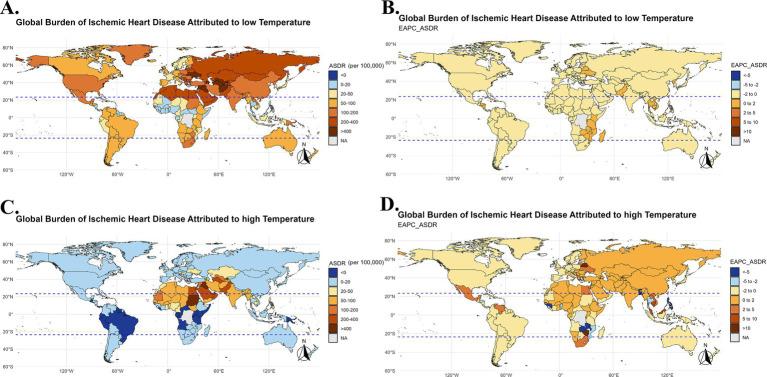
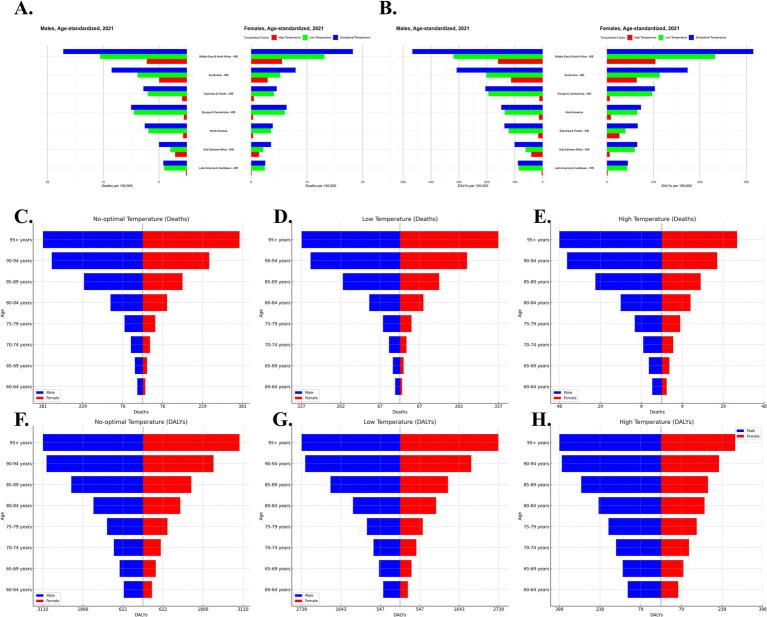
From 1990 to 2021, the IHD burden in the older adult population was mainly attributed to low temperatures. However, it has increased the burden of IHD due to high temperatures, especially in tropical and low-income regions. The analysis of gender difference revealed that men are usually more affected by high temperatures, though generally, women are more sensitive to low temperatures. Forecasts are that in the future, the burden of IHD due to high temperatures will continue to rise, especially in areas with limited adaptive capacity.
CONCLUSION
Although low temperature remains the most important contributor to IHD burden among the older adult, the burden attributable to high temperature is on the rise, which increases the need to address the extreme temperature fluctuation. That is more so in poor-income and tropical regions where the most vulnerable populations bear a higher risk for health. Thus, there is an urgent need to develop adaptive public health measures against the dual health risks from extreme temperatures. The findings emphasize that targeted interventions are necessary, with adjustments in regional differences and gender-specific risks to effectively address the growing health threats from climate change.
背景
缺血性心脏病(IHD)是导致死亡和残疾的主要原因,尤其影响老年人群体。已知极端温度,特别是极低和极高温度,会加重心血管疾病负担。随着全球气候变化的持续,了解非适宜温度对缺血性心脏病负担的影响变得越来越重要,尤其是在老年等脆弱人群中。
方法
本研究使用了2021年全球疾病负担研究(GBD 2021)的数据,分析了1990年至2021年期间低温和高温对老年人群体(60岁及以上)缺血性心脏病负担的时空趋势。我们使用年龄标准化率(ASR)、年度百分比变化(EAPC)以及贝叶斯年龄-时期-队列(BAPC)模型来预测2050年的情况。此外,还使用世界银行区域分析了缺血性心脏病负担的地理差异。
结果
1990年至2021年期间,老年人群体的缺血性心脏病负担主要归因于低温。然而,高温增加了缺血性心脏病的负担,特别是在热带和低收入地区。性别差异分析显示,男性通常受高温影响更大,不过总体而言,女性对低温更敏感。预测未来高温导致的缺血性心脏病负担将继续上升,特别是在适应能力有限的地区。
结论
尽管低温仍然是老年人群体缺血性心脏病负担的最重要因素,但高温导致的负担正在上升,这增加了应对极端温度波动的必要性。在低收入和热带地区更是如此,这些地区最脆弱的人群面临更高的健康风险。因此,迫切需要制定针对极端温度双重健康风险的适应性公共卫生措施。研究结果强调,有必要进行针对性干预,调整区域差异和特定性别的风险,以有效应对气候变化带来的日益增长的健康威胁。


 Zotero 插件