
用于神经支配多组织再生的生物活性无机材料。
Bioactive Inorganic Materials for Innervated Multi-Tissue Regeneration.
作者信息
Zhang Hongjian, Zhao Ziyi, Wu Chengtie
机构信息
State Key Laboratory of High Performance Ceramics and Superfine Microstructure, Shanghai Institute of Ceramics, Chinese Academy of Sciences, Shanghai, 200050, P. R. China.
Center of Materials Science and Optoelectronics Engineering, University of Chinese Academy of Sciences, Beijing, 100049, P. R. China.
出版信息
Adv Sci (Weinh). 2025 Apr;12(13):e2415344. doi: 10.1002/advs.202415344. Epub 2025 Feb 27.
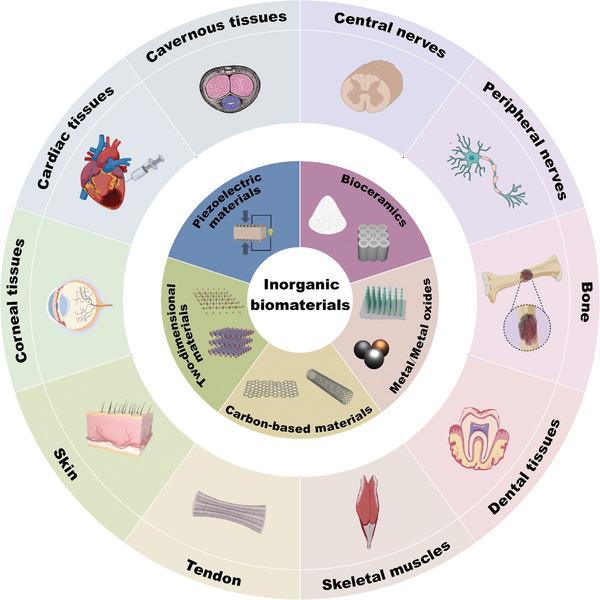
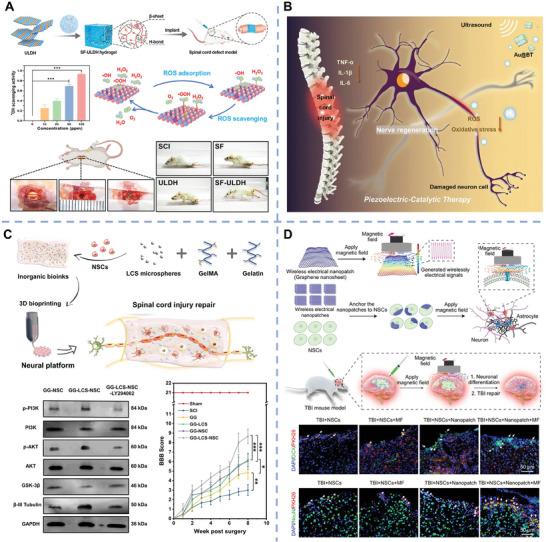
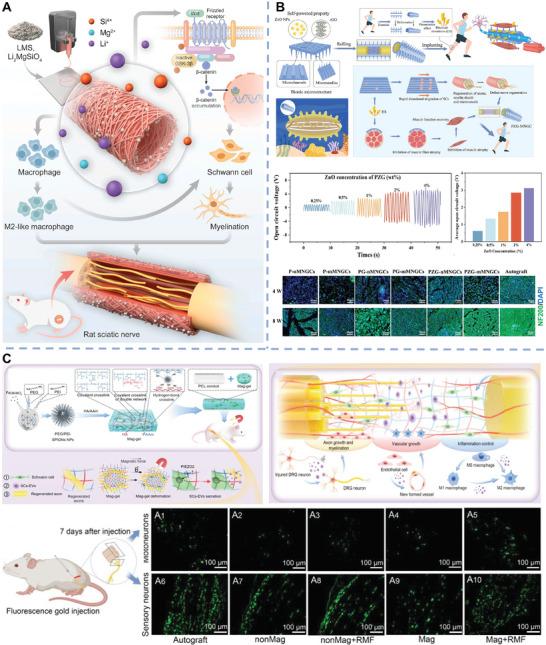
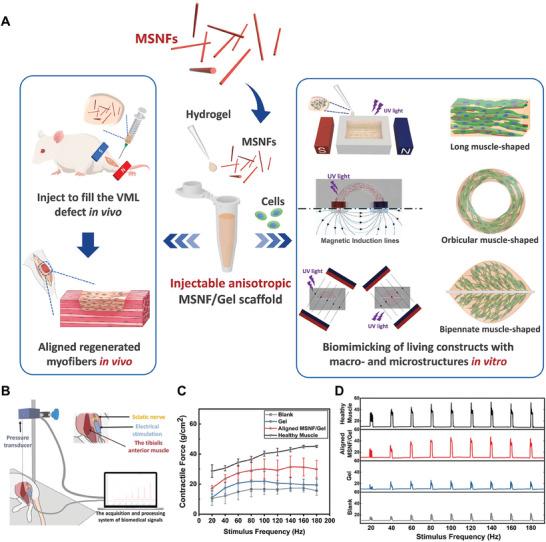
Tissue engineering aims to repair damaged tissues with physiological functions recovery. Although several therapeutic strategies are there for tissue regeneration, the functional recovery of regenerated tissues still poses significant challenges due to the lack of concerns of tissue innervation. Design rationale of multifunctional biomaterials with both tissue-induction and neural induction activities shows great potential for functional tissue regeneration. Recently, the research and application of inorganic biomaterials attracts increasing attention in innervated multi-tissue regeneration, such as central nerves, bone, and skin, because of its superior tunable chemical composition, topographical structures, and physiochemical properties. More importantly, inorganic biomaterials are easily combined with other organic materials, biological factors, and external stimuli to enhance their therapeutic effects. This review presents a comprehensive overview of recent advancements of inorganic biomaterials for innervated multi-tissue regeneration. It begins with introducing classification and properties of typical inorganic biomaterials and design rationale of inorganic-based material composites. Then, recent progresses of inorganic biomaterials in regenerating various nerves and nerve-innervated tissues with functional recovery are systematically reviewed. Finally, the existing challenges and future perspectives are proposed. This review may pave the way for the direction of inorganic biomaterials and offers a new strategy for tissue regeneration in combination of innervation.
组织工程旨在修复受损组织并恢复其生理功能。尽管存在多种组织再生的治疗策略,但由于缺乏对组织神经支配的关注,再生组织的功能恢复仍然面临重大挑战。具有组织诱导和神经诱导活性的多功能生物材料的设计原理在功能性组织再生方面显示出巨大潜力。近年来,无机生物材料因其卓越的可调化学成分、拓扑结构和理化性质,在神经支配的多组织再生(如中枢神经、骨骼和皮肤)研究与应用中受到越来越多的关注。更重要的是,无机生物材料易于与其他有机材料、生物因子和外部刺激相结合,以增强其治疗效果。本文综述了无机生物材料在神经支配多组织再生方面的最新进展。首先介绍了典型无机生物材料的分类和特性以及无机基材料复合材料的设计原理。然后,系统综述了无机生物材料在再生各种神经和具有功能恢复的神经支配组织方面的最新进展。最后,提出了现存挑战和未来展望。本综述可为无机生物材料的发展方向提供思路,并为结合神经支配的组织再生提供新策略。






 Zotero 插件