
基质蛋白1(M1)的分子模式:H9N2禽流感病毒适应性进化的有力预测指标
Molecular patterns of matrix protein 1 (M1): A strong predictor of adaptive evolution in H9N2 avian influenza viruses.
作者信息
Zhu Yanting, Cong Yulin, Sun Yixue, Sheng Shouzhi, Liu Chang, Jiang Jianfeng, Li Siqi, Zhang Pengju, Gao Chao, Zhao Jinghui, Cong Yanlong
机构信息
State Key Laboratory for Diagnosis and Treatment of Severe Zoonotic Infectious Diseases, Key Laboratory for Zoonosis Research of the Ministry of Education, Department of Animal Infectious Disease and College of Veterinary Medicine, Jilin University, Changchun 130062, China.
Jilin Research & Development Center of Biomedical Engineering, Changchun University, Changchun 130022, China.
出版信息
Proc Natl Acad Sci U S A. 2025 Mar 4;122(9):e2423983122. doi: 10.1073/pnas.2423983122. Epub 2025 Feb 28.
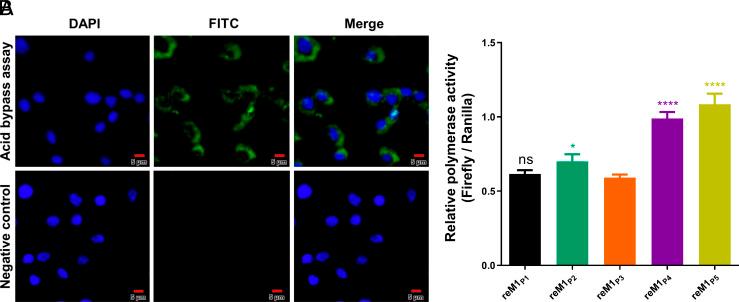
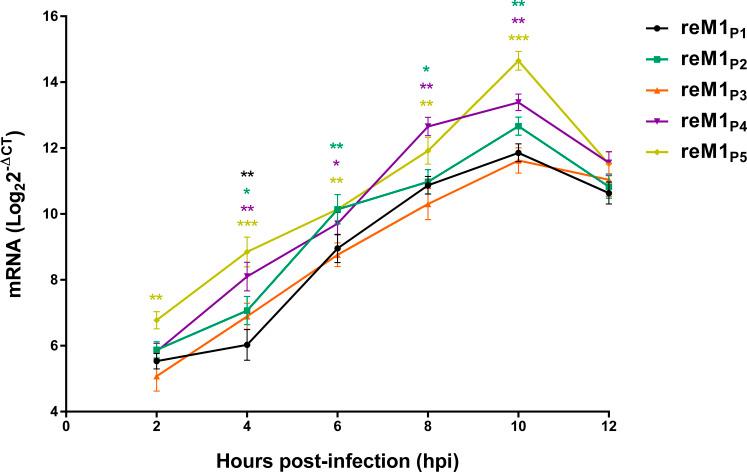
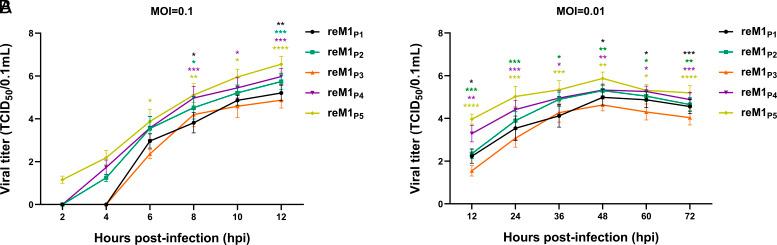
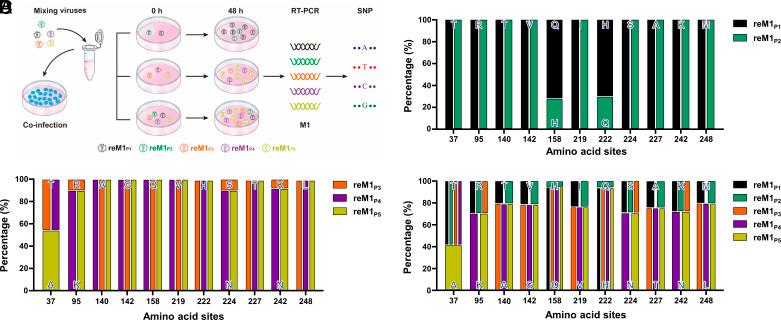
The H9N2 subtype of avian influenza virus (AIV) emerges as a significant member of the influenza A virus family. However, the varying degrees of epidemiological dominance among different lineages or clades of H9N2 AIVs have not been fully clarified. The matrix protein M1, a key structural component of the virion, plays a crucial role in maintaining the viral structure and lifecycle. To elucidate the intrinsic relationship between the genetic patterns of M1 and the adaptive dynamics of H9N2 AIVs, this study focused on the five major evolutionary patterns of M1 and conducted in vitro and in vivo investigations from the perspectives of vRNP release after viral uncoating, polymerase activity, mRNA and vRNA levels, the nuclear export of vRNPs, plasma membrane-binding capacity, proliferation capacity, growth competitiveness, and transmission potential. The results revealed a strong correlation between the epidemiological dominance of H9N2 AIVs and the specific patterns of M1, with M1 standing out as particularly significant. This finding highlights the pivotal influence of the M1 gene patterns on the replication and transmission dynamics of H9N2 AIVs, thereby offering valuable insights into the mechanisms driving differences in adaptive evolution and shifts in epidemiological dominance within the H9N2 AIV population.
甲型流感病毒(AIV)的H9N2亚型已成为甲型流感病毒家族的重要成员。然而,H9N2禽流感病毒不同谱系或分支在流行病学上的优势程度不同,尚未完全阐明。基质蛋白M1是病毒粒子的关键结构成分,在维持病毒结构和生命周期中起关键作用。为阐明M1基因模式与H9N2禽流感病毒适应性动态之间的内在关系,本研究聚焦于M1的五种主要进化模式,并从病毒脱壳后vRNP释放、聚合酶活性、mRNA和vRNA水平、vRNP的核输出、质膜结合能力、增殖能力、生长竞争力和传播潜力等方面进行了体外和体内研究。结果显示,H9N2禽流感病毒的流行病学优势与M1的特定模式之间存在很强的相关性,其中M1尤为显著。这一发现突出了M1基因模式对H9N2禽流感病毒复制和传播动态的关键影响,从而为H9N2禽流感病毒群体适应性进化差异和流行病学优势转变的驱动机制提供了有价值的见解。





 Zotero 插件