
产前金属暴露与儿童神经发育的关联以及代谢途径扰动的中介作用。
Associations of prenatal metal exposure with child neurodevelopment and mediation by perturbation of metabolic pathways.
作者信息
Xie Ya, Xiao Han, Zheng Dejuan, Mahai Gaga, Li Yuanyuan, Xia Wei, Xu Shunqing, Zhou Aifen
机构信息
Department of Obstetrics, Wuhan Children's Hospital (Wuhan Maternal and Child Health care Hospital), Tongji Medical College, Huazhong University of Science and Technology, Wuhan, Hubei, PR China.
School of Public Health, Tongji Medical College, Huazhong University of Science and Technology / Key Laboratory of Environment and Health, Ministry of Education / Key Laboratory of Environmental Pollution and Health Effects of the Ministry of Ecology and Environment, Wuhan, Hubei, PR China.
出版信息
Nat Commun. 2025 Mar 1;16(1):2089. doi: 10.1038/s41467-025-57253-3.
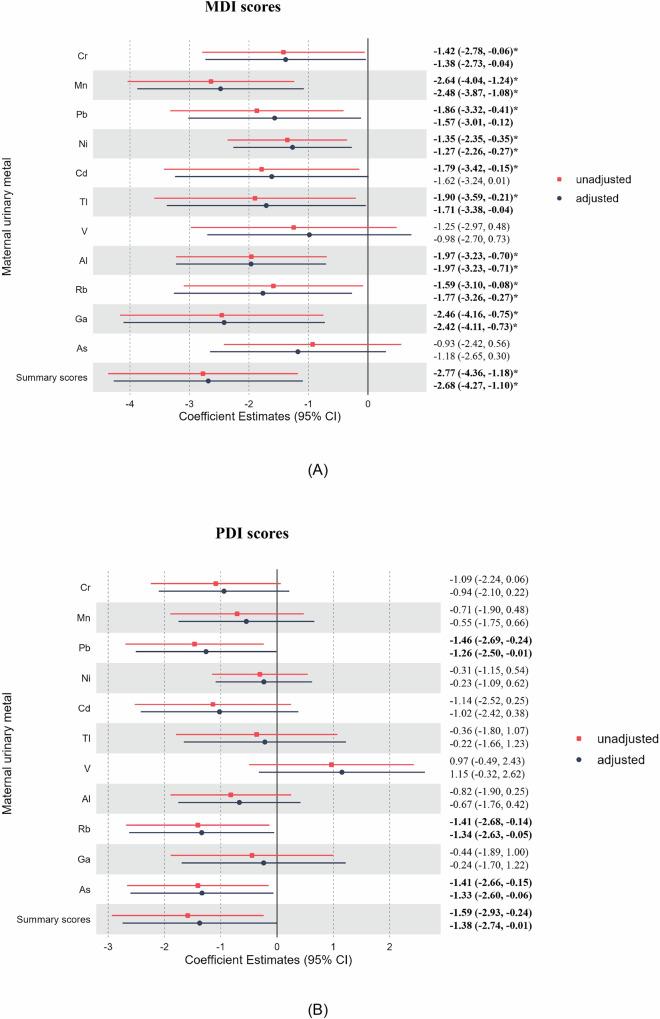
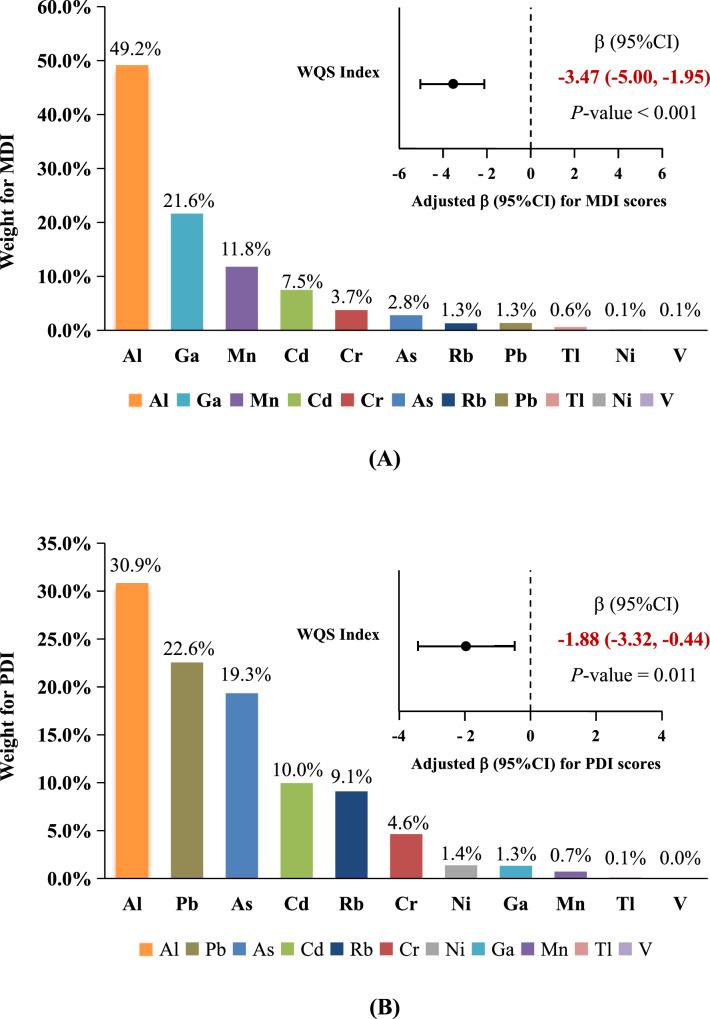
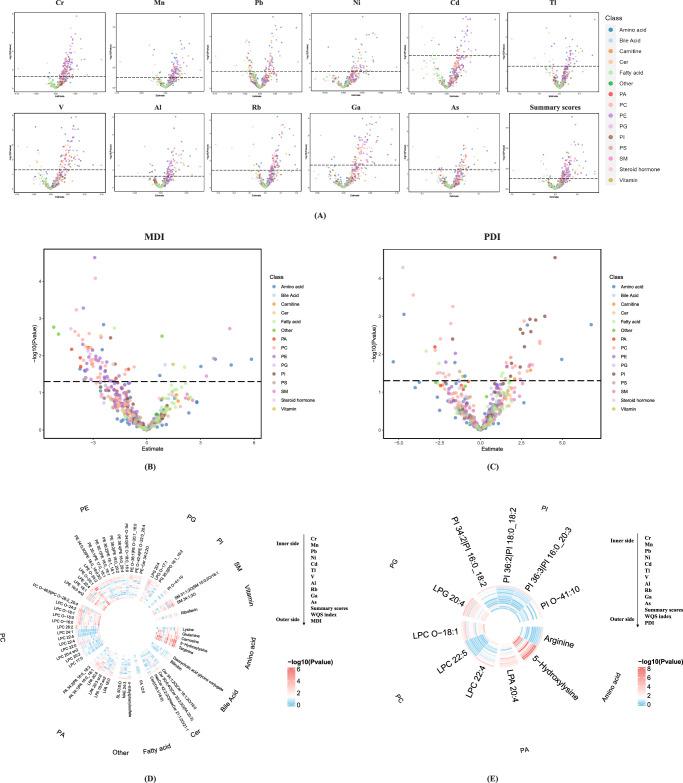
Prenatal exposure to metals has been associated with impaired neurodevelopment in children, but the detailed molecular mechanisms remain largely unknown. Based on the Wuhan Healthy Baby Cohort, China (N = 1088), eleven metals were measured in maternal urine during early pregnancy (13.1 ± 1.1 weeks) and metabolomics profiling was conducted in cord blood. Neurodevelopment was evaluated using the Bayley Scales of Infant Development in 2-year-old children to obtain the mental development index (MDI) and psychomotor development index (PDI). After false discovery rate correction, higher maternal urinary levels of manganese, nickel, aluminum, rubidium, gallium, and the summary score of metals were only significantly associated with lower MDI scores. The weighted quantile sum index of the metal mixture showed a significant inverse association with MDI and PDI scores, with aluminum contributing the most to the associations. Histidine, beta-alanine, purine, and pyrimidine metabolism significantly mediated the above associations, suggesting that disturbances in amino acids, neurotransmitter and neuroendocrine metabolism may be important mediators in contributing to impaired neurodevelopment of children.
产前接触金属与儿童神经发育受损有关,但详细的分子机制在很大程度上仍不清楚。基于中国武汉健康婴儿队列(N = 1088),在孕早期(13.1 ± 1.1周)测量了母体尿液中的11种金属,并对脐带血进行了代谢组学分析。使用贝利婴幼儿发展量表对2岁儿童的神经发育进行评估,以获得智力发展指数(MDI)和心理运动发展指数(PDI)。经过错误发现率校正后,母体尿液中较高水平的锰、镍、铝、铷、镓以及金属综合评分仅与较低的MDI评分显著相关。金属混合物的加权分位数和指数与MDI和PDI评分呈显著负相关,其中铝对这些关联的贡献最大。组氨酸、β-丙氨酸、嘌呤和嘧啶代谢显著介导了上述关联,表明氨基酸、神经递质和神经内分泌代谢紊乱可能是导致儿童神经发育受损的重要介质。


 Zotero 插件