
肌痛性脑脊髓炎/慢性疲劳综合征(ME/CFS)中的脑脊液代谢组学、脂质组学及丝氨酸途径功能障碍
Cerebrospinal fluid metabolomics, lipidomics and serine pathway dysfunction in myalgic encephalomyelitis/chronic fatigue syndroome (ME/CFS).
作者信息
Baraniuk James N
机构信息
Department of Medicine and Interdisciplinary Program in Neuroscience, Georgetown University, 3900 Reservoir Road, Washington, DC, 20007, USA.
出版信息
Sci Rep. 2025 Mar 3;15(1):7381. doi: 10.1038/s41598-025-91324-1.
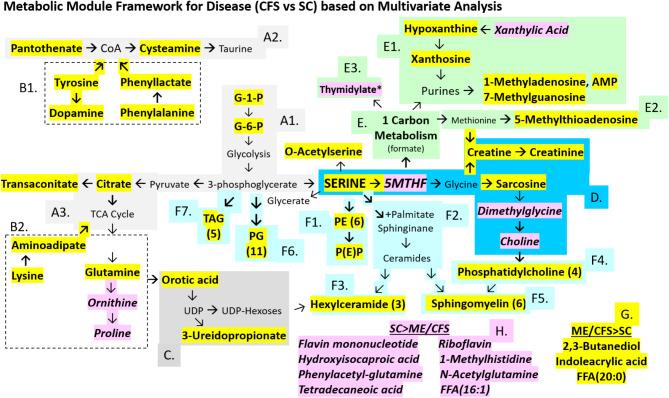
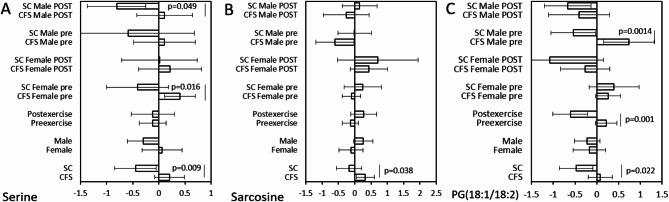
We proposed that cerebrospinal fluid would provide objective evidence for disrupted brain metabolism in myalgic encephalomyelitis/chronic fatigue syndroome (ME/CFS). The concept of postexertional malaise (PEM) with disabling symptom exacerbation after limited exertion that does not respond to rest is a diagnostic criterion for ME/CFS. We proposed that submaximal exercise provocation would cause additional metabolic perturbations. The metabolomic and lipidomic constituents of cerebrospinal fluid from separate nonexercise and postexercise cohorts of ME/CFS and sedentary control subjects were contrasted using targeted mass spectrometry (Biocrates) and frequentist multivariate general linear regression analysis with diagnosis, exercise, gender, age and body mass index as independent variables. ME/CFS diagnosis was associated with elevated serine but reduced 5-methyltetrahydrofolate (5MTHF). One carbon pathways were disrupted. Methylation of glycine led to elevated sarcosine but further methylation to dimethylglycine and choline was decreased. Creatine and purine intermediates were elevated. Transaconitate from the tricarboxylic acid cycle was elevated in ME/CFS along with essential aromatic amino acids, lysine, purine, pyrimidine and microbiome metabolites. Serine is a precursor of phospholipids and sphingomyelins that were also elevated in ME/CFS. Exercise led to consumption of lipids in ME/CFS and controls while metabolites were consumed in ME/CFS but generated in controls. The findings differ from prior hypometabolic findings in ME/CFS plasma. The novel findings generate new hypotheses regarding serine-folate-glycine one carbon and serine-phospholipid metabolism, elevation of end products of catabolic pathways, shifts in folate, thiamine and other vitamins with exercise, and changes in sphingomyelins that may indicate myelin and white matter dysfunction in ME/CFS.
我们提出,脑脊液将为肌痛性脑脊髓炎/慢性疲劳综合征(ME/CFS)中大脑代谢紊乱提供客观证据。运动后不适(PEM)的概念,即有限运动后出现致残性症状加重且休息后无缓解,是ME/CFS的诊断标准之一。我们提出,亚极量运动激发会导致额外的代谢紊乱。使用靶向质谱法(Biocrates)以及以诊断、运动、性别、年龄和体重指数作为自变量的频率主义多变量一般线性回归分析,对比了ME/CFS患者和久坐对照者在运动前和运动后的脑脊液中的代谢组学和脂质组学成分。ME/CFS诊断与丝氨酸升高但5-甲基四氢叶酸(5MTHF)降低有关。一碳途径受到破坏。甘氨酸甲基化导致肌氨酸升高,但进一步甲基化生成二甲基甘氨酸和胆碱的过程减少。肌酸和嘌呤中间体升高。三羧酸循环中的反乌头酸在ME/CFS患者中升高,同时必需芳香族氨基酸、赖氨酸、嘌呤、嘧啶和微生物群代谢产物也升高。丝氨酸是磷脂和鞘磷脂的前体,在ME/CFS患者中也升高。运动导致ME/CFS患者和对照者的脂质消耗,而ME/CFS患者的代谢产物被消耗,对照者则产生代谢产物。这些发现与之前ME/CFS患者血浆低代谢的研究结果不同。这些新发现产生了关于丝氨酸-叶酸-甘氨酸一碳代谢和丝氨酸-磷脂代谢、分解代谢途径终产物升高、运动时叶酸、硫胺素和其他维生素的变化以及鞘磷脂变化的新假设,这些变化可能表明ME/CFS患者存在髓鞘和白质功能障碍。


 Zotero 插件