
使用LUPINE进行纵向微生物组研究的微生物网络推断
Microbial network inference for longitudinal microbiome studies with LUPINE.
作者信息
Kodikara Saritha, Lê Cao Kim-Anh
机构信息
Melbourne Integrative Genomics, School of Mathematics and Statistics, The University of Melbourne, Royal Parade, 3052, Parkville, Victoria, Australia.
出版信息
Microbiome. 2025 Mar 3;13(1):64. doi: 10.1186/s40168-025-02041-w.
BACKGROUND
The microbiome is a complex ecosystem of interdependent taxa that has traditionally been studied through cross-sectional studies. However, longitudinal microbiome studies are becoming increasingly popular. These studies enable researchers to infer taxa associations towards the understanding of coexistence, competition, and collaboration between microbes across time. Traditional metrics for association analysis, such as correlation, are limited due to the data characteristics of microbiome data (sparse, compositional, multivariate). Several network inference methods have been proposed, but have been largely unexplored in a longitudinal setting.
RESULTS
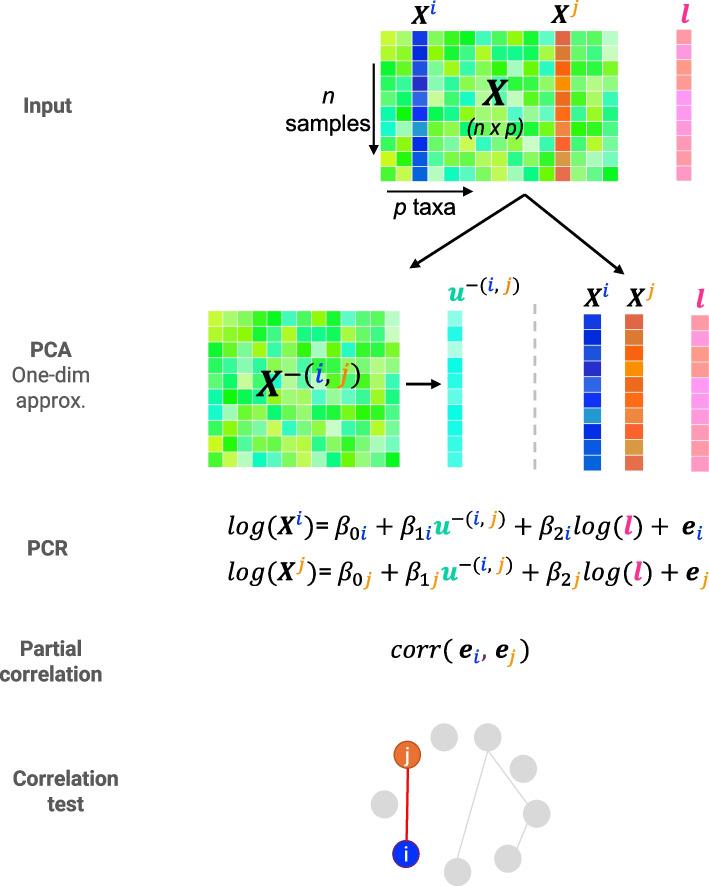
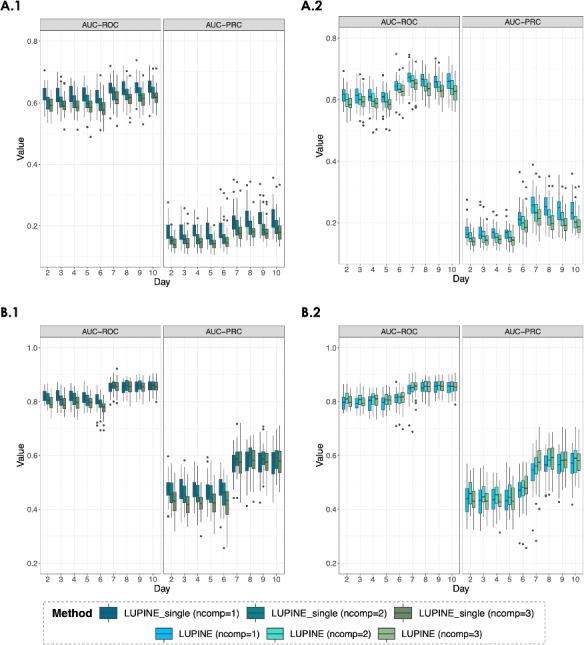
We introduce LUPINE (LongitUdinal modelling with Partial least squares regression for NEtwork inference), a novel approach that leverages on conditional independence and low-dimensional data representation. This method is specifically designed to handle scenarios with small sample sizes and small number of time points. LUPINE is the first method of its kind to infer microbial networks across time, while considering information from all past time points and is thus able to capture dynamic microbial interactions that evolve over time. We validate LUPINE and its variant, LUPINE_single (for single time point analysis) in simulated data and four case studies, where we highlight LUPINE's ability to identify relevant taxa in each study context, across different experimental designs (mouse and human studies, with or without interventions, and short or long time courses). To detect changes in the networks across time and groups or in response to external disturbances, we used different metrics to compare the inferred networks.
CONCLUSIONS
LUPINE is a simple yet innovative network inference methodology that is suitable for, but not limited to, analysing longitudinal microbiome data. The R code and data are publicly available for readers interested in applying these new methods to their studies. Video Abstract.
背景
微生物组是一个由相互依存的分类群组成的复杂生态系统,传统上是通过横断面研究进行研究的。然而,纵向微生物组研究正变得越来越普遍。这些研究使研究人员能够推断分类群之间的关联,以了解微生物随时间的共存、竞争和协作情况。由于微生物组数据(稀疏、成分性、多变量)的数据特征,传统的关联分析指标,如相关性,存在局限性。已经提出了几种网络推断方法,但在纵向环境中大多未被探索。
结果
我们引入了LUPINE(用于网络推断的基于偏最小二乘回归的纵向建模),这是一种利用条件独立性和低维数据表示的新方法。该方法专门设计用于处理样本量小和时间点数少的情况。LUPINE是同类方法中第一种能够跨时间推断微生物网络的方法,同时考虑了所有过去时间点的信息,因此能够捕捉随时间演变的动态微生物相互作用。我们在模拟数据和四个案例研究中验证了LUPINE及其变体LUPINE_single(用于单时间点分析),在这些研究中,我们强调了LUPINE在不同实验设计(小鼠和人类研究,有或无干预,以及短或长时间进程)下,在每个研究背景中识别相关分类群的能力。为了检测网络随时间和组的变化或对外部干扰的响应,我们使用了不同的指标来比较推断出的网络。
结论
LUPINE是一种简单而创新的网络推断方法,适用于但不限于分析纵向微生物组数据。R代码和数据可供有兴趣将这些新方法应用于其研究的读者公开获取。视频摘要。







 Zotero 插件