
迈向可持续农业生态系统:土壤可生物降解地膜与传统塑料地膜的生命周期评估综述
Towards sustainable agroecosystems: A life cycle assessment review of soil-biodegradable and traditional plastic mulch films.
作者信息
Dada Oluwatunmise Israel, Habarakada Liyanage Teshan Udayanga, Chi Ting, Yu Liang, DeVetter Lisa Wasko, Chen Shulin
机构信息
Department of Biological Systems Engineering, Washington State University, Pullman, WA, 99164-6120, USA.
Department of Apparel, Merchandising, Design and Textiles, Washington State University, Pullman, WA, 99164-6406, USA.
出版信息
Environ Sci Ecotechnol. 2025 Feb 12;24:100541. doi: 10.1016/j.ese.2025.100541. eCollection 2025 Mar.
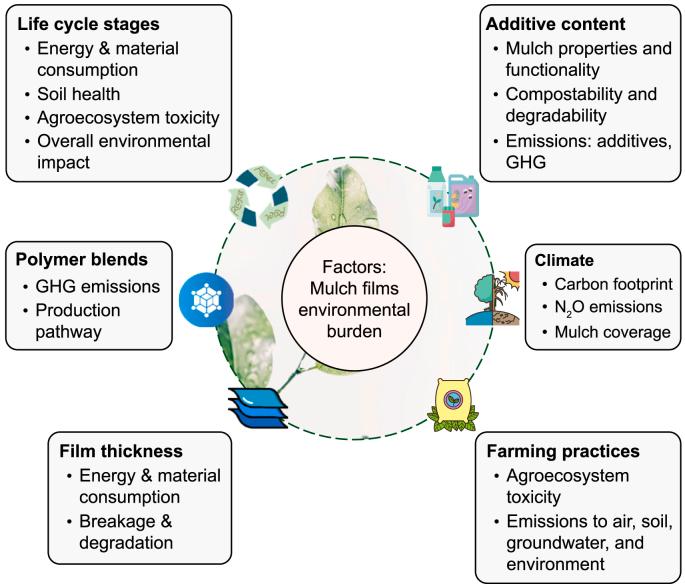
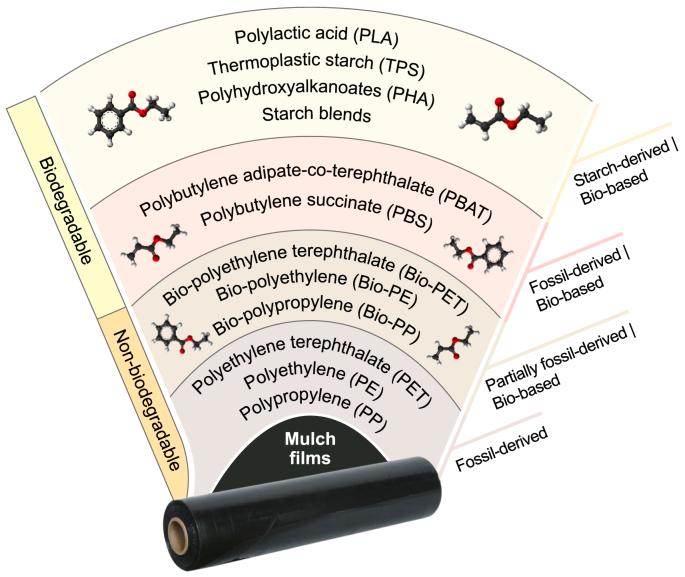
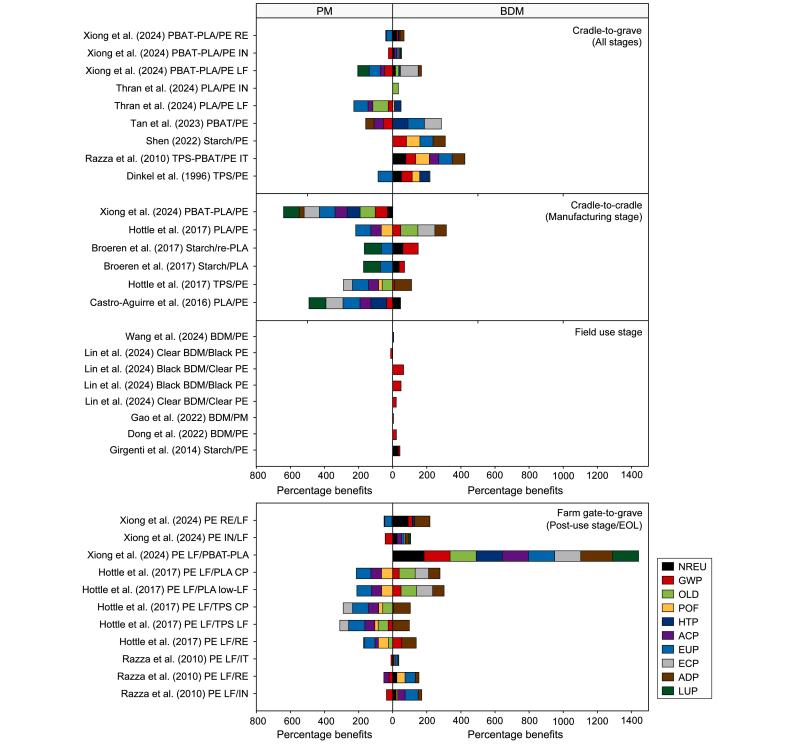
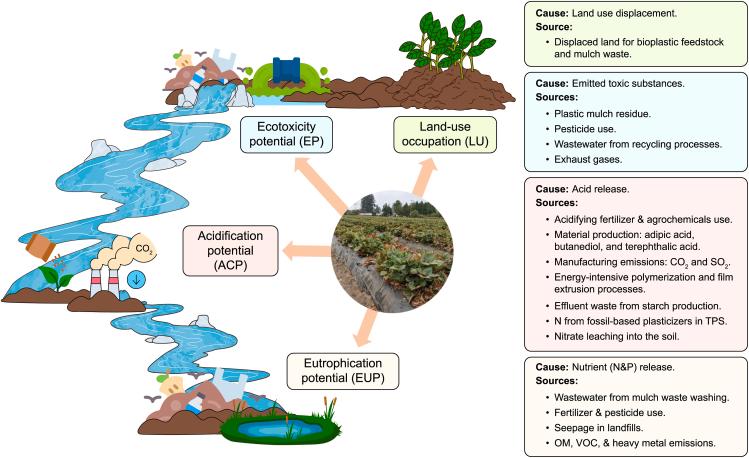
The increasing use of traditional agricultural plastic mulch films (PMs) has raised significant environmental concerns, prompting the search for sustainable alternatives. Soil-biodegradable mulch films (BDMs) are often proposed as eco-friendly replacements; however, their widespread adoption remains contentious. This review employs a comparative life cycle assessment perspective to evaluate the environmental impact of PMs and BDMs across their production, use, and end-of-life stages, providing strategies to mitigate their impact on agroecosystems. BDMs generally exhibit lower energy use and greenhouse gas emissions than PMs but contribute to greater land-use demands. Reported eutrophication and acidification potentials are less consistent, varying based on feedstock types and the scope of assessment of BDM, as well as the end-of-life management of PM. The environmental burden of both mulch types is influenced by the life cycle stage, polymer composition, farming practices, additives, film thickness, and local climatic conditions. The manufacturing stage is a major contributor to energy use and greenhouse gas emissions for both PMs and BDMs, despite their shared benefits of increasing crop yields. However, post-use impacts are more pronounced for PMs, driven by end-of-life strategy and adsorbed waste content. While starch-based BDMs offer a more sustainable alternative to PMs, uncertainties regarding the residence time of BDM residues in soil (albeit shorter than PM residues) and their effects on soil health, coupled with higher production costs, impede widespread adoption. For BDM end-of-life, soil biodegradation is recommended. Energy and material recovery options are crucial for PM end-of-life, with mechanical recycling preferred, although it requires addressing eutrophication and human toxicity. This review discusses these complexities within specific contexts and provides actionable insights to guide the sustainable integration of mulch films into agricultural practices.
传统农用塑料地膜(PMs)使用的不断增加引发了重大环境问题,促使人们寻找可持续的替代品。土壤可生物降解地膜(BDMs)常被提议作为环保替代品;然而,其广泛采用仍存在争议。本综述采用比较生命周期评估视角,评估PMs和BDMs在生产、使用及寿命终结阶段的环境影响,提供减轻其对农业生态系统影响的策略。BDMs通常比PMs表现出更低的能源使用和温室气体排放,但会导致更大的土地使用需求。报告的富营养化和酸化潜力不太一致,因BDM的原料类型、评估范围以及PM的寿命终结管理而异。两种地膜的环境负担都受生命周期阶段、聚合物组成、耕作方式、添加剂、薄膜厚度和当地气候条件的影响。制造阶段是PMs和BDMs能源使用和温室气体排放的主要贡献阶段,尽管它们都有提高作物产量的共同益处。然而,由于寿命终结策略和吸附的废物含量,使用后对PMs的影响更为明显。虽然淀粉基BDMs为PMs提供了更可持续的替代品,但BDM残留物在土壤中的停留时间(尽管比PM残留物短)及其对土壤健康的影响存在不确定性,再加上生产成本较高,阻碍了其广泛采用。对于BDM的寿命终结,建议进行土壤生物降解。能源和材料回收选项对PM的寿命终结至关重要,机械回收是首选,尽管这需要解决富营养化和人类毒性问题。本综述在特定背景下讨论了这些复杂性,并提供了可操作的见解,以指导地膜可持续融入农业实践。


 Zotero 插件