
神经免疫联系:揭示线粒体DNA-环鸟苷酸-腺苷酸合成酶-干扰素基因刺激蛋白信号通路在阿尔茨海默病中的作用
The neuroimmune nexus: unraveling the role of the mtDNA-cGAS-STING signal pathway in Alzheimer's disease.
作者信息
Quan Shuiyue, Fu Xiaofeng, Cai Huimin, Ren Ziye, Xu Yinghao, Jia Longfei
机构信息
Innovation Center for Neurological Disorders and Department of Neurology, Xuanwu Hospital, Capital Medical University, National Clinical Research Center for Geriatric Diseases, 45 Changchun St, Beijing, 100053, China.
出版信息
Mol Neurodegener. 2025 Mar 4;20(1):25. doi: 10.1186/s13024-025-00815-2.
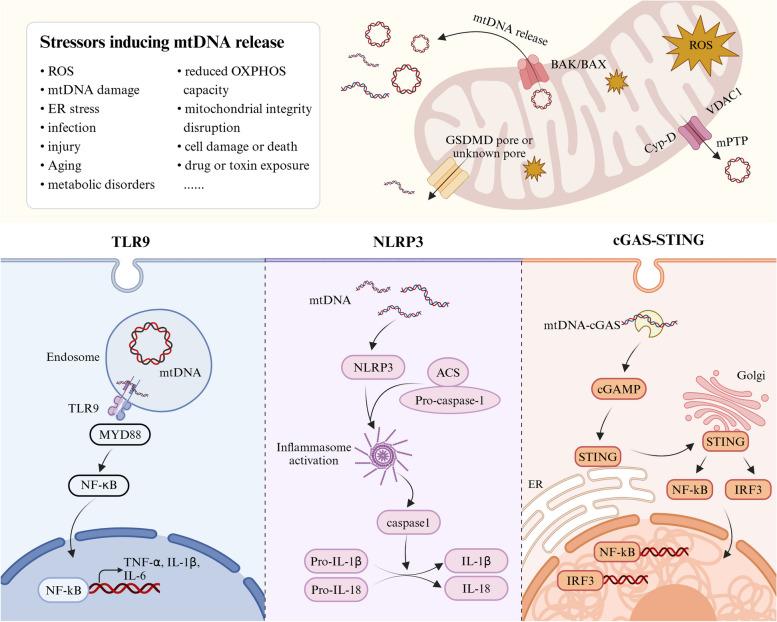
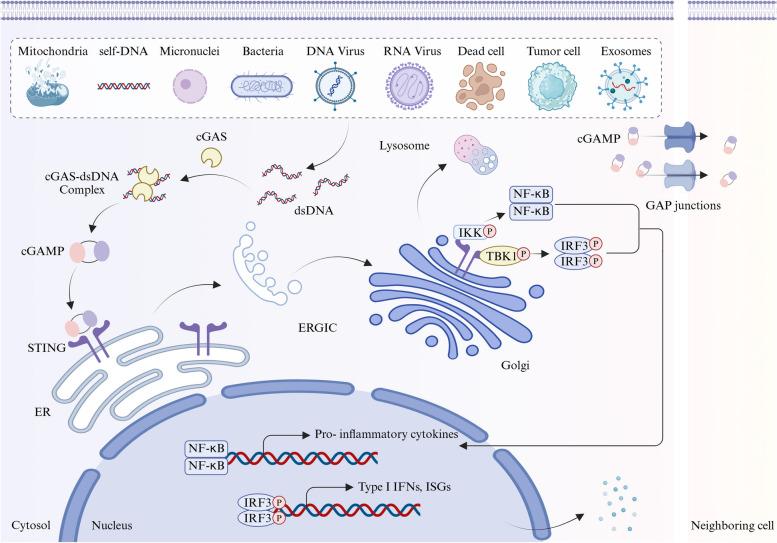
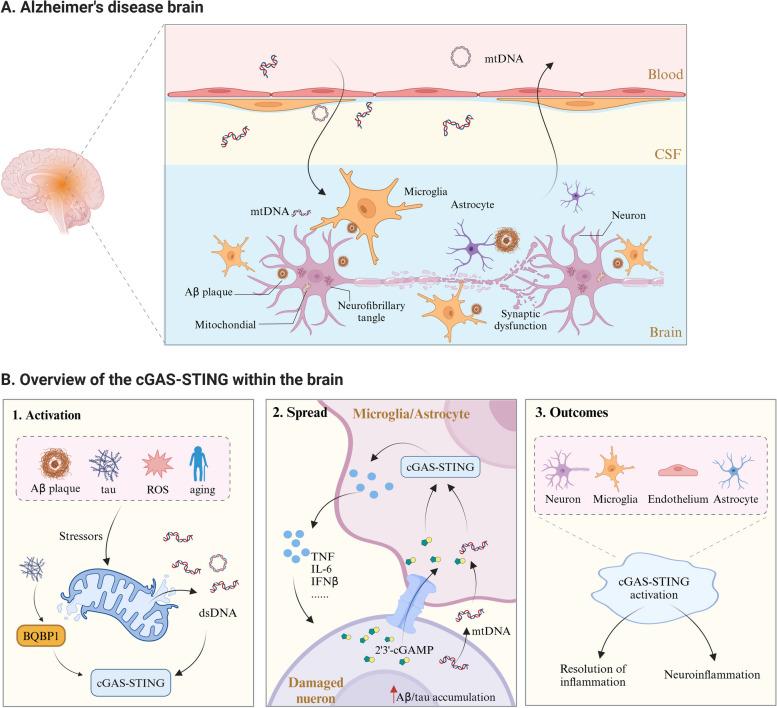
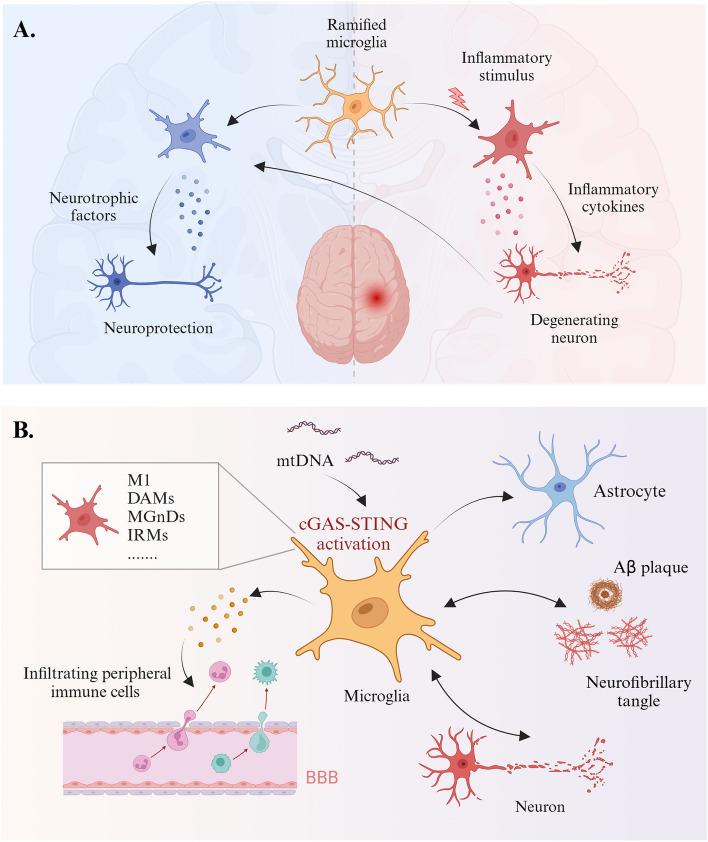
The relationship between Alzheimer's disease (AD) and neuroimmunity has gradually begun to be unveiled. Emerging evidence indicates that cyclic GMP-AMP synthase (cGAS) acts as a cytosolic DNA sensor, recognizing cytosolic damage-associated molecular patterns (DAMPs), and inducing the innate immune response by activating stimulator of interferon genes (STING). Dysregulation of this pathway culminates in AD-related neuroinflammation and neurodegeneration. A substantial body of evidence indicates that mitochondria are involved in the critical pathogenic mechanisms of AD, whose damage leads to the release of mitochondrial DNA (mtDNA) into the extramitochondrial space. This leaked mtDNA serves as a DAMP, activating various pattern recognition receptors and immune defense networks in the brain, including the cGAS-STING pathway, ultimately leading to an imbalance in immune homeostasis. Therefore, modulation of the mtDNA-cGAS-STING pathway to restore neuroimmune homeostasis may offer promising prospects for improving AD treatment outcomes. In this review, we focus on the mechanisms of mtDNA release during stress and the activation of the cGAS-STING pathway. Additionally, we delve into the research progress on this pathway in AD, and further discuss the primary directions and potential hurdles in developing targeted therapeutic drugs, to gain a deeper understanding of the pathogenesis of AD and provide new approaches for its therapy.
阿尔茨海默病(AD)与神经免疫之间的关系已逐渐开始被揭示。新出现的证据表明,环磷酸鸟苷-腺苷酸合成酶(cGAS)作为一种胞质DNA传感器,识别胞质损伤相关分子模式(DAMPs),并通过激活干扰素基因刺激物(STING)诱导先天免疫反应。该信号通路的失调最终导致与AD相关的神经炎症和神经退行性变。大量证据表明,线粒体参与了AD的关键致病机制,其损伤导致线粒体DNA(mtDNA)释放到线粒体外空间。这种泄漏的mtDNA作为一种DAMP,激活大脑中的各种模式识别受体和免疫防御网络,包括cGAS-STING信号通路,最终导致免疫稳态失衡。因此,调节mtDNA-cGAS-STING信号通路以恢复神经免疫稳态可能为改善AD的治疗效果提供有前景的方向。在这篇综述中,我们重点关注应激期间mtDNA释放的机制以及cGAS-STING信号通路的激活。此外,我们深入探讨了该信号通路在AD中的研究进展,并进一步讨论了开发靶向治疗药物的主要方向和潜在障碍,以更深入地了解AD的发病机制并为其治疗提供新方法。

 Zotero 插件