
探索人类血液代谢物与自闭症谱系障碍风险之间的关联:一项双向孟德尔随机化研究。
Exploring the Association Between Human Blood Metabolites and Autism Spectrum Disorder Risk: A Bidirectional Mendelian Randomization Study.
作者信息
Li Wenhua, Ma Suya, Tian Yunong
机构信息
State Key Laboratory of Component-Based Chinese Medicine, Ministry of Education, Key Laboratory of Pharmacology of Traditional Chinese Medicine Formulae, Institute of Traditional Chinese Medicine, Tianjin University of Traditional Chinese Medicine Tianjin China.
Guang'anmen Hospital, China Academy of Chinese Medicine Sciences Beijing China.
出版信息
Health Sci Rep. 2025 Mar 3;8(3):e70528. doi: 10.1002/hsr2.70528. eCollection 2025 Mar.
BACKGROUND AND AIMS
Autism spectrum disorder (ASD) is a complex neurodevelopmental condition with a poorly understood etiology. Recent studies have suggested that metabolic dysregulation might be linked to the development of ASD; however, causal relationships remain unclear. This study aimed to investigate the causal association between these factors using two-sample Mendelian randomization (TSMR).
METHODS
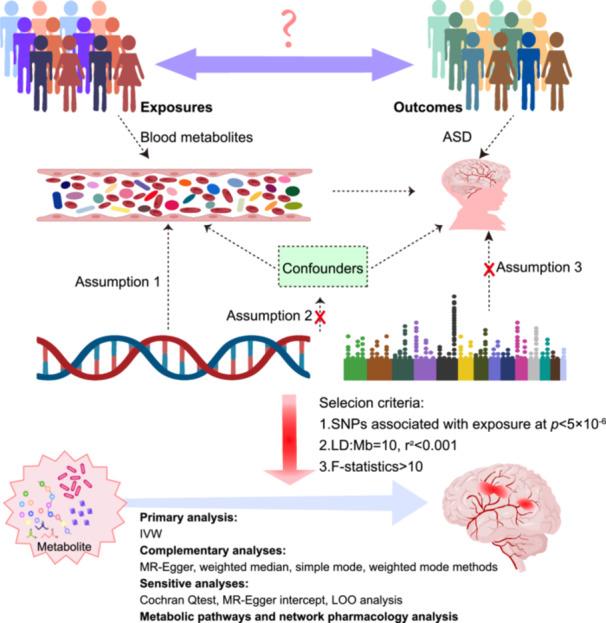
We conducted a TSMR analysis to assess the relationship between blood metabolites and ASD using summarized GWAS data. The metabolite dataset from the Canadian Longitudinal Study of Aging included 1091 metabolites and 309 ratios from 7824 European individuals. The ASD data from the Psychiatric Genomics Consortium comprised 18,381 ASD cases and 27,969 controls. Blood metabolites were set as exposures with ASD as the outcome. We primarily used the inverse-variance weighted method, supplemented by MR-Egger, weighted median, simple mode, and weighted mode methods. We also conducted sensitivity analyses to confirm robustness. Replication, confounding, and reserve analyses were performed to verify causation. Additionally, metabolic pathway and network pharmacology analyses were conducted to explore potential mechanisms.
RESULTS
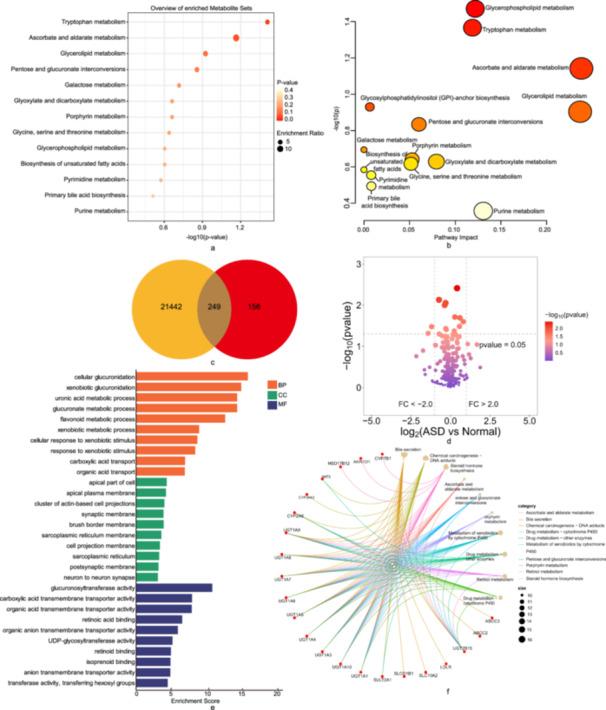
We identified 55 known metabolites including 13 metabolite ratios and 10 unknown blood metabolites associated with ASD. Additionally, our analysis identified 13 potential metabolic pathways, among which tryptophan metabolism was the most notable ( = 0.0388). Gene Ontology functional analysis and Kyoto Encyclopedia of Genes and Genomes analysis highlighted crucial pathways, such as cellular glucuronidation, glucuronosyltransferase activity, and bile secretion, and the significance of the apical part of the cell.
CONCLUSIONS
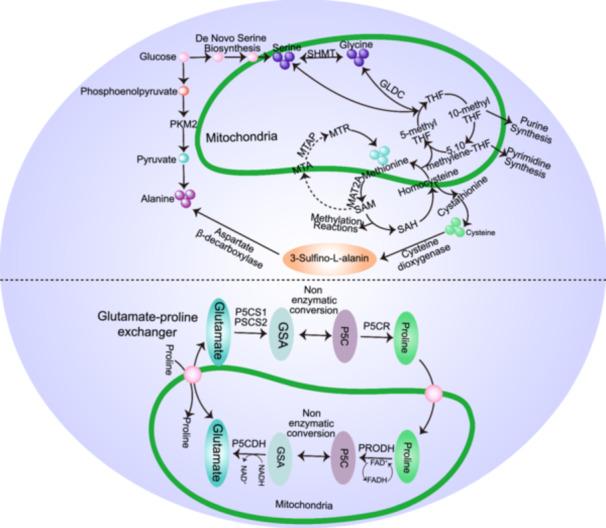
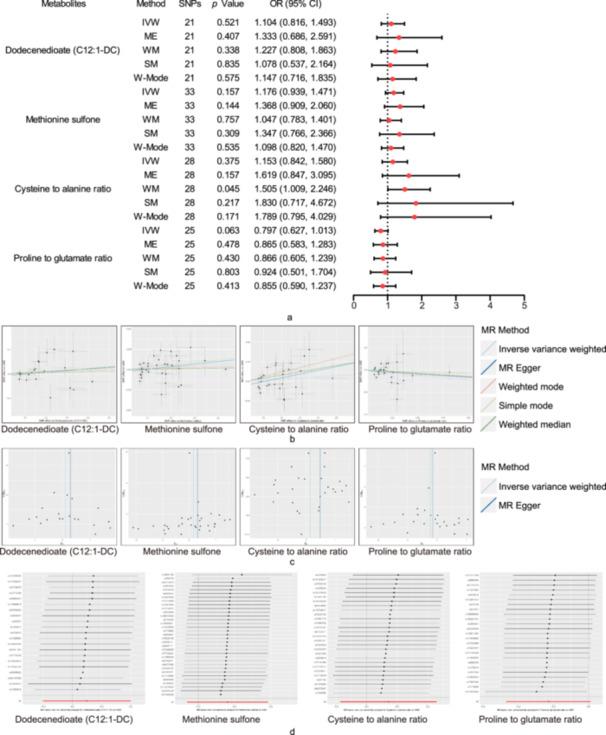
Our findings indicate that the dodecenedioate, methionine sulfone, cysteine to alanine ratio and proline to glutamate ratio have an impact on ASD. These results enhance our understanding of the metabolic pathways involved in ASD and could lead to new avenues for intervention and prevention. Further research is needed to explore the mechanisms underlying these associations and confirm these findings in different populations.
背景与目的
自闭症谱系障碍(ASD)是一种复杂的神经发育疾病,其病因尚不清楚。最近的研究表明,代谢失调可能与ASD的发生有关;然而,因果关系仍不明确。本研究旨在使用两样本孟德尔随机化(TSMR)方法研究这些因素之间的因果关联。
方法
我们使用汇总的全基因组关联研究(GWAS)数据进行了TSMR分析,以评估血液代谢物与ASD之间的关系。来自加拿大老龄化纵向研究的代谢物数据集包括来自7824名欧洲个体的1091种代谢物和309种比率。来自精神疾病基因组学联盟的ASD数据包括18381例ASD病例和27969例对照。将血液代谢物作为暴露因素,ASD作为结局。我们主要使用逆方差加权法,并辅以MR-Egger法、加权中位数法、简单模式法和加权模式法。我们还进行了敏感性分析以确认稳健性。进行了复制、混杂和储备分析以验证因果关系。此外,进行了代谢途径和网络药理学分析以探索潜在机制。
结果
我们确定了55种已知代谢物,包括13种代谢物比率和10种与ASD相关的未知血液代谢物。此外,我们的分析确定了13条潜在的代谢途径,其中色氨酸代谢最为显著(P = 0.0388)。基因本体功能分析和京都基因与基因组百科全书分析突出了关键途径,如细胞葡萄糖醛酸化、葡萄糖醛酸转移酶活性和胆汁分泌,以及细胞顶端部分的重要性。
结论
我们的研究结果表明,十二碳烯二酸、甲硫氨酸砜、半胱氨酸与丙氨酸的比率以及脯氨酸与谷氨酸的比率对ASD有影响。这些结果加深了我们对ASD相关代谢途径的理解,并可能为干预和预防开辟新途径。需要进一步研究以探索这些关联背后的机制,并在不同人群中证实这些发现。



 Zotero 插件